Books

Books you should plan to read this fall

Summer has arrived in full force — at least here in southeastern Virginia, where the temperature has been creeping up towards 100 degrees — and so, too, have those lists of the best beach books, hottest summer reads, high temp tomes, etc. But fall is just around the corner, so why not take a peek at what’s in store? Here are a few forthcoming books that piqued my interest for one reason or another. This isn’t a list of the fall’s “biggest” books. Some of these might not be covered at all in the national press. But if you want a list like that, just wait. You’ll have 20 to choose from before long. Here is mine. Robert Crawford’s Eliot after The Waste Land (August 23, FSG), the second volume of his biography of T.S.

substack

The rise of gay Washington

Anyone under fifty may be unaware of how largely invisible gay Americans were until at least the 1980s. James Kirchick’s incredibly rich and impressively thorough Secret City does not mention Bowers v. Hardwick, the notorious 1986 Supreme Court ruling that upheld the criminalization of gay sexuality, but only post-Bowers did the push for gay equality, and eventually same-sex marriage, rapidly become what he rightly calls “the most successful social movement in American history.” In 1992, a Gallup poll indicated that 43 percent of Americans said they knew a gay person — double the figure from just seven years earlier — and across all of America it was that growing knowledge of the presence of gay people that allowed such a dramatic political transformation to take place.

gay
original sins

How not to live a life

When Thomas de Quincey wrote Confessions of an English Opium-Eater in 1821, he could not possibly have guessed what he would set in motion. Over two hundred years later, the addiction memoir looks different: less subversive, more sentimental, undeniably more commercial. Since the advent of Alcoholics Anonymous in Akron, Ohio, in 1935, the formula of the recovery memoir now yokes the moral to the medical: alcoholism may be a moral disorder, but it is underwritten by a chemical condition marked by incessant craving — in recovery parlance, an “allergy,” a state of “dis-ease.” For Matt Rowland Hill, the two are inextricably combined. Original Sins is the debut memoir from a writer whose two great loves, “Jesus and heroin,” never quite slip out of one another’s grasp.

yimby

NIMBYs to the left of me, YIMBYs to the left

First disclosure: I do not appear in this book. I say that only because — second disclosure — I consider myself a YIMBY, and I am familiar, at least online, with many of the characters and figures quoted or interviewed. However, I learned a lot about this loose movement and found it fascinating to read a book on a phenomenon that I would have trouble viewing with a detached, scholarly distance. Yes to the City, by the cultural sociologist and urban policy scholar Max Holleran, must have been a difficult book to write, not least because YIMBY (“Yes in my backyard”) is as much a rallying cry or a slogan as it is a movement, let alone an organization. The YIMBY nemesis, NIMBY (“Not in my backyard”), is equally amorphous.

dewitt

Helen DeWitt’s brilliance and unsuccess

No one ever expects an author simply to minuet her way into a book deal and, if lucky — merely “talented” doesn’t usually do the trick — into commercial success. But the publishing jukes and vaults that have earned Helen DeWitt the title of “America’s Great Unlucky Novelist” rather resemble the vertiginous motions of a mazurka on pogo sticks. Disagreements with her editors led DeWitt to attempt suicide twice. Her first novel, The Last Samurai, remained out of print for eleven years after its publisher went bankrupt. Before DeWitt was able to publish her second novel, Lightning Rod, another ten years lapsed.

translation

Lost in translation

Picture the scene: a twenty-something college student, desperately trying to impress a girl he’s met for a date. He's early, but that isn’t a problem as it gives him a chance to sit nonchalantly with his ever-so-artfully-battered paperback. It’s Rimbaud’s Collected Poems: intellectual, sensual, rebellious — everything he wants to be perceived as. He props the book up so that the poet’s name is visible and waits for his delicate intellectualism to be applauded. The only thing missing from this tableau is the name of the poems’ translator, assuming that the student isn’t pretentious enough to be carrying around the original French. A smaller name on the fragile paperback, the translator is generally unmentioned, forgotten, and obscured.

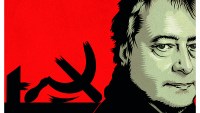
The Marxist writer who railed against Lenin

The writer Maxim Gorky edited the Menshevik newspaper New Life during its short run from May 1, 1917 to July 16, 1918, before Vladimir Lenin gave the personal order to shut it down. Gorky was a one-time friend of Lenin’s and a committed socialist (when Lenin gave the order to shut down New Life, he is reported to have said, “Gorky is one of us”), but he was also a frequent critic of the Bolshevists. In his column for the paper, which ran under the heading “Untimely” — because it focused on culture and morality rather than on practical matters of the revolution — he complained frequently about the politicking of party leaders and the stupidity of the masses.

In praise of (very) small independent publishers

Recently, several prominent writers have left jobs at national newspapers and magazines to go it alone on Substack or other email subscription services. In 2020, Matt Yglesias left Vox and Glenn Greenwald left the Intercept — both for Substack. That same year, Andrew Sullivan brought the Dish out of retirement and to Substack. Bari Weiss and Charlie Warzel left the New York Times and started a Substack in 2021. Ruth Reichl, the former editor of Gourmet, started a newsletter in 2021. Others who have written for a variety of publications — Matt Taibbi, Glenn Lourey, Jesse Singal, Erick Erickson, Freddie DeBoer, Roxanne Gay — have all made Substack their home. And the list goes on.

Virginia Woolf’s very own Bloomsday

“Mrs. Dalloway said she would buy the flowers herself.” Nine words into her 1925 classic, Virginia Woolf has taken us to another world. London — Westminster to be precise — in mid-June 1913, a world in which it is unusual for a woman to buy the flowers for her own party. Clarissa Dalloway only steps out into the early morning air (“fresh as if issued to children on a beach”) because her maid, Lucy, “had her work cut out for her.” The Wednesday in the “middle of June” on which the action of Mrs. Dalloway takes place is debated. The year is 1923, which would make the 13th of June the most likely candidate. But as academics are wont to do, there has been some disagreement.

mrs. dalloway

Searching for the American summer novel

I am convinced that the sweet-smelling tycoons that run candle-making companies must have read too much Proust when they were younger. With scents like “Inspire,” “Bohemia,” and “Sunny Daydream,” they cannot be aiming for something as cheap and transitory as mere tawdry olfactory pleasure. They must have become all but obsessed by À la Recherche du Temps Perdu, and be aiming for something akin to his narrator’s nostalgic odyssey upon tasting a madeleine: “and at once the vicissitudes of life had become indifferent to me, its disasters innocuous, its brevity illusory.” Rather pretentious, oui — but what other excuse can there be for a candle that proclaims it can smell like a cool library at midnight, or the depths of some dreamy reverie?

The Optimist’s Daughter at fifty

By her own account, Eudora Welty had an idyllic childhood. Born in 1909 on Congress Street, two blocks from the state capitol in Jackson, Mississippi, Welty spent her early years playing with friends from school, reading voraciously and riding her bicycle to the local store to pick up some flour or eggs for her mother and, of course, a treat for herself. Her father, who was devoted to his wife and children, advanced from a cashier to vice president at Lamar Life Insurance before his daughter had finished high school. He had, as Welty put it, a love for “all instruments that would instruct and fascinate,” including a toy train set, a telescope and a folding Kodak, with which he would teach the young Eudora the pleasures of photography.

eudora welty

A royal affair

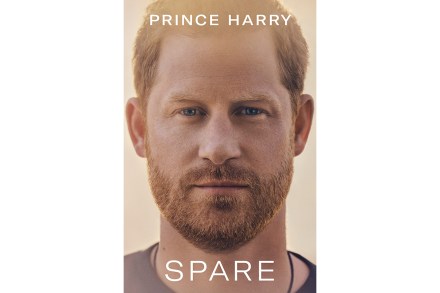
The cover blurb, from “Lady Anne Glenconner” on this huge book proclaims: “Brilliant. Tina Brown has inside knowledge and writes so well.” The credit for the author of the 2019 bestseller, Lady in Waiting: My Extraordinary Life in the Shadow of the Crown should in fact be “Lady Glenconner”. You might not think it matters much these days that, over and over again, Tina Brown gets the titles wrong in this book. But this is supposedly the ultimate insider’s look at the royal family over the last forty years or so. And titles are at the heart of the Firm — think of the agony of Prince Harry and Prince Andrew at no longer being able to use their HRH titles and having to give up their honorary military roles.

royal brown
facemaker fitzharris

Faces off

Humankind’s ability to destroy itself has always outweighed its desire to fix the broken pieces. Conflict and war create great suffering, anguish and death, but they also lead to discoveries in technology, industrialization and, we learn from Lindsey Fitzharris’s The Facemaker, the invention of cosmetic and reconstructive surgery. At the dawn of the Great War, it became painfully evident to those in the trenches that contemporary developments in warfare had far exceeded those in the world of medicine. These ghastly developments are illustrated in great detail in Fitzharris’s book, which tracks the military career and early life of Harold Gillies, the man who is largely credited as the father of modern plastic surgery as well as with having performed the first phalloplasty.

friends

Forever young

Long before publishing dreamt up the category of Young Adult fiction to try to persuade adult children and childish adults to keep reading, there were novels that described what it felt like to be young. Catcher in the Rye was one such, as were The Bell Jar and Bonjour Tristesse; these books coincided with the invention of the teenager circa 1950 and have enjoyed lasting critical and commercial success. Though British writers reign supreme in the field of children’s literature, American authors have always written outstandingly about teenagers. But the changeover from fiction describing the condition of being young to the YA genre, with its accounts of first love, high-school hell and so on, has not necessarily served every reader well.

limón

A quiet delight

What would you do if you looked out of your window expecting to see the neighbor’s cat, and instead were presented with a groundhog in its place, “waddle-thieving” your tomatoes and “taking such/ pleasure in the watery bites”? Ada Limón’s speaker, in the opening poem of her new collection, The Hurting Kind, is not angry at this “all muscle and bristle” tomato-thief. The groundhog is an embodiment of all she cannot have: an animal, natural freedom that inspires her to ask, “Why am I not allowed/ delight?” ...A stranger writes to request my thoughts on suffering. Barbed wire pulled out of the mouth, as if demanding that I kneel to the trap of coiled spikes used in warfare and fencing.

herzog

Carry on regardless

The director Werner Herzog’s first novel, The Twilight World, occupies quintessential Herzogian territory. Those familiar with his films will recognize the themes: man’s insignificance in the face of a totally implacable nature and his overweening ambitions to surmount this failure. Futility and pride are locked together in hallucinatory, self-destructive cycles. His film Fitzcarraldo, for example, demonstrated the real-life attempts of a rubber baron to transport a steamship over a mountain in Peru. Grizzly Man, meanwhile, documented the sad life of a man who had made his home among bears. It doesn’t end well. (Those readers who haven’t the time to get to know his work may wish to find “Werner Herzog” reading Curious George on YouTube — a delightful parody of his style.

dyer

A grand slam

The majority of us who aren’t touched by genius come to terms with our mediocrity in late adolescence, once our dreams of sports superstardom are dashed or that bumbling first attempt at a novel sets us straight. You won’t be the next Jordan or Hemingway, after all. Getting over the initial shock of one’s dreams being dashed without suffering some kind of crack-up is the mark of high character and perhaps the first sign a man will settle solemnly — but not joylessly — for a well-adjusted life of invisible, middling victories. The best-adjusted man will embrace the comfort of mediocrity and live vicariously through the great men he admires, which is to say that he’ll become a fan.

The energetic and tragic Keats

When John Keats wrote “On First Looking into Chapman’s Homer,” he had just returned from a long evening at the home of a childhood friend, Charles Cowden Clarke. Charles Clarke was the son of the headmaster of Clarke’s Academy, where Keats had gone to school. A week earlier, Clarke had introduced Keats to one of his heroes, Leigh Hunt, editor of the independent Examiner (Hunt was imprisoned for two years for printing that the Prince Regent was “a fat Adonis at forty”), friend of William Hazlitt and Charles Lamb, and literary kingmaker. Hunt despised what he viewed as the overly ornate poetry of Alexander Pope, preferring instead Chaucer’s earthy Old English and the directness of Shakespeare and Milton.