Books

The wild times on the late, great John Belushi’s most famous film

A good place to start with The Blues Brothers, Daniel de Visé’s engaging account of the John Belushi-Dan Aykroyd comedy classic, is in the spring preceding the movie’s summer 1980 release. By this stage, the production was mired in controversy and a martyr to industry scuttlebutt. Press reports put the expenditure at anywhere between $35 million and $40 million (in fact it sailed home at a mere $27.5 million) — and this at a time when over-subsidized box office calamities such as Steven Spielberg’s 1941 and Michael Cimino’s Heaven’s Gate had prompted many a lament about Hollywood hubris. The rough cut came in at a mammoth three hours, at a time when two were reckoned excessive.

Belushi
Connell

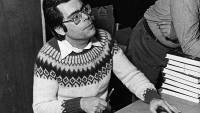
The talented Evan S. Connell

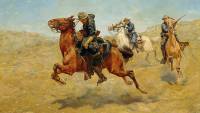
When the journalist Steve Paul began his biography of the writer Evan S. Connell, a young librarian was helping him access research material. She happened across a photograph, and remarked, “What a suave-looking dude.” Connell had movie-star good looks. Of his eight novels, two are now packaged as classics of American literature. This on top of a biography of Goya; a 2009 Man Booker International nomination for lifetime achievement; and a bestselling history of a battle in the Great Sioux War of 1876. Acolytes recommend his greatest book, Mrs. Bridge, with the confident smile that looks forward to welcoming another member to the exclusive band of Connellites.

Until August

Gabriel García Márquez’s posthumously published novel is unconvincing

Love and loneliness. Loneliness and love. These two motifs, these two codependent deities, underpin all of grand maestro Gabriel García Márquez’s fiction — from his bewitching magnum opus One Hundred Years of Solitude to the tumultuous romance of Love in the Time of Cholera. His final sultry, sun-soaked and unexpected work, Until August, which he attempted to complete while struggling with dementia, is a continuation of these oeuvre-defining themes. It’s a damn shame it’s half-baked. The circumstances under which Until August came to be written might, themselves, one day make a rather droll short story, perhaps even a sparky novella.

Where is the clarity in modern center-right foreign policy?

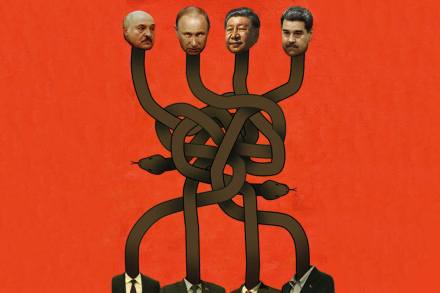
When Ohio senator J.D. Vance arrived at the Munich Security Conference in February, he had a clear message meant for the world: the Republican Party was no longer the party of Ronald Reagan. Standing outside the Hotel Bayerischer Hof, he informed reporters that he did not believe American support for combat against authoritarian regimes should extend to Ukraine — and that he would continue to oppose efforts to “increase the supply of weapons in Ukraine because we’ve already expended so many of our munitions and resources” to achieve a victory that he does not foresee. Vance’s bootstrap story is well-known — he’s a Marine veteran turned Yale Law grad turned venture capitalist made prominent by his bestselling Appalachia memoir Hillbilly Elegy.

foreign policy
rollins

An unvarnished insight into the mind of Sonny Rollins

In the mid-1950s, alongside his close friend and intimate confidant John Coltrane, the revered saxophonist Sonny Rollins completely revolutionized notions about how the tenor saxophone could function within modern jazz. In landmark albums like Freedom Suite, Way Out West and Tenor Madness, Rollins pushed the art of melodic improvisation to transcendent new heights, his charismatic sound, his snaking melodies and his rhythmic liquidity ringing the changes as surely as Louis Armstrong had done thirty years earlier. And like Louis, and later Miles Davis, there came a point where Rollins wrestled free of the jazz aficionado’s gaze to become admired by a more general audience.

Holiday

A look into Billie Holiday’s final year

If ever a singer were difficult to pin down, it was Billie Holiday (1915-59), whose harrowing life story was first told in an unreliable memoir published just three years before her death. With Lady Sings the Blues, the jazz legend known for her emotional honesty not only allowed herself to be misrepresented (after all, she wasn’t even a blues singer), but actively participated in fabricating the fake stories which proliferated through the book. Some of these — such as a misstatement of her place of birth — are still repeated to this day. Two decades after the publication of Lady Sings the Blues a steady stream of more accurate biographies began to appear.

butler

Who’s afraid of Judith Butler?

Gay icon Judy Garland. Folk queen Judy Collins. Now, we have the lesbian saint Judith Butler (as of 2020, they/them saint Judith Butler.) Once resigned to recognition on college campuses for their unreadable 1990 tome Gender Trouble, which posited that gender is a performance, the queer theorist and Berkeley professor took off as a mainstream hero in the past decade. Tumblr kids reposted quotes from their lengthy, poorly written academic work. New York magazine declared Butler a “pop celebrity.” In March, Farrar, Straus and Giroux published Butler’s first commercial book, Who’s Afraid of Gender? Its prolonged roll-out aims to credit Butler for “birthing” the nonbinary and trans identities of the twenty-first century. It’s as much a publicity stunt as a book.

Who’s really behind the Biden administration’s foreign policy?

If you’re one of the many people worried that US foreign policy is in the hands of a visibly declining eighty-one year-old president, Alexander Ward’s account of the Biden administration’s first two years in office may — or may not — make you feel better, for he leaves readers with little doubt as to who is actually the executive branch’s most influential decision-maker: forty-seven year-old national security advisor Jake Sullivan. Ward might deny any such authorial intent, but time and again he shows his hand, as when he invokes “Sullivan’s first two years at the helm alongside Biden.

biden ward
rutland

War hero, bon viveur, Japanese spy: Frederick Rutland wore many masks

It is early in the morning on the “day of infamy,” Sunday, December 7, 1941. Two hundred and fifty miles north of Hawaii, six Japanese aircraft carriers are preparing to launch more than 350 aircraft in a surprise attack on the United States Pacific Fleet at Pearl Harbor. The fleet’s commander-in-chief, Admiral Husband E. Kimmel, had told a reporter the day before that the Japanese would be “damned fools” to attack the United States, ignoring the warnings that war was imminent. Around 7:30 a.m., the lead Japanese pilot fires a single flare, giving the pilots the “final go” signal. “Within an hour... the US Pacific Fleet was in ruins.” The American public, writes espionage historian Ronald Drabkin in Beverly Hills Spy, quite rightly demanded: “Whose fault was it?

chidren's

The frustrating rise of celebrities ‘writing’ children’s books

When you are next visiting a bookstore, and find your way to the children’s section, you might be forgiven for thinking that there is no longer such a thing as a children’s author. Instead, you will be ambushed by piles of books blazoned with the names of actors, singers, comedians, DJs and people who generously exhibit themselves on social media. “Writing” a children’s book has become another string to the celebrity bow. Imagine the scene. You’ve married a prince, and opened a shop that sells vaginal eggs. What more is there to do? A-ha, thinks the celebrity, perhaps while she is sitting on a bench. All those untutored minds, eager for moi! My personal brand will bring them such joy, such self-worth! They will all feel seen!

Cavendish

The wit and wisdom of Margaret Cavendish

Margaret Cavendish, Duchess of Newcastle, who died aged fifty in 1673, was a divisive character whose life spanned one of the most fraught periods of English history. To some contemporaries, she was one of the wonders of the age, while others considered her one of the silliest writers ever to have taken up a pen. In her last two decades, Cavendish published over a dozen works of drama, philosophy and poetry, including what some consider her masterpiece, The Blazing World. Posterity has seen her obscured and dismissed, the fame she admitted craving granted only in 1929, when Virginia Woolf described Cavendish in A Room of One’s Own as “a giant cucumber” who “frittered her time away, scribbling nonsense and plunging ever deeper into obscurity.

zwick

Edward Zwick on his hits — and his misses

It is both disappointing and unsurprising that A-list filmmakers don’t use social media more often. Disappointing, because the opportunity to share candid insights into their craft would be of enormous interest to those who have watched, and often loved, their films; unsurprising, because the vast majority of these men and women wish to make more pictures in the future, and know that the chances of excommunication for excessive candor do not justify entertaining the curious and prurient with some well-chosen putdowns of actors, producers and other creatures of ego.

Dune, an enduring monument to cultural appropriation

One of the Ukraine war’s minor celebrities is Ramzan Kadyrov, a Russian politician and Islamic hardliner who rules his native province of Chechnya as a personal fiefdom. Kadyrov and his combative underlings have been active on social media from the beginning of the conflict, posing with guns and trophies and boasting about their martial prowess.  Before they became villains in the Western press, tarred by their association with Russian aggression and Islamic fundamentalism, the Chechnyan mountain clans’ struggle for independence was a Victorian cause celebre, akin to Western support for Ukraine today.

dune

What Really Happens in Vegas doesn’t tell you what really happens in Vegas

Many magicians have passed through Las Vegas since its inception somewhere around the early 1940s: David Copperfield, Penn and Teller, Criss Angel. But possibly its most renowned, yet least acclaimed, trickster was a woman named Gloria Dea.   Dea performed traditional magic — the sleight of hand stuff — but she had a specialty in billiard ball manipulation, tossing the balls so that they seem to multiply and then disappear. A prodigy, you could say — and one of the first magicians, let alone a female one, to set foot on the Strip. In 1941, Dea, who was born Gloria Metzner in Oakland, California, appeared at the Round-Up Room at the El Rancho Vegas. She was not yet twenty years old. Dea lasted a year before Hollywood recruited her into D-movies.

seal patterson vegas

Pat Yale follows her hero across Turkey

Green-eyed Gertrude Bell belongs in Charles Doughty’s Travels in Arabia Deserta, that slab of velvety antique that enthralled the English (they were not yet British) in the love-affair phase of their relationship with the Arabs. County Durham-born to a wealthy industrialist father, Bell (1868-1926) was a key player when the Powers tried ineptly to mould the Middle East, as the Ottoman Empire crumbled. She is well covered in the literature and appears in a large hat alongside Churchill in conference photographs. But as Pat Yale announces in this new book: “Her time in Turkey has been largely overlooked.” Bell traveled extensively in that country before the first world war (starting in 1899) and in its aftermath.

Yale

Woody Allen pens new short story for the New Criterion

Manhattan-based literary magazine the New Criterion has published its first ever piece of fiction in its forty-two-year history. The author may raise an eyebrow: it’s legendary and controversial filmmaker Woody Allen. Allen has penned the short story “Breakfast Special” for the magazine's February 2024 edition. Appropriately enough, for both the magazine and the author, it takes place in Manhattan and stars Murray Tempkin, "a slim, bespectacled thirty-year-old writer, who on a good hair day resembles a scientist or an intellectual but should the weather turn humid looks more like some kind of meshuggener." The tale, which centers on a meetcute gone very, very wrong, bears all of Allen's hallmarks: neuroses, humor, romance, social awkwardness.

woody allen