Books

Books of the Year 2021

Matt Labash I read a lot of books. Probably well over sixty in the last year. I’m not saying that in some little-kid braggadocious way. After all, I’m fifty-one years old. Though some have said I read on a fifty-two-year-old level. In addition to the couple of books I have open at any time, a good deal of my book consumption comes via audio: I have an audiobook going in my car or on my MP3 player at all times. And at my advanced age, if I don’t dog-ear and underline a book, it’s lost down the memory hole forever, no matter how much I liked it. But one I do remember liking so much that it bears mentioning, is John Green’s The Anthropocene Reviewed: Essays on a Human-Centered Planet (Penguin, $28).
books
Solzhenitsyn

Aleksandr Solzhenitsyn’s masterpiece is finally appearing

In the mid-1970s, exiled from the Soviet Union for exposing its vast crimes against humanity, and having won the Nobel Prize in Literature for that endeavor, Aleksandr Solzhenitsyn turned his back on the lionization that awaited him in New York and other cultural capitals of the West and instead settled with his family in the woods of Vermont. Avoiding visitors for the better part of the next two decades, he churned out half a dozen or so books, averaging roughly 750 pages each, that together tell the story of the Russian Revolution and its antecedents. This act of sheer energy, self-discipline and renunciation of the conventional worldly pleasures bestowed by the literary elite was in the spirit of Russia’s own eastern monasticism.

road traveled meredith

The Road Not Traveled

Meredith Swann is driving in her new car under the M40 flyover, checking on her GPS system to see if she’s following the flowing arrows correctly. She has switched off the woman’s voice — “Turn left in 200 yards” — because it reminds her uncannily of her mother, all calm, quiet advice with a subtext of disapproval. She turns and turns again. Now she is on a road of towering glass office blocks. Is she lost? No, there it is — Sainsbury’s Homebase. She parks, steps out of her car and pulls down her T-shirt to cover the neat dome of her pregnant belly. The car magically locks itself as she walks away, its lights giving her a knowing wink of acknowledgment. In the vast Homebase she is daunted and diminished by the size of the place.

Fawning over Kamala

Stacey Johnson-Batiste’s account of her friendship with Vice-President Kamala Harris comes at an awkward time. Over the past eighteen months, Harris has seen her approval ratings fall to record lows — even worse than Dick Cheney's and Mike Pence's — and has been the subject of regular rumors from Team Biden that she’ll be removed from the VP ticket and shunted off to the Supreme Court. A well-sourced, and damning, CNN story suggests that, in the increasingly likely event of Biden not standing for a second term, she would face an opposed candidacy, rather than the coronation that many, no doubt including Harris herself, might have expected.

The return of Thomas Pynchon?

The question of whether the novel is dead is one that often occupies those in the business of writing or commenting on novels, much as the question of self-driving cars doubtless occupies truckers. One’s attitude towards the question largely depends on one’s attitude towards genre fiction and Sally Rooney. Still, whatever its truth, it is inarguable that, as Joseph Bottum wrote in his 2019 book The Decline of the Novel, “art forms are not immortal or incapable of collapse when their social foundations shift.” To that end, authors have been attempting to innovate. The “alt-lit” community have been using social media for years, both as a source of thematic material and as a means of publication, and even grizzled vets are learning new tricks.

Lionel Trilling against cancel culture

You’re sick of cancel culture, and you’re not alone. Just last week, the fashion designer Tom Ford complained that cancel culture “‘inhibits design’ because ‘everything is now considered appropriation’ and designers can no longer ‘celebrate other cultures’.” The actress Dakota Johnson, famous until recently for being the daughter of Don Johnson and Melanie Griffith, told The Hollywood Reporter she finds the whole thing — and I do mean the whole thing — sad. “I feel sad for the loss of great artists. I feel sad for people needing help and perhaps not getting it in time. I feel sad for anyone who was harmed or hurt. It’s just really sad.

Woke Twitter is ruining literature

When Democratic strategists look back on how woke theology cost them key races in 2021 — never mind the coming flood of the midterms — they will discover the #MSWL. Hidden away on Twitter, it's one of the actual headwaters of all things blindly woke, the way the mighty Mississippi begins as a shallow stream. It’s part of the reason we have drag queens reading to our kids in public libraries and Virginia doesn’t have Terry McAuliffe as governor. #MSWL is a hashtag meaning "manuscript wish list." For anyone interested in publishing fiction, the road to a book deal is complex. Publishers aren't interested in reading manuscripts sent directly to them because most are truly horrible. They will only consider reading those submitted by literary agents on behalf of authors.

Long live the New England horror story

There is a spot, about a twenty-minute drive from the New England town in which I grew up, where the devil is said to appear to hikers. It isn't known why he does this or if he's ever decent enough to bring a six-pack with him. But the legend is such that a high school friend of mine once refused to go there, presumably out of fear that she'd come back with a hex. That's New England for you, where growing up you assume that every town has its eerie old house and every county its howling boarded-up insane asylum. That diabolical trail is just one of countless spooky yarns native to the region, catalogued in collections of ghost stories you can buy in bookstores and airports.

new england

All Greek to us

We are traveling through a shower of Greek anniversaries, triumphant and calamitous. Last year marked the 25th centenary of the Battle of Salamis in 480 BC, when 300 Greek warships defeated a Persian armada four times larger and ended the Persian empire’s expansion into Europe. This year marks the bicentenary of the beginning of the Greek War of Independence from the Ottoman empire in 1821, which resulted in the first European nation-state to be founded on the Enlightenment values of the American Constitution. Next year will mark the centenary of Greece’s defeat in Asia Minor in 1922, which ended the modern Greek state’s aspirations to absorb all the lands where Greeks lived and had lived since antiquity, an event still referred to as ‘the catastrophe’.

greek

Why should art have ever been considered a male preserve?

I’m a lady, I kept thinking, reading these two books. More: I’m a lady art historian. Oughtn’t I to like books by other lady art historians about lady artists and ladies in art? Why don’t I? Why so out of sync with the sisterhood? Start with the positive. Jennifer Higgie’s The Mirror and the Palette follows an interesting, original line: ‘If she had access to a mirror, a palette, an easel and paint, a woman could endlessly reflect on her face and, by extension, her place in the world.’ Higgie, editor-at-large at frieze magazine and the host of the (excellent) art history podcast Bow Down, considers the lives and ambitions of a series of women artists in the light of the self-portraits they painted.

art women

Why we should venerate Evelyn Waugh

Evelyn Waugh is popularly known today as a comic author, despite the fact that Brideshead Revisited, made famous by the eponymous 1981 television series, is certainly not a comedy. Not everyone agrees. Years ago, a well-read friend of mine remarked to me that he was not fond of Waugh’s work. When I asked why, he replied, ‘Because I don’t think he’s that funny.’ I answered that the way to appreciate the exquisite wit of Evelyn Waugh is to approach him in the expectation of something other than humor, in which case the absurd incongruities, outrageous juxtapositions and ludicrous extremes that occur throughout the novels are in fact supremely funny. Waugh never set out to write comedic stories in the manner of P.G.

waugh

Turning the page on James Bond

The much-delayed 25th James Bond film, No Time To Die, is finally limping onto the big screen. There are gadget-packed car chases, scarred supervillains and revelations as to the loyalties of supposedly sympathetic characters, but there are also new, socially-conscious elements. Lashana Lynch plays a PoC 00-agent who is very much Bond’s equal at spycraft. Fleabag’s Phoebe Waller-Bridge has been parachuted in as a script doctor, to notify us that this is a post-#MeToo Bond. Without a simultaneous release on a streaming service, Daniel Craig’s swan song as Bond will stand or fall on its theatrical performance.

bond

Why isn’t Netflix canceling Roald Dahl?

Alexander the Great famously wept when he saw the breadth of his domains, for there were no more worlds left to conquer. Had he been alive today, he would simply have signed a Netflix deal and reaped hitherto unimaginable rewards. Netflix's announcement that they have paid an undisclosed but presumably staggering amount of money for the complete works of Roald Dahl, to add to the licensing agreement that they already had with the Roald Dahl Story Company, seems set to flood the streaming service with unlimited Dahl adaptations over the coming years. Already, we are promised a new film of the musical of Matilda and a television series based on Charlie and the Chocolate Factory, but these are merely the tip of a very large, very lucrative and wholly fantastical iceberg.

roald dahl

An orange or an egg? Determining the shape of the world

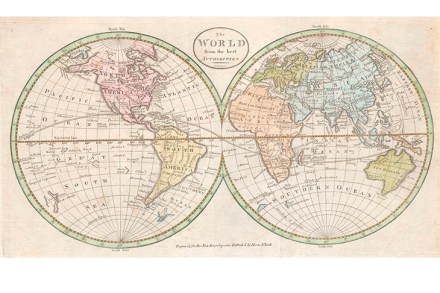
Thirty-two years ago, the young Nicholas Crane, who would go on to become one of England’s most esteemed television geographers, set out to woo a young woman by spiriting her off to the unfailingly romantic landscape of Chimborazo and Cotopaxi. The couple spent their high-altitude idyll walking the hills in hobnail boots, making river passage in dugout canoes and boarding a Quito-bound steam train through the Andes, run by the estimable Empresa de Ferrocariles Ecuatorianos. Their journey had its moments: at one stage both parties were to be found at 13,000 feet, crusted with ice and huddled overnight from the gales inside a pair of plastic trash bags; they then got themselves lost for a while among a wilderness of huge and very active volcanoes.

crane

How Hitler’s great gamble nearly paid off

Do we need another wrist-breaking book about Adolf Hitler, the Third Reich and World War Two? What is there left to say? To gain attention, any new study has to have a thesis: some fresh angle that previous writers have overlooked or played down. For Frank McDonough it is the insane impossibility that Germany could ever have won the struggle it launched against the combined powers of the US, USSR and the British Empire that was the Führer’s fatal flaw. McDonough is an academic specializing in Nazi Germany, and he writes clearly and readably, with just enough detail, on the huge canvas that he covers.

hitler

The cult of Sally Rooney

Sally Rooney is preparing to publish her new book, Beautiful World, Where Are You. But reports are emerging of near-hysterical behavior more suited to a (pre-cancellation) J.K. Rowling Harry Potter novel than an elegantly written work of literary fiction. Pre-publication proof copies of the novel have sold on eBay for hundreds of dollars, despite the US publisher Farrar, Straus and Giroux having explicitly asked recipients of the advanced reading copies not to resell them, and even a promotional canvas tote bag is realizing nearly $100. Meanwhile, when the book is published in the US and UK on September 7, 50 British retailers will be opening their doors early on the day, so eager purchasers can get their Rooney fix shortly after daybreak.

sally rooney

What Richard Scarry did all day

If you were lucky enough to know Richard Scarry, you might get a postcard from one of the world’s most successful and celebrated children’s book authors. If you were lucky enough to be Scarry’s friend, you might get a letter from Lowly Worm. If you were lucky enough to be a close friend and also a storyteller, you might get advice from the master storyteller himself. I was very lucky to be all three. I met Dick Scarry in 1959, when Dick bought a sailboat from my father in Westport, Connecticut. The two men had become friends based on a love of all things nautical. My father was an artist-illustrator and writer before he gave up the Madison Avenue rat race and opened a yacht brokerage and ship’s chandlery in Westport.

richard scarry
Fitzgerald

The odd couple: John Keats and F. Scott Fitzgerald

On a shard of paper, some time in the bleak 1930s, F. Scott Fitzgerald incorporated a favorite line from one of his favorite poets, John Keats, in a short verse of his own: 'Don’t you worry I surrender Days are long and life’s a bender Still I know that Tender is the Night.' Keats was a Romantic, perhaps the Romantic, with his lyric gift and tragically brief life. Fitzgerald loved the Romantic poets, and romance in the lower case, but was at the heart’s core a modernist, far more egoist than romantic, and quite hardboiled. The little quatrain above is rather like T.S. Eliot’s ‘jug jug’ in The Waste Land — homage of a sort, but also showing ironic distance, and no intention of writing like Keats.

A fatal clash of civilizations

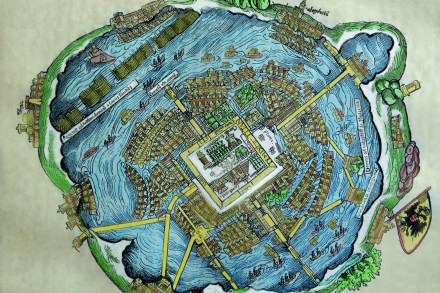
Many books claim to describe junctures that changed the world, but few examine ones as consequential as Conquistadores. Hailed by the Romantics as courageous explorers, the Spanish conquerors are increasingly seen as violent and rapacious exploiters. That, says Fernando Cervantes, oversimplifies the complexities of the early modern period. Cervantes, a Mexican historian, places the conquest of the Americas in Spain’s political context. In 1492, at great cost to the royal purse, Spain recovered Andalucía from the Moors. So when a charismatic Genoese navigator proposed to sail southwest in search of a new trade route to Asia, Ferdinand and Isabella approved. Columbus’s voyage was the first step to transforming a young nation into the greatest imperial power on Earth.

Conquistadores
steiner

A letter to George Steiner

Dear George, I met you first in 1965. You had just given a lecture at the Royal Society of Literature’s premises. You were outspoken in declaring the merits of reticence. Ardent for cool, you insisted that, when writing about sex, the explicit, licensed by the verdict in the Lady Chatterley trial, was the enemy of art. Never mind Sir Robert Walpole’s ‘Let us talk bawdy, then all may join in’: obscenity was one thing, literature another. The naming of parts, in your view, belonged only in the kind of book which Jean-Jacques Rousseau held to be read with one hand.