Books

Poor little rich girls

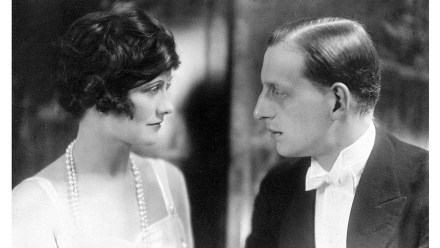
But why did she marry him? That is the question so often asked of heiresses who have, it would appear, the chance to marry anyone on whom their fancy alights yet so often make bad choices. And it’s the question reverberating through this funny, insightful and extremely modern look at an age-old problem by the British author Laura Thompson. “Why, when one had the power of near-limitless choice, would one choose so badly?” she asks. Taking this as her challenge, she examines dozens of (mostly ghastly) marriages over the last four centuries before concluding that it was a rare heiress who triumphed over her ordained fate as a victim, but it was indeed possible.

heiresses

The last conservative critic?

The death of Terry Teachout has put me in a funk. In 2019, we lost Clive James and John Simon. In 2020, we lost Roger Scruton and George Steiner. In 2021, Adam Zagajewski, Denis Donoghue, and Joan Didion all passed. Now we start 2022 with the sudden death of Terry Teachout. Most of these critics (though not Teachout) came of age in the late 1940s and early 1950s during one of the great periods of literary criticism in the last two hundred years. Consider some of the works that were published between 1947 and 1957. We have Cleanth Brooks’s The Well Wrought Urn in 1947 and F. R. Leavis’s The Great Tradition in 1948. Rene Wellek and Austin Warren published their influential Theory of Literature in 1949.

Reading during a pandemic

The experience of having Covid is, by now, well-documented. You spend seven to ten days in your room or house feeling ill and sorry for yourself. The world outside becomes a distant dream, and one of the few pleasures of spending twenty-four hours a day in bed is the time to read. This winter, the Omicron bell tolled for me — as it seemed to do for half of the global population. I was very lucky with the virus: after two days of unbelievable complaining and texting everyone I knew to tell them I was either like Beth in Little Women or a fevered Marianne in Sense and Sensibility, I recovered from my gothic heroine-like swoon and set about ploughing through novels. At the outset, there were endless articles and tweets about what one should read during a pandemic.

Writing and the conservative impulse

Radicals often think of writing primarily as an act of provocation — a bullet in the chest of the bourgeoisie. No doubt, writing can provoke, and one doesn’t need to be a radical to know this, as any reader of Tom Wolfe will tell you. But to provoke in writing, particularly literary writing, is at once to provoke and to conserve a provocation. To write is a tacit acknowledgment that something is worth keeping. Otherwise, one could simply shout. What else does writing conserve? All sorts of things, of course, but in literature, it conserves feelings, perceptions, the lives and actions of people or a way of life. It conserves ideas that one hopes won’t be burned to a crisp on the streets of Avignon.

Siri Hustvedt and saving the personal essay

Siri Hustvedt, Mothers, Fathers, and Others (Simon and Schuster, 304 pages) An essay by Honor Jones for The Atlantic went viral last month. It was entitled “How I demolished my life” and was a how-divorce-altered-me piece, something of a bildungsroman for the fortysomething woman. One paragraph in particular caused enormous offense on social media: How much of my life — I mean the architecture of my life, but also its essence, my soul, my mind — had I built around my husband? Who could I be if I wasn’t his wife? Maybe I would microdose. Maybe I would have sex with women. Maybe I would write a book. Many found the essay galling because it intellectualizes a decision that many married couples go through.

‘The Fifth Head of Cerberus’ at 50

Gene Wolfe’s sci-fi novella, The Fifth Head of Cerberus, was published fifty years ago this year. It is a minor masterpiece. Set in the town of Port-Mimizon on the imaginary planet of Saint Croix, the story follows a family who are descendants of French colonizers. A sister planet, Saint Anne, was also colonized by the French. The original inhabitants of both planets were shapeshifters, and one of the early questions of the novella is whether the current inhabitants of both planets are in fact French or shapeshifters who, according to one theory, killed the would-be colonizers and permanently took on their form. The story is narrated by one of two brothers, who live in a large house on 666 Saltimbanque.

Who killed Bambi?

It never occurred to me that one day, I would review Bambi (the novel). If it had, I would not have expected that its story and backstory would, among other surprises, include the Nazis, a communist, pornography and talking leaves. In fact, I didn’t even know that the film had been preceded by a novel. Felix Salten wrote Bambi: Eine Lebensgeschichte aus dem Walde in Vienna, where it appeared as a newspaper serial in 1922 before being published in book form in Germany the following year. It debuted in America in 1928 as Bambi, a Life in the Woods, translated by none other than Whittaker Chambers, already a communist, but not yet in the Soviet agent phase of his astoundingly protean career.

bambi
Ulysses

One hundred years of Ulysses

A few years ago, the private school where I teach asked me to offer an evening class on James Joyce’s Ulysses to adults. The idea was to remind alumni, parents and other community members what it feels like to be in one of our enriching classrooms. For over a decade, my Ulysses senior elective had been a major feature of our course catalogue; now, a few adults were about to pop the hood on this infamous tank of a book. As course registrations began to trickle in, I recognized the surnames of current and former students. Then an administrator joined the course, and I had a flutter of nerves at the realization that one of my bosses was actually going to read Ulysses and encounter the disreputable content that lurks within. My cover was blown.

literary

On literary cross-dressing

When Carmen Mola won Spain’s Planeta literary prize for her crime thriller, The Beast, it was widely assumed that she was a female professor with a hardboiled literary style. Think again, mis amigas. Mola was the pseudonymous literary creation of three men: Jorge Diaz, Antonio Mercero and Agustin Martinez. The three scriptwriters smirkingly accepted the million-euro prize at a ceremony in October, and the literary world, home of uppity puritans and shrill wokesters, immediately found itself enmeshed in a scandal highlighting issues relating to authenticity and authorial freedom.

de mans

Style and substance

In Ravelstein, Saul Bellow’s thinly disguised account of the final years of the University of Chicago professor Allan Bloom, the narrator Chick and his close friend Abe Ravelstein go on a shopping spree in Paris sometime in the 1990s. For all their highfalutin philosophical talk about Athens versus Jerusalem and the like, Bellow makes it clear that there is a Dionysian as well as Apollonian cast to the bond between Chick and Abe. After departing the Hôtel de Crillon, their first stop is Lanvin. There, Abe is smitten by a beautiful flannel jacket retailing for $4,500. He buys it.

substack

Stacking up

"It feels almost like there is money in writing again.” So the historian and New York Times bestselling author Dan Jones tells me. Is he referring to increased book sales, or lucrative adaptation deals? Not this time. Instead, he’s discussing Substack, which launched in 2017. It has now become the platform of choice for writers to develop their careers on their own terms, without having to give substantial percentages away to agents, publishers and lawyers. For years, authors have felt that they have been little more than galley slaves, flogging themselves and their wares for the profit of multinational corporations. Now, finally, they have been given an opportunity to take back control of their own careers and destinies. The format is a simple one.

Joan Didion got inside all of us

When asked what they knew about Joan Didion, a not insignificant number of people might mention her famous essay "Slouching Towards Bethlehem." It is the eponymous essay of Didion’s 1968 collection, the first non-fiction collection of her career. The essay ends with the oft-repeated description of Susan, a five-year-old in the Haight-Ashbury district of San Francisco. She wants a bicycle for Christmas, likes ice cream, Coca-Cola, and the beach — and gets high on acid. Didion describes the domestic setup, and her own discomfort: she "falter[s] at the key words" when asking her if she has other friends on drugs. Didion immortalized the scene of Sixties freedom gone wrong; there is no utopia here. Other Didion fans might be drawn to her essay "Goodbye to All That.

How black was the Obama presidency?

Barack Obama exited the presidency far blacker than he entered it. That’s a central theme of historian Claude A. Clegg III’s splendid and wide-ranging “interpretive history” of how Obama’s White House years “were witnessed, experienced, and interpreted by African-Americans.” That framing reflects a book that is self-consciously aimed at black readers, but it also illuminates an important truth about Obama, one that this reviewer realized after spending more than eight hours talking with him during three “off-the-record” visits to the Oval Office during the last nine months of his presidency. Clegg is too good a historian to be an uncritical fanboy like the many journalists who forfeited their professionalism during the Obama years.

obama

The undying Christopher Hitchens

Today marks ten years since the death of the writer Christopher Hitchens, one of the most distinctive voices in twentieth and early twenty-first century journalism. He probably would have been amused by the way virtually every sector of political and social thought has subsequently claimed him as their own in his posthumous form. Whether you’re a right-wing demagogue, a left-wing woke activist or a hand-writing neocon, you can surely find the perfect Hitchens quote to suit your purposes. Hitchens died far too young at 62, but then he had already lived the kind of full-throated bacchanal existence that his peers could only look upon in envy. He wrote over thirty books, which alternated between the profound and the provocative, and millions of words of journalism.

hitchens

Saving Henry James’s Christmas ghost story from the critics

If you have a graduate degree in English, I’ll bet you my neglected copy of Jacques Derrida’s Dissemination, you’ve read Henry James’s The Turn of the Screw. It’s long been a favorite of critics because we don’t really know what happens in the end — everyone loves a puzzle — but the postmodern critics love it big time. You can superimpose any half-baked theory with impunity because no one will call you on it. In 1995, Wayne Booth wrote that he found more than 500 books or articles on the novella before he got tired of adding them up. It’s easily double that now. That’s not to say it’s a bad story. Quite the opposite. I think it’s one of James’s best. It is also a good example of how James has been misunderstood.

ghost

How a small publisher survived the digital age

Godine at Fifty: A Retrospective of Five Decades in the Life of an Independent Publisher, by David R. Godine, David R. Godine, 2021 In The Truth about Publishing, Sir Stanley Unwin writes: “It is easy to become a publisher, but difficult to remain one.” David R. Godine has accomplished the difficult task of remaining one for fifty years, and in the beautifully designed and set Godine at Fifty — would we expect any less from a Godine book? — he tells the story of the company’s beginning and survival and of each book he has published over the years, chock-full of reproductions of the company’s covers, woodcuts, and illustrations. This is a book about books for book lovers. Raised in Boston, David R.

Books of the Year 2021

Matt Labash I read a lot of books. Probably well over sixty in the last year. I’m not saying that in some little-kid braggadocious way. After all, I’m fifty-one years old. Though some have said I read on a fifty-two-year-old level. In addition to the couple of books I have open at any time, a good deal of my book consumption comes via audio: I have an audiobook going in my car or on my MP3 player at all times. And at my advanced age, if I don’t dog-ear and underline a book, it’s lost down the memory hole forever, no matter how much I liked it. But one I do remember liking so much that it bears mentioning, is John Green’s The Anthropocene Reviewed: Essays on a Human-Centered Planet (Penguin, $28).

books
Solzhenitsyn

Aleksandr Solzhenitsyn’s masterpiece is finally appearing

In the mid-1970s, exiled from the Soviet Union for exposing its vast crimes against humanity, and having won the Nobel Prize in Literature for that endeavor, Aleksandr Solzhenitsyn turned his back on the lionization that awaited him in New York and other cultural capitals of the West and instead settled with his family in the woods of Vermont. Avoiding visitors for the better part of the next two decades, he churned out half a dozen or so books, averaging roughly 750 pages each, that together tell the story of the Russian Revolution and its antecedents. This act of sheer energy, self-discipline and renunciation of the conventional worldly pleasures bestowed by the literary elite was in the spirit of Russia’s own eastern monasticism.

road traveled meredith

The Road Not Traveled

Meredith Swann is driving in her new car under the M40 flyover, checking on her GPS system to see if she’s following the flowing arrows correctly. She has switched off the woman’s voice — “Turn left in 200 yards” — because it reminds her uncannily of her mother, all calm, quiet advice with a subtext of disapproval. She turns and turns again. Now she is on a road of towering glass office blocks. Is she lost? No, there it is — Sainsbury’s Homebase. She parks, steps out of her car and pulls down her T-shirt to cover the neat dome of her pregnant belly. The car magically locks itself as she walks away, its lights giving her a knowing wink of acknowledgment. In the vast Homebase she is daunted and diminished by the size of the place.