Arts Reviews

The good, bad and ugly in arts and exhbitions

Stands alongside Under Milk Wood: Shedding a Skin, at Soho Theatre, reviewed

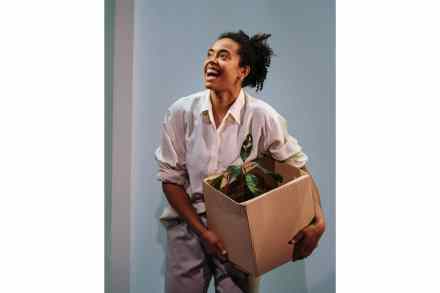
Shedding a Skin opens with an office nightmare. Myah is a mixed-race employee in a predominantly white firm who gets summoned to the boss’s room for a group photo. The only other workers present are black and they greet each other with the ‘black nod’ as she calls it. And the group includes a black cleaner dressed in a suit to ‘bump up the numbers’. She tells the boss that this attempt to promote racial harmony simply instils mistrust and division but she gets sacked for rebelling against the firm’s ‘fakery’. Next, her layabout boyfriend, a musician who lives on a barge, gives her the elbow. Now she’s homeless, jobless
Fabulously boring: Weather Station’s How Is It That I Should Look at the Stars reviewed

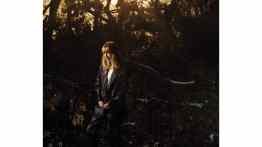
Grade: C– Anyone remember that TV advert for Canada from the 1980s – a succession of colourful images, including a delicious pink donut, downtown T.O. and soaring mountain peaks, displaying the beauty, vitality and vibrancy of the country? It made me want to visit. Wild horses wouldn’t drag me there now – that glorious, vast expanse now the sine qua non of smugness and condescension. It has become a terminally precious country and we should withdraw our ambassador, or invade (that being the fashion). Weather Station, led by the fabulously irritating Tamara Lindeman, were once okayish indie folkies who have now become pretentious, half-assed purveyors of somnambulant fake jazz, like

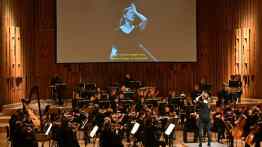
Astonishing, if unnecessary, grandstanding: Barbara Hannigan’s La voix humaine reviewed

I think it was when she leaned forward and balanced on one leg that Barbara Hannigan jumped the shark. It wasn’t just a question of physical agility, although that was impressive enough. Hannigan performed her on-the-spot acrobatics while singing; the results were projected on to a big screen by three remote-controlled cameras, which zoomed in on her eyes, merged blurry images of her face and occasionally froze, meaningfully, on a particularly arresting posture. She did all this at the same time as conducting the London Symphony Orchestra in Poulenc’s one-woman opera La voix humaine, though that wasn’t really what this was about; at least, not by the time she was

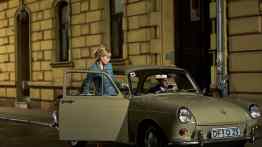
What’ll happen next – or what’s happened so far – is anybody’s guess: The Ipcress File reviewed

ITV’s new version of The Ipcress File began with a close-up of a pair of black-rimmed glasses just like those worn by Michael Caine in the 1965 film. They were then put on by their owner (Joe Cole), thus transforming him into Harry Palmer – but also neatly establishing the kind of show we were in for. Sunday’s first episode did a fine job of setting up an impeccably twisty (i.e. confusing) Cold War plot. It spared no effort in its quest to show us that the Britain of 1963 was on the Brink of Social Change. And yet, neither of these things really got in the way of its

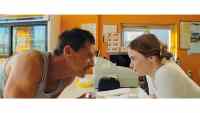
A compelling, if flawed, example of the new American noir: Red Rocket reviewed

Mikey (Simon Rex) first appears striding down a road in utterly wrecked jeans and shirt. He is carrying nothing and seems to be going nowhere until he walks up the pathway to the house of the wife he abandoned and her venomously disapproving, chain-smoking mother. Sean Baker’s Red Rocket is a movie set in Texas City in Galveston County. It’s basically an oil town and almost all the action in this film takes place on the perimeter of a vast refinery. Everything is very grainy, especially the dark interiors. This is because the film is shot on 16mm film, a medium which, on the big screen, produces a lively, speckled

Renaissance radical: Carlo Crivelli – Shadows on the Sky at Ikon Gallery reviewed

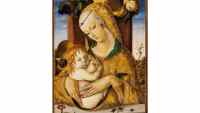
‘Camp,’ wrote Susan Sontag, ‘is the paintings of Carlo Crivelli, with their real jewels and trompe-l’oeil insects and cracks in the masonry.’ She didn’t even mention the renaissance painter’s curious cucumber fetish. Nor the unwittingly comedic homoeroticism of his portrait of Saint Roch, one stocking rolled down coquettishly to reveal a decorous inner-thigh wound. Nor the extraordinarily ugly baby Jesus clutching an apple as big as his head while his mother, understandably, averts her eyes. ‘Camp is playful, anti-serious,’ argued Sontag. Sontag wasn’t alone in not taking Crivelli (c.1430–95) seriously. Giorgio Vasari, who scorned the illusionism that some have taken to be Crivelli’s USP, erased him from his art history.

Film’s most unforgettable scene

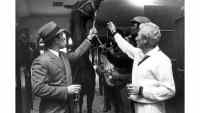
The actor never knew they would use a real horse’s head. This was May 1971 and John Marley was preparing to perform in the most infamous scene in The Godfather, playing the corrupt movie producer who wakes up to find a horse’s head in his bed. Reportedly, Marley assumed this would just be a plastic prop. But the director, Francis Ford Coppola, had other ideas. In a note to himself, Coppola observed: ‘If the audience does not jump out of their seats on this one, you have failed.’ So he quietly sent an assistant to a dog-food factory to pick up a genuine head, newly hewn from the shoulders of

Beautiful and revealing: The Three Pietàs of Michelangelo, at the Museo dell’Opera del Duomo, Florence, reviewed

The room is immersed in semi-darkness. Light filters down from above, glistening on polished marble as if it were flesh. This is the installation for Le Tre Pietà, a remarkable micro-exhibition that has just opened at the Museo dell’Opera del Duomo in Florence. It is low in quantity, containing just three works. But stratospherically high in quality, since it comprises Michelangelo’s three versions of the Pietà – that is, the Madonna mourning the dead Christ. He carved these over almost 70 years: one in his early twenties, the next in his seventies, the last in his eighties. Admittedly, the first and the last are present only in a rather old-fashioned

Saudi Arabia’s burgeoning art scene

A little more than a century ago, a charismatic British army captain called T.E. Lawrence and fearsome Bedouin warriors swept through the sublime canyons around the desert city of Al-’Ula where I stroll today. They blew up the Hejaz railway, built to transport hajjis from Damascus towards Mecca but repurposed during the first world war by Turks to ferry munitions and troops. Such was the 1916-18 Arab Revolt that threw off Arabia’s Ottoman yoke. Today a very different kind of Arab uprising is sweeping through Al-’Ula. The canyons resonate not with bombs but with art. Dubai-based Zeinab Alhashemi has constructed boulders made from camel hides for a piece called ‘Camouflage

The genius of Iannis Xenakis

This year is the centenary of the birth of Iannis Xenakis, the Greek composer-architect who called himself an ancient Greek stuck in the contemporary world. His instrumental music at times suggests an alien species trying to communicate with us through our musical instruments, his electronic music a distressed animal on the receiving end of amateur dentistry. For his part, Xenakis said that music ‘must aim… towards a total exaltation in which the individual mingles, losing his consciousness in a truth immediate, rare, enormous and perfect’. Of all the post-war European firebrands, Xenakis remains the most influential today. ‘Xenakis opened many fields of inquiry that are still vital, undiscovered, and brimming

Too neat but it has hooks aplenty: Avril Lavigne’s Love Sux reviewed

Grade: B Yay, life just gets better and better. World War Three and now this. More petulant popcorn pre-school punk in which Avril spells words stupidly and tells ‘bois’ how much she weally, weally hates them but acksherly weally loves them. This was momentarily captivating on the magnificently catty glam-rock thrash of ‘Girlfriend’ 15 years ago. Trouble is, Avril is now 37, older than the Prime Minister of Finland – and there’s something a little unbecoming in a mature woman still hanging around the school bike sheds and shrieking at those bois: ‘When I think of you I wanna throw up!’ Shouldn’t she be writing about pre-nups, the onset of

Some of the best social commentary around: Celebrity Book Club with Steven & Lily reviewed

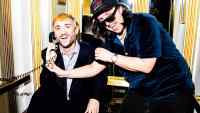
When I was ten years old I had a babysitter who was a beautiful graduate student at an Ivy League university who loved to read celebrity gossip tabloids to ‘turn her brain off’. After I’d finished my homework, she and I would watch the only reality TV show I’ve ever loved, The Hills, and read magazines about Brangelina. This all ended when I was with my mom at the grocery store and I tried to buy a tabloid, and my mother, a Woman of Taste, asked what on earth I was doing. I said, copying my babysitter, ‘it’s to turn my brain off’, and my mom flipped out and made

Enthralling and unusual – even if you don’t care about Kanye: Netflix’s Jeen-yuhs: A Kanye Trilogy reviewed

The most disappointing pop performance I’ve ever seen – and in the course of my 15-odd years as a music critic I saw an awful lot – was Kanye West at Glastonbury in 2015. Perhaps he was making some kind of ironic statement on the nature of celebrity and fan expectation: blinding lights all focused on himself; no attempts to engage with the crowd; relentless, mechanical rapping but with most of the amusing samples and catchy hooks removed, the better to punish us all by ordeal with loud, righteous verbiage. But I still admire this irritating genius hugely because besides making often very addictive albums he refuses to play the

Humourless and stale: The Batman reviewed

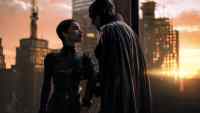
The latest Batman film, The Batman, may be a reboot, or even a reboot of a rebooted reboot that’s been rebooted. Hard to tell any more. Tracey Ullman once joked that her mother had served leftovers for so long that no one could recall the original dish and this feels like that. What was the original dish? Was it Tim Burton’s version from 1989 starring Michael Keaton? I don’t know. All I know is that you hope each time for something fresh and surprising and entertaining but every film since has simply attempted to out-film noir the last. We can go darker still! Bruce Wayne, more traumatised by his childhood

Swings between violence and comedy: Pina Bausch’s Kontakthof, at Sadler’s Wells, reviewed

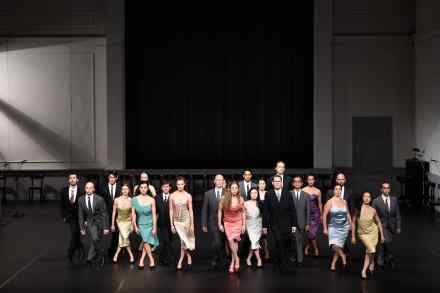
When you take in the richness of a Pina Bausch production — the redolent staging, the eloquent, eccentric twists of the choreography — it’s everything and it’s something. Kontakthof, created in 1978, sounds the bell of hopeful passes and freighted expectations, centuries of hearts on the line, desperate to elude solitude. A keystone of her back catalogue, the piece illuminates the convoluted, often rotten thrusts of human desire, with special emphasis on women’s vulnerability in the dating game. A gramophone pipes out vintage love songs as the ensemble to and fro across a dance hall in Bausch’s standard-issue suits and gowns. The title — a reference to the area of

A beautiful, frustrating bore: Florian Zeller’s The Forest, at Hampstead Theatre, reviewed

The Forest is the latest thriller from the French dramatist Florian Zeller, translated by Oscar winner Christopher Hampton. It’s a well-worn yarn of adultery, betrayal and vengeance set among the yuppie classes. The action is located in France but the actors speak in Home Counties accents. (In theory, at least. Some are better at imitating BBC newsreaders than others.) Zeller makes his story deliberately arty and obscure. Man 1, also known as Pierre, is a wealthy doctor whose wife, or ‘The Wife’, is played by Gina McKee. Pierre has a hysterical girlfriend, known as ‘The Girlfriend’, who threatens to reveal their affair and destroy Pierre’s marriage. The Girlfriend dies bloodily

If you like First Dates, you’ll love This is Dating

The tagline of This is Dating, a new podcast from across the pond, is ‘Come for the cringe, stay for the connection.’ This sums up the listening experience pretty well. If the prospect of eavesdropping on a series of strangers’ first dates sends a shiver down your spine (some of us have endured enough disastrous dates of our own), give it ten minutes and cupid’s arrow should slowly begin to sink in. The concept is similar to that of First Dates, the reality TV show in which lonely hearts pair up for dinner and judgment while a sexy French maitre d’ looks on, pitying the lack of social skills on

For all its absurdity, it delivers the goods: BBC2’s Louis Theroux’s Forbidden America reviewed

In the latest episode of Louis Theroux’s Forbidden America, Louis asked a rapper called Broke Baby if ‘it’s important to keep it real’. ‘You have to play your role,’ replied Broke by way of apparent agreement. Given how stoned he was, this neat paradox — that you keep it real by pretending to — mightn’t have been wholly intended. Either way, however, it was hard not to apply it to Louis himself. More than 20 years into his TV career, does anybody know for sure whether his familiar schtick is genuine or faked? Certainly not, I’d suggest, Louis — whose elaborate stage-English courtesy, wide-eyed bemusement and spectacular naivety are now