Arts Reviews

The good, bad and ugly in arts and exhbitions

Vital Morgan

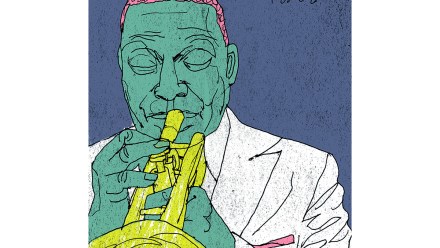
The jazz world has seen more than its share of tragic deaths, whether it was the trumpeter Clifford Brown perishing in a car crash at night on the Pennsylvania Turnpike at the age of 25 or saxophonist John Coltrane succumbing to liver cancer at 40. But perhaps there is no more confounding early demise than that of the bravura trumpeter Lee Morgan. Morgan, who played with the likes of Miles Davis, Dizzy Gillespie and Art Blakey as a teenager, was known for his swagger, which he liked to call ‘expoobidence’, (which he deployed as the title for an album for Vee-Jay records in 1960 called Expoobident). It all came to a swift terminus in February 1972 after his common-law wife Helen, a tough cookie if there ever was one, pulled out a .

morgan

Eternal Eastwood

No other actor epitomizes traditional masculinity and classic cool quite like Clint Eastwood. He long ago ceased being human and transformed into the American Man. When you watch an Eastwood movie, your understanding of Clint as the ultimate symbol of a bygone America is so potent that an otherwise mediocre movie like Gran Torino feels greater than the sum of its parts because of his mere presence. This is what an American man is supposed to look and sound like, you think, as Clint snarls and puts up his dukes. These young whippersnappers, they’re no good now, you hear. Which is to say that when you watch one of his films, you’re not watching the actor become a different character, but rather hoping to see ‘Clint Eastwood’.

eastwood

The spy’s the limit

No Time to Die is Daniel Craig’s last mission as James Bond. Clocking in at well over 180 minutes, it might more accurately be called No Time to Pee. The epic length and general air of slothful despair derive from the picture’s tortured development. Mess and confusion are the inevitable product of two directors, platoons of writers, a tangled residue of multiple plotlines and the star’s blatant misery at being once again vacuum-packed into a tuxedo one size too small. ‘We did our best,’ Daniel Craig has said repeatedly in promotional interviews. M wouldn’t accept that, so why should we? Bond begins No Time to Die with plenty of time to die. He has retired with his heart broken and the rest of him in little better shape.

no time to die bond

Wanted this Halloween: terror films, not horror

Yet another Halloween film was released last weekend, this time illogically entitled Halloween Kills. By now, the saga is about as well-known as the Bible, and considerably less enjoyable. There is an ill-intentioned madman on the loose named Michael Myers, who wears a faceless white mask. He enjoys slicing up various members of the supporting cast unfortunate enough to have agents who did not negotiate them multi-picture deals. Opposing Myers, primus inter pares, is the character Laurie Strode, who has on some occasions been portrayed as his understandably resentful sister, and on other occasions as merely a resourceful woman who manages to get the drop on him before, Lazarus-like, he rises again in time for the next installment.

halloween

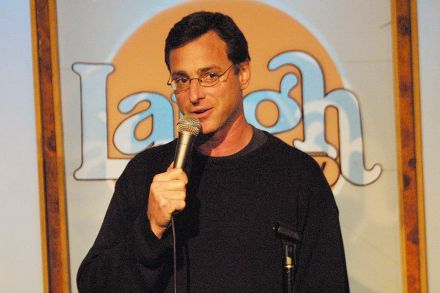
Dave Chappelle’s last special is no masterpiece

Dave Chappelle is a member of a dying breed — a remnant of an age that has been drifting into history. That’s right. Dave Chappelle is a comedian who does not have a podcast. I do not begrudge comedians their podcasts. (After all, I am a writer with a Substack.) As a comedian who has not blessed us with his every thought and memory, though, Chappelle has maintained his mystique. His specials are events, and his last special, The Closer, is doubly so. Critics and reporters have been focusing on its allegedly offensive jokes at the expense of trans people. I would like to shove these subjects to one side for a moment and ask the most vital questions. Is it funny? Yes. Is it very funny? No. Chappelle is a tremendous performer.

dave chappelle

Succession is the wittiest, darkest show on TV

The most eagerly anticipated television series of 2021 has finally returned. There are no dragons, or homicidal drug lords, or anachronistically liberal Georgian aristocrats in sight. Instead, the protagonists are a bunch of squabbling, backstabbing multi-millionaires so obsessed with obtaining advantage over one another that the casual cruelties they inflict on the 'little people' around them pass unnoticed. Welcome to the third season of Succession, the wittiest, most vicious show in recent memory. There are numerous reasons for its success.

succession

The Rolling Stones cancel themselves

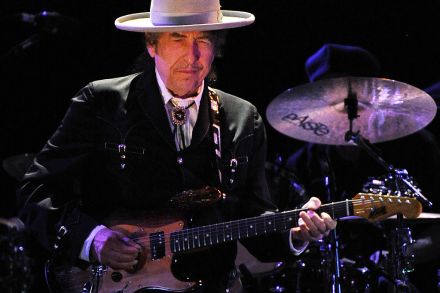
First, the good news. Despite the recent death of drummer Charlie Watts, the Rolling Stones are back among us, playing a series of sold-out US stadium shows between now and Thanksgiving. It’s not just that the three surviving band members, now all in their seventies, refuse to grow up. They seem actually to live in a time warp: in an era when most rock stars dress like they work at UPS and offer a relentless diet of screwed-up nihilism and phony salves, the Stones are still out there in their skimpy, Day-Glo T-shirts and leather pants, serving up great meat-and-potato rock songs garnished with lyrics about sex and drugs, and generally carrying on like it’s 1967 all over again. Now the bad news.

rolling stones

Squid Game’s bloody attack on inequality and dehumanization

Netflix’s biggest hits to date have been solidly middlebrow fare with a contemporary twist: Bridgerton, The Crown, Lupin. It’s surprising, then, that its all-conquering new success is an ultraviolent South Korean thriller laced with social satire. Squid Game isn’t just the Battle Royale/Hunger Games rip-off that its premise suggests. Instead, it combines cartoonish brutality with provocative digs at a society in which the acquisition of status has become all-important. This is served up in an addictive, cliffhanging format, which allows the audience to gasp in surprise at each new twist, even as the net tightens inexorably on its hapless protagonists.

squid game

The Sting paradox

As a fitfully employed, freelance hack, there are few jobs I consider beneath me. I’ve peered anxiously over the boundary wall of Eric Clapton’s English estate to the approaching noise of guard dogs to see if Clapton might care to supply an impromptu quote or two in lieu of the formal interview his management had aggressively denied me. I’ve been informed by a source close to Roman Polanski that he considered me a ‘nosy fellow’ — enough, perhaps, to give pause to anyone who happens to recall the director using that same phrase to Jack Nicholson immediately prior to inserting his flick-knife in Nicholson’s left nostril in a scene from Chinatown.

sting

The Crown will long reign o’er the Emmys

The Emmys last night produced several controversies, as usual. The only person of color to win an acting award was Courtney B. Vance, for Lovecraft County, and there were complaints about predictability and a lack of daring. The dominance of Netflix and other streaming services suggests that the once-mighty HBO and other premium cable providers are now fighting for relevance and survival (although we can expect White Lotus to put up a strong showing next year). But the biggest story came in the regal dominance of The Crown, which swept the field with 11 awards. The fourth season of The Crown attracted both plaudits and controversy.

crown

Shakespeare is getting trigger warnings

Hark, groundlings: Shakespeare, after decades of being found to be Problematic, is now being reclaimed as the wokemeister-in-chief. New York’s Shakespeare in the Park company returned to Central Park this summer with a staging of The Merry Wives of Windsor, adapted by the Ghanaian-American playwright Jocelyn Bioh. The action, traditionally located in the white-supremacist purlieus of 17th-century Windsor, is now transposed to 116th Street in Harlem. The cast is mostly black, the script has been updated to contain references to Black Lives Matter and the Bronx, and Jacob Ming-Trent portrays the portly knight-about-town Falstaff as a wannabe gangsta. The critics love the production.

shakespeare
lo-fi

The triumph of bedroom pop

I must have been about 16 when I got my first Portastudio. The compact home recording unit had first been introduced by Japanese electronics firm Teac in 1979, offering unprecedented multitrack dubbing to the bed-bound amateur musician. For a little less than $1,000, you could record four separate tracks of instrumentation — as much as the Beatles had when making Sgt. Pepper — on an ordinary cassette tape. By the time I got my teenage hands on a four-track machine of my own, that price had come down by an order of magnitude. It was a chunky little unit in pigeon blue with just two microphone sockets and a small handful of mixing dials for volume control and stereo panning.

Norm Macdonald’s comedic danger

Norm Macdonald claimed to have coined the phrase ‘fake news’ two decades before Donald Trump brought it into the political lexicon. That’s just one of dozens of examples of how the late Canadian-born comic left a mark on American culture. As host of Saturday Night Live’s long-running ‘Weekend Update’ segment during the mid-1990s, Macdonald often used the term when welcoming audiences. ‘I’m Norm Macdonald,’ he would begin, ‘and now, the fake news.’ What followed, however, almost always jumped the rails of what could reasonably be described as news satire.

norm macdonald

Flagging energy

Paintings so nice you’ll see them twice. That’s the gambit of Jasper Johns: Mind/Mirror, the gargantuan ‘simultaneous retrospective’ that’s currently split between the Philadelphia Museum of Art and New York’s Whitney Museum of American Art. OK, so the concurrent presentations of painting and sculpture by the neo-Dada, quasi-proto-Pop artist aren’t exactly duplicates. The museums promise a sort of imperfect symmetry: ‘each half of the exhibition will act as a reflection of the other, inviting viewers to look closely to discover the themes, methods, and coded visual language that echo across the two venues’.

American Dream
another round

Time for Another Round

Years ago, a friend of mine turned to me at someone’s birthday party and called beer ‘the universal panacea’. Beyond a physical intolerance to most alcohol, I can hardly tolerate alcoholics and their often appalling behavior. Anything that valorizes drinking alcohol, a drug whose societal acceptance is wildly at odds with its negative effects and addictive nature, is a hard sell for me. Unless you’re a member of the Jackass ensemble — that’s appointment viewing. If you’re getting bitten by scorpions and jumping off buildings for fun, a beer bong up the rear end is a nice surprise, at least in the world of cinema.

Titian meets Isabella Stewart Gardner

In 1576 Venice was gripped by plague. The island of the Lazzaretto Vecchio, on which the afflicted were crammed three to a bed, was compared to hell itself. In the midst of this horror Tiziano Vecellio, the greatest painter in Europe, died — apparently of something else. He was in his eighties and working, it seems, almost to the end. Titian: Women, Myth & Power, now on view at Boston’s Isabella Stewart Gardner Museum, contains several of the greatest masterpieces of his old age — and also of European art. It comprised just six canvases (a seventh was unable to travel to Boston), all done for Philip II of Spain — a villain of English history, the man who launched the Armada but, as far as Titian was concerned, his most discerning patron.

titian

Stillwater and the rise of the blue-collar American in Hollywood

Blue-collar folks are having a moment in Hollywood. Multiple directors and actors have dropped the usual disdain we see on television and the silver screen for the working class, instead unpretentiously telling the stories of down-on-their-luck rural Americans. Nomadland, which won Best Picture at the 93rd Academy Awards in April, followed a woman who started living out of a van and working seasonal jobs after losing her job due to the closure of a local construction materials plant. Kate Winslet adopted a Yinzer accent in HBO’s Mare of Easttown, playing a small-town Pennsylvania detective that vapes and drinks her way through family trauma and a grisly murder case.

stillwater

Britain: please take James Corden back

There are many things that Britain has given America for which the United States will forever be grateful. The English language; representative democracy; irony; Monty Python; Downton Abbey. And there are other things which have been regarded with considerably less indulgence. I am unsure that there are many true-born Americans who weep into their breakfast cereal and wish that Piers Morgan could return to assure them that they are, essentially, second-class citizens. But to their number must be added another name. James Corden, it is time to pack your bags, say farewell to your Beverly Hills mansion, and return to Primrose Hill. Your days as an American entertainer are — must be — behind you. I bear no personal animosity towards Corden.

james corden

Could the Chinese gaming clampdown backfire?

When the Soviet Union still existed, visitors to Eastern Europe would smuggle illegal books and magazines to visitors. As the Chinese government announces that young people are to be banned from playing video games for more than three hours a week, it is tempting to imagine people sneaking copies of Call of Duty and Grand Theft Auto into the PRC — perhaps inside DVD cases of lavish propaganda films such as The Founding of a Republic. OK, I’m aging myself here. I know most gamers now play online. I also know the Chinese are big fans. More than half the population enjoy gaming and China has the world’s most substantial market for games.

gaming

An ode to Charlie Watts, the politest man in rock music

There can be few terms in the English language more debased than ‘rock star’. Nowadays, it seems, the press makes a fetish of every halfway plausible such chancer to appear over the horizon, regardless of whether their art will endure, or their generally slim recorded oeuvre instead be among the detritus one eventually takes to the nearest Goodwill store. But the Rolling Stones drummer Charlie Watts, who died today aged 80, truly merits a place in the pop pantheon. He wasn’t just an original among the standard tub-thumpers of his profession. He was unique. Back in 1963 the Stones’s first manager, Eric Easton, fastened on the essential thing about Watts, which was that he was ‘totally unpretentious’ and ‘perfect at his job.

Charlie Watts of The Rolling Stones performs live at Adelaide Oval on October 25, 2014 (Getty Images)