Arts Reviews

The good, bad and ugly in arts and exhbitions

Fatty Arbuckle’s fall

Roscoe ‘Fatty’ Arbuckle (1887-1933) never won an Oscar or saw his name emblazoned on the Hollywood Walk of Fame, but he should be remembered as a movie pioneer. Despite his considerable physical size, he was a remarkably versatile and agile actor, and his best films are weirdly droll as much as slapstick funny. He predated both Charlie Chaplin and Buster Keaton as a master of physical comedy played with a straight face. Arbuckle was also an accidental pioneer of cancel culture. Exactly a hundred years ago, he found himself sitting in a cell on ‘felony row’ at the downtown San Francisco jail, held without bail for the alleged rape and subsequent death of a 26-year-old actress named Virginia Rappe.

fatty arbuckle
art

The art of politics: what ministers hang on their walls

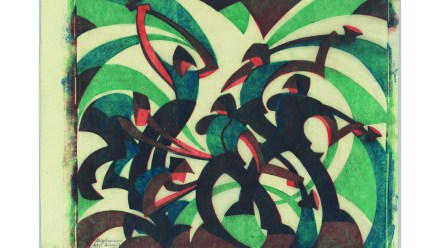
If I am ever appointed to one of Britain’s Great Offices of State — stranger things have happened to Spectator hacks — the first thing I’d do is furnish my office. A raid on the Government Art Collection is a perk of being a minister, and better than the car and the driver. A few Hogarth engravings, a set of David Jones’s ‘Ancient Mariner’ etchings, Cedric Morris’s ‘Irises and Tulips’, Edward Bawden’s ‘The Coal Exchange’...I’d have liked to nab Winifred Nicholson’s ‘Flower Piece’, if only Carrie, the new Mrs Boris, hadn’t got there first. A Freedom of Information request from The Spectator has lifted the little red velvet curtains on which works of art ministers have got from the vaults.

Perry Mason was America’s Sherlock Holmes

I was well into my thirties when my parents acquired a television set, for no good reason that I could discern after they’d gone so many years without one without obvious damage to their health or intellects. Growing up in the Fifties and Sixties, my sister and I were permitted to watch two television shows while visiting with relatives. One was Topper. The other was Perry Mason, which they occasionally joined us for: a small family grouping that was the closest thing the Williamsons ever came to resembling a painting by Norman Rockwell. Over the past year and a half, I have been re-watching episodes of the original show starring Raymond Burr as Mason, Barbara Hale as Della Street, William Hopper as Paul Drake, Ray Collins as Lieutenant Tragg and William Talman as Hamilton Burger.

mason
all light, everywhere

Somebody’s watching me

America has an abundance of daring documentarians: Frederick Wiseman, Errol Morris, Alex Gibney, Laura Poitras, Morgan Neville, Matt Wolf, Morgan Spurlock and Michael Moore, off the top of my head. Not a diverse list demographically, but you can tell their movies apart. Some are better than others, some (Poitras and Neville) have oily ethics, but others still have made some of the most iconic American films of this century (Spurlock’s Super Size Me is in the lexicon even if nothing else he’s done is, and say what you will about Moore and his films, his impact on American pop-political culture cannot be dismissed entirely).

Black Widow and the bungling of female superhero movies

C’mon, guys: you know how Natasha Romanoff feels about having red in her ledger. Marvel's long-awaited Black Widow movie finally arrived in theaters in July. But the excitement of the release has been sullied by bad blood — and bad debts. Scarlett Johansson, who gave 10 years of her life to the Marvel Cinematic Universe and the Avengers saga before getting a film of her own, sued Disney for breach of contract after they released Black Widow in the ‘Premier Access’ category on the Disney+ streaming service on the same day it hit theaters. According to Johansson and her reps, her Black Widow contract guaranteed an exclusive theatrical release.

black widow

Hollywood’s vacuous moral turn

On today's market, we find a whole series of products deprived of their malignant property: coffee without caffeine, cream without fat, beer without alcohol... The list goes on: virtual sex as sex without sex, the art of expert administration as politics without politics, up to today’s tolerant liberal multiculturalism as an experience of 'Other' deprived of its disturbing Otherness. We should add to this series another key figure from our cultural space: a decaffeinated protester, a protester who says all the right things, but somehow deprives them of their critical edge.

black widow hollywood

I remember Halston

'Imperious’ comes to mind in describing the great American fashion designer Halston. ‘Perverse’ does too; ‘grand’, ‘haughty’, ‘intimidating’ also fit. But, once you got to know him, it was apparent that he was a sweet and clever boy from the corn fields of the Midwest putting on a show for the big city sophisticates he sought to impress — and impress them he did. I met Halston in the summer of 1971 when I was brought to a party at the fashion illustrator Joe Eula’s by Andy Warhol, who had made me editor of his new magazine Interview the previous fall at age 22. Halston terrified me.

halston
death venice

Yet more death in Venice

The inspiration for the object of Aschenbach’s infatuation in Thomas Mann’s Death in Venice was acknowledged by the author some years after publication, and the subject of a biography a century later (The Real Tadzio by Gilbert Adair). He was a Polish boy the writer ogled from a distance in 1911 while holidaying with his wife at the Grand Hotel des Bains in Venice. Less is known of the teenager who played the role in Luchino Visconti’s 1971 film of Mann’s novel. For years the director trawled the Continent in pursuit of the right actor for the part. It was a search that had eluded the other major directors who had attempted to bring the book to the screen: John Huston, Joseph Losey, Franco Zeffirelli. Visconti finally found 15-year-old Björn Andrésen in Stockholm.

tyrant

The techniques of totalitarianism are still fully in play today

How to Become a Tyrant (Netflix) is ideal history TV for Generation No Attention Span. Presented in six bite-sized chunks by Peter Dinklage, aka the ‘Imp’ Tyrion Lannister from Game of Thrones, it tells you most of the things you need to know about Hitler, Stalin, Mao, Gaddafi, Kim Il-Sung, Idi Amin and Saddam Hussein, without obliging you to think or grapple with any tedious detail. Instead of examining the dictators individually, it explores their careers thematically, looking for the ingredients they have in common. It’s split into half-hour episodes — ‘Seize Power’, ‘Crush Your Rivals’, ‘Reign Through Terror’, ‘Control the Truth’, ‘Create a New Society’, ‘Rule Forever’ — which mix contemporary film footage with attractive animation.

The lost king of the blues

February 15, 1981, the day after Valentine’s Day. At 11 on a Sunday morning, a man’s body was found slumped in the passenger seat of a beige 1971 Mercury on a residential street in the Forest Hills section of San Francisco. All four doors were locked. A Valium bottle was in the pocket of a coat on the back seat. There was no ID: the body went to the morgue as John Doe #15. The dead man was 37-year-old Michael Bloomfield, a pioneering guitarist who brought blues to the mainstream and set Bob Dylan’s music alight. The cause of death was registered as cocaine and methamphetamine poisoning. Questions remain unanswered about how he died; why methamphetamine, which he avoided, was in his system; and why he was in a part of town where he knew no one.

bloomfield

Affluent white female killer

The poster for I Care a Lot, now available on Netflix and Amazon Prime, has a pull quote from a Collider review: ‘DELICIOUSLY NASTY’. In a better world, perhaps this would be true. But here on Earth, we have J Blakeson’s film, starring Rosamund Pike as Marla Grayson, a predatory professional legal guardian convincing crooked courts to grant her the right to put old people in nursing homes against their will, regardless of their health or mental capacity. This allows her to cash in on their homes, jewelry, valuables and anything else that she can vacuum up. Near the beginning of the film, shortly before she picks up ‘a cherry’ in the form of Jennifer Peterson (Dianne Wiest), we see Marla before a wall of her wards, all taped up and looking miserable in their intake headshots.

care

Abolishing museums serves nobody

Museums used to be such comfortable spaces. Peaceful. Places of remembered somnolent plodding on school outings or rainy Sunday afternoons; somewhere to eat a lunchtime sandwich or sneak a quiet doze in front of a favorite painting, somewhere you maybe never actually went but were vaguely pleased to have around, like a respectable elderly relation. Museums existed in a rarefied (if somewhat dusty) realm beyond the exigencies of daily life, where voices were lowered and visitors emerged with a gratifying sense of being hallowed by contact with Culture. However, museums across the world currently find themselves on the front line of that hardiest of perennial abstract conflicts, the culture wars.

museums

Winston Marshall is more than a martyr

Is Winston Marshall — guitarist, banjo player, composer of Mumford & Sons, and father of the west London ‘Nu-Folk’ music that eventually conquered the world — a martyr to the Twitter mob? I find his story more interesting than that. He was trolled earlier this year for tweeting in favor of a book by Andy Ngo about the power of the far-left in the United States. (I haven’t read the book; I gather it is polemical, but in no way fascist.) Because of the difficulties this created for the band, he apologized, but later felt uneasy since he believed he had said nothing wrong. After consulting his fellow band members, he decided he wanted to be able to speak out. The best way to respect the mutual accountability by which they operate was to leave the band altogether.

winston marshall

Dungeons and Dragons goes woke

East Lansing, Michigan, August 15, 1979 — James Dallas Egbert III, 16, disappears. The child prodigy went missing at Michigan State University, where he studied computer science and played the fantasy roleplay game Dungeons & Dragons. Egbert was shy and especially small for his age. The young boy faced intense academic pressure, battled drug addiction and was a latent homosexual. He entered the steam tunnels underneath his college, intending to commit suicide by consuming methaqualone but failed. Egbert woke up the next day and fled. His parents hired private investigator William Dear to track him down. Dear discovered Egbert’s fascination with D&D after scoping through his dormitory, where he found evidence suggesting Egbert hosted games in the tunnels with other students.

dungeons and dragons

Watching The Woman in the Window

Watching the rich and famous fail in slow motion is an American pastime. Movies like Heaven’s Gate, Eyes Wide Shut and They All Laughed weren’t reviewed — it was their circumstances, their producers, their directors that people wrote about. And that’s how most material on The Woman in the Window (not to be confused with the 1944 Fritz Lang film) begins and ends: ‘A.J. Finn’s beloved novel had a long, hard way to its release.’ Now that it’s here, dumped on Netflix in lieu of a major theatrical release by the already defunct Fox 2000 Pictures, fans of the book are largely disappointed, and fewer still are even aware of the film’s existence. Compared to the anemic ‘Netflix Originals’ it’s padding out, The Woman in the Window is a stunner.

woman window

No success like failure

It is a standard narrative in all showbiz reporting — and one that arts hacks seem to be duty bound to abide by. It is the fairy tale of ‘Making It’: the story of a star whose career took time to get off the ground but, thanks to perseverance and self-belief, went stratospheric. It goes like this: ‘I was a nobody, and I was turned down from everything. And I nearly didn’t go to that final audition, but whaddya know? I turned up and... Shazam! Oscars raining down and a mini-series on Netflix.’ There is an encyclopedia of stars who toughed it out before making it big.

failure

Girls on film

We are familiar with Dorothea Lange’s gritty photographs of Okies during the Dust Bowl. New Woman Behind the Camera, which opens this month at the Metropolitan Museum of Art, showcases Lange alongside over 120 other female photographers who refashioned modernist photography in the same years. Photography developed through an ambivalent relationship to high art: the camera was often seen as a medium for journalism or advertising. Yet the modernist works here showcase the flexibility of the form. Still, there are inherent tensions in an exhibit like this. Georgia O’Keeffe once declined an invitation to be included in an exhibit of ‘women artists’: she wanted to be seen as competing with the best, not as part of an inferior subgroup.

woman

The legend of forgotten musical genius Mieczyslaw Weinberg

Imagine a John Le Carré thriller — one of the Cold War ones, not the tedious lefty morality tales — in which we meet Moisey Vainberg, a Polish Jewish composer who defected to Russia in 1943 while the rest of his family was wiped out in the Holocaust. He dresses like a mid-level bureaucrat and seems nervous about drawing attention to himself. That’s sensible, given that under Stalin he was thrown into jail for ‘Jewish bourgeois nationalism’. Then he’s rehabilitated, his music enjoys a brief vogue, he’s performed by Rostropovich, Shafran, Gilels, Kogan and the Borodins — but he never boasts or promotes himself. A few recordings reach the West, but the critics wrinkle their noses.

Weinberg
vacation

Vacation time

Americans are a vacationing people. We are those who mark the start of the summer with a ticket to a theme park, the end of high school with a tour of Europe and the commencement of retirement with a cruise trip. In fact, it is entirely fitting that the coronavirus pandemic first gripped the American consciousness thanks to reports of travelers marooned aboard cruise ships, or that, as virus cases at last start to flatline, many long for nothing more than for a few weeks at sea in the company of, say, Tony Orlando or Marie Osmond. Some would say that this vacationing spirit is an inheritance from our empire-making ancestors in Great Britain.

Steve Austin and the age of the antihero

Having been fired from World Championship Wrestling, Steve Austin entered the World Wrestling Federation with the godawful gimmick of 'the Ringmaster’. He looked no more memorable than a Big Mac. Austin knew that something had to change. He wanted to adopt an edgier, more cold-blooded character. The WWF’s creative team, displaying the genius that had inspired 'Mantaur’, a wrestler who dressed up as a Minotaur, and 'the Gobbledy Gooker’, proposed such names as 'Otto Von Ruthless’ and 'Chilly McFreeze’. According to wrestling legend, Austin was at home when his wife told him to drink his tea before it turned 'stone cold’. Stone Cold Steve Austin was born. He quickly flourished.

stone cold steve austin