Arts Reviews

The good, bad and ugly in arts and exhbitions

Birth of the seaside

If we must have frequent Impressionist exhibitions, and it’s clear from the public’s insatiable appetite for them that we must, then at least let’s have good ones. The current show at the Academy is a well-conceived and enjoyable expedition into a theme. All too often themed shows seem forced — the art selected to illustrate an idea, rather than the idea helping us to focus on key works of art. Impressionists by the Sea is both interesting and revealing, and it includes a good percentage of high-quality art into the bargain. An excellent show for those who prefer the idea of the seaside to the actuality of overcrowded or rain-despoiled

Boundless passion

L’Amore dei tre Re; Macbeth Montemezzi’s L’amore dei tre Re has had a puzzling history. It was first performed at La Scala in 1913 and was quite successful; far more successful under Toscanini at the New York Met, until after the second world war, and a fair number of performances elsewhere, often as a vehicle for one of the great lyric sopranos. In 1952 it suddenly disappeared from the repertoire, and revivals since have been increasingly rare. As so often, Opera Holland Park has come to the rescue. With what seems to be a guaranteed audience, it can stage what it likes, and it likes so-called verismo operas, though the

Wordless wonders

A strange night at the Soho. Before curtain-up the place was crowded with people excitedly conversing with each other yet there was practically no noise. They were deaf. Signed conversation requires full and constant eye contact, which makes it more intense, intimate and animated than our conversation, and as I watched the deaf exchanging their artful, fascinating hand-dances I felt an enormous pang of envy. What a club to belong to! And this turned out to be the theme of the play. John and Alison, both deaf, have a daughter who needs a mechanical implant to improve her hearing. Alison is keen but John fears that the doctors are plotting

How to feel young again

The older I become, the easier I find it to sink into that old-gittish state of believing everything has got worse with the passage of time. In my childhood there was the hippie movement, when young people felt that peace and love and expanding your mind might be a nice idea, helped along by the occasional mild, non-psychosis-inducing joint. Nowadays, the drug of choice is cheap booze, with rampaging chavs turning town centres into a Hogarthian nightmare of vomiting and violence fuelled by alcopops and super-strength lagers. Then there are South West Trains, which drive me to the brink of apoplexy almost every day of the week. They offer a

Midnight’s children

Yet another rash of programmes has erupted marking the anniversary of yet another of Britain’s disastrous foreign policy decisions. At midnight on 14 August it will be 60 years since Nehru, as the prime minister of newly independent India, pronounced those fateful words, ‘A moment comes, which comes but rarely in history, when we step out from the old to the new, when an age ends, and when the soul of a nation, long suppressed, finds utterance.’ Yet another rash of programmes has erupted marking the anniversary of yet another of Britain’s disastrous foreign policy decisions. At midnight on 14 August it will be 60 years since Nehru, as the

Misleading the public

I was fascinated to watch the low-key struggle the other day between BBC and ITV executives, and members of the Commons culture committee. The television people said they were appalled by the chicanery revealed in various programmes — premium-rate phone-ins, the show about the Queen, for example — and would take urgent steps to make sure it never happened again. Mark Byford, the BBC’s deputy director-general, seemed to be in a state of anguish. One member of the committee said afterwards that he feared he might demonstrate his contrition by slitting his wrists in front of them. The MPs were rather sceptical, especially about the BBC’s decision to make 16,000

Ingmar Bergman RIP

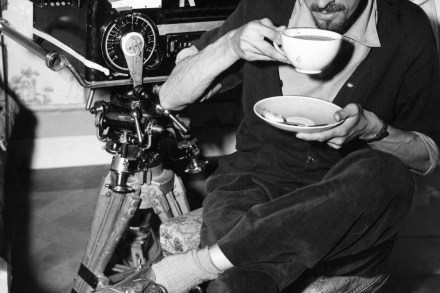
The death of Ingmar Bergman coincides with the re-release of his greatest film, The Seventh Seal (1957), a meditation upon death and the fear of godlessness set in the middle ages but inspired by the nuclear terrors of the Cold War. The bleakness of Bergman’s oeuvre is undeniable, but his films were not cold: there are few more affecting explorations of the life of the elderly than Wild Strawberries, or poignant explorations of a relationship than Scenes from a Marriage or its recent sequel Saraband. Fanny and Alexander is, amongst many other things, one of the most visually sumptuous films of the twentieth century. So many directors wanted to be

Wish fulfilment

Which super power would you choose? When I was young, the one I quite wanted was invisibility. I imagined myself sneaking into the bedrooms of all the girls I fancied and persuading them that I was an incubus come to satisfy their every desire. An ability to arrest time with a stopwatch would be a handy power too, as would being able to fly or teleport. But the impression I get with super powers is that you’re not allowed to be too greedy. I was trying to think which low-level super power I’d accept today and I realised how unambitious I’ve become. Being able to go to the loo without

Bowled over

Adorable, sensational Joseph. I was bowled over by this show, not just by the slick vitality of the 60-strong cast, not just by the teasingly satirical hippy-trippy lighting effects, not just by Preeya Kalidas’s gloriously stylish Narrator, and not just by the Mel Brooksian chorus-line of high-kicking Jewish shepherds, no — by the material. Talk about genius from nowhere. The script originated as a 20-minute end-of-term sketch for the pupils of St Paul’s in west London. Its charm and its technical brilliance were noticed immediately and the show, once expanded, launched its authors heavenwards. Tim Rice’s lyrics are joyously witty. When Joseph declares that Pharaoh’s dream foretells years of plenty

Making connections

In idle mood — perhaps prompted by the news of terrible further flooding — I’ve just listened for the first time in many years to Peter Grimes. In idle mood — perhaps prompted by the news of terrible further flooding — I’ve just listened for the first time in many years to Peter Grimes. Idleness scarcely survives the excitement that involves the listener from the opening bar. It’s difficult to understand Britten’s later disclaimer to a young admirer embarked on his own first opera — ‘but Grimes is full of howlers!’ — for everything now, 60-plus years after, has long since seemed so absolutely right. These six decades have consolidated

Family favourites

As you’d expect — doh! — The Simpsons Movie has some glorious lines in it. Lisa to Marge: ‘I’m so angry.’ Marge to Lisa: ‘You’re a woman. You can hold it in for years.’ Bart to Homer: ‘This is the worst day of my life.’ Homer to Bart: ‘No, son. This is the worst day of your life so far.’ No one, by the way, says: ‘When writing about the Simpsons, there will always be a “doh!” so get it out the way quick’ but you will note that I have been clever enough to do so, all the same. There are no flies on me. Yes, yes, yes…almost since

Bare necessities | 28 July 2007

The Naked Portrait Scottish National Portrait Gallery, Edinburgh, until 2 September, then Compton Verney, Warwickshire, from 29 September to 9 December The advance publicity I saw for this on the whole excellently curated exhibition contained a health warning: ‘Please note this show contains nudity. Children under 16 must be accompanied by an adult.’ The title comes from the phrase used by Lucian Freud for several of his nudes but, alas, for the prurient, there are few images that might disturb or inflame either adults or children, except perhaps one of a woman holding a silk rosette bearing the word ‘Boob’ against her own left breast mutilated (but not removed) by

Scratching the surface

Così fan tutte; Summer ConcertRoyal Opera House The Royal Opera, for its last revival of the season, got Jonathan Miller to make over his 1995 production of Così fan tutte, everyone’s favourite Mozart opera these days, owing to its sceptical view of sexual relationships, combined with a subtle acknowledgement of how painful we often find it to be as fickle as we are, how unwilling we are to be so much at the mercy of our impulses. Mozart’s own mixed feelings on the matter are shown by the interestingly different attitudes of his two spokespersons Don Alfonso and Despina to the same phenomenon: she is hard-bitten, resolutely superficial and mercenary,

Going Dutch | 28 July 2007

Andrew Lambirth delights in the National Gallery’s exhibition of a Golden Age I’ve been reading Still Life with a Bridle by the poet Zbigniew Herbert in preparation for Dutch Portraits: The Age of Rembrandt and Franz Hals at the National Gallery. It’s a fascinating collection of essays which examines and pays tribute to the Golden Age of Dutch art and the society that produced it. Packed with unusual and stimulating perceptions, not to mention poetic inventions, the book only increases one’s sense of wonder at such an efflorescence of talent concentrated in one unprepossessing place over a relatively short period. (This exhibition covers the years 1599–1683 and runs until 16

James Bond vs. Jason Bourne

Peter Suderman and Isaac Chotiner each highlight an interview with Matt Damon (who is promoting the latest Jason Bourne thrilla, The Bourne Ultimatum). I like Damon. He’s an increasingly interesting actor and his excellent performance in The Good Shepherd last year was every bit as under-rated as the movie itself. Nevertheless, he’s also an ass. Evidence for the prosecution? Matt Damon’s amnesiac assassin Jason Bourne shares initials with another notorious screen operative. But other than that, Damon doesn’t see any similarities between Bourne and James Bond. Bond is “an imperialist and he’s a misogynist. He kills people and laughs and sips martinis and wisecracks about it,” Damon, 36, told The

Shambo RIP

It’s official. A nation mourns. Mr Eugenides strikes a mournful, plangent note: Stop all the clocks, cut off the telephone,Prevent the dog from barking with a juicy T-bone,Silence the tambourines and with muffled drumsBring out the burger buns, let the ketchup come. Let cattle trucks circle moaning round the barnScribbling in the dirt the message, Shambo Is Dead,Put mournful garlands round the white necks of the temple monks,Let the government veterinarians wear black rubber gloves…

The good and the bad

These are difficult times for the BBC. The fine for the Blue Peter phone-in fraud was, in its way, as big a shock as the famous vandalising of its garden. The silly Crowngate affair in which what they claimed was the Queen staging an angry walk-out turned out to be her staging an angry walk-in. And some ratings have been very poor. The drama True, Dare, Kiss broadcast last week got a miserable 3.2 million viewers, one of the smallest ever Thursday peak-time audiences on BBC1. Over on BBC2, Alastair Campbell’s diaries rose from 1.3 million viewers on Wednesday to a hardly impressive 1.5. It all implies a nervous institution