Arts Reviews

The good, bad and ugly in arts and exhbitions

Back-seat driving

Seven hundred miles now in the borrowed Bristol 410 and I’ve loved every yard of it. Seven hundred miles now in the borrowed Bristol 410 and I’ve loved every yard of it. It’s poised, tolerant, powerful and very comfortable, now that I’ve removed the sunroof windshield that was threatening to scalp me. The elegantly understated lines make you feel you’re driving your club, appreciated by those who know, unrecognised by those who don’t (fortunately it handles rather better than the club would). In fact, the handling continues to surprise, partly because the wide, old-fashioned wheel makes you more conscious of steering, while the naturally aspirated 5.2 Chrysler V8 burbles and

Communicating through music

Henrietta Bredin on how Music for Life can help overcome the isolation of dementia sufferers I am looking at an elderly woman, tiny in a huge armchair. She has not spoken for months, she has not maintained eye contact with anyone for even longer and she has developed a nervous compulsion to keep one hand always up to her chin, covering her mouth. A woman in a pink overall is sitting next to her, gently stroking her hand, and a young man with a violin is kneeling at her feet. With infinite patience, the violinist starts to play a simple tune, making it even quieter, more exploratory, when she appears

Engaging conversation

Carlos Acosta Sadler’s Wells Theatre Jerome Robbins, the undisputed, though often unsung, father of modern American ballet, was one of the few dance-makers who could successfully choreograph to Bach’s music. Undaunted by the morass of cultural, historical and artistic biases that still surrounds the compositions of the baroque master, Robbins approached Bach with an intriguing mix of respect, in-depth musical understanding and modern-day wit. In his ‘Bach’ creations, the dance idiom is never a mere translation/adaptation of the music, but an ideal complement to the same, which highlights the scores’ linear complexities by responding to the music’s incessant inventiveness with a seamless outpouring of ideas. Look, for example, at A

Slice of life

Cat on a Hot Tin Roof Novello The Stefan Golaszewski Plays Bush Revolutionary republics, like the USA and Soviet Russia, never really get rid of royalty. They just appoint surrogates. America’s yearning for icons has accorded the actor James Earl Jones a rank somewhere between Richard the Lionheart and John the Baptist. The producers of Cat on a Hot Tin Roof approached him on bended knee (‘You don’t audition James Earl Jones,’ gushed one) and begged for the royal assent. Good King James was probably giggling behind his hand as he boomed out an affirmation with the famous Darth Vader rumble. I bet he was thrilled to smithereens to be

Light in the dark

God, I hate this time of year. Getting up in the dark in the morning, setting off to work in the dark in the late afternoon, then spending the evening sitting in the dark in the theatre are bad enough. But then there’s the cold, angular rain, stinging my face as I sit cowering in the porch nursing a roll-up, the office on the phone wanting yet another piece to fill the vast open spaces they so much dread between Christmas and the new year, and even dear Liz, this magazine’s saintly arts editor, wanting early copy because she’s already up to her ears with the yuletide bumper issue. It’s

Portrait of a working artist

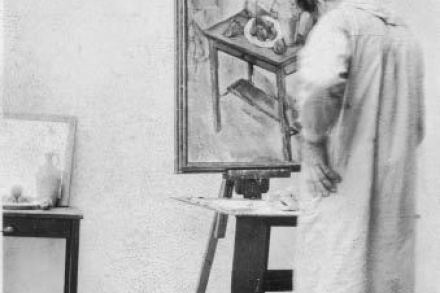
Edward Bawden Bedford Gallery, Castle Lane, Bedford, until 31 January 2010 In these days when museums seem to think it acceptable to sell off the charitable gifts of past ages to feed contemporary vanities, I wonder who will be tempted to donate works of art without binding them securely in protective red tape? In the last eight years before his death, the artist and illustrator Edward Bawden (1903–89) gave a vast archive of his work to the Cecil Higgins Art Gallery in Bedford. It was, effectively, the contents of his studio, representing nearly every period of his career, and it numbers more than 3,000 items. The Cecil Higgins is currently

Word perfect | 9 December 2009

If you haven’t spoken to anyone at all for 24 hours, not even the newsagent or supermarket assistant, it can be odd trying to find the right words, and the right voice, to make a human connection. If you haven’t spoken to anyone at all for 24 hours, not even the newsagent or supermarket assistant, it can be odd trying to find the right words, and the right voice, to make a human connection. It’s as if you can get rusty with audacious speed, and that without continual usage the habit of conversation begins to degenerate, like the muscles of a marathon runner who stops running. Radio, though, is a

Public face

My favourite Alan Bennett story dates from when his play The Lady in the Van was performed in London. The piece includes two Alan Bennetts, one to take part in the action, the other to narrate. One was played by Nick Farrell, a neighbour of ours, who had agreed to do it on condition that he would be free to attend the birth of his first child. For some reason there was no understudy, so when Nick’s wife went to hospital a chap in black tie appeared on stage before the curtain rose. ‘Owing to indisposition,’ he said — an odd choice of words in the circumstances — ‘the part

Dubai debacle

When the Marx Brothers announced in 1946 that their upcoming film was called A Night in Casablanca, Warner Bros threatened to sue for breach of copyright. Warner had produced the great hit Casablanca four years earlier, and insisted that the funny men were trying to cash in on it. But Groucho was no slouch. He had his lawyer threaten Warner Brothers with breach of copyright for using the word brothers. The Marx boys won, as they were brothers before the Warners had formed the company. A Night in Casablanca also turned out to be a great hit. (Here, as bores and pedants tend to do, I have to declare an

Closely guarded secret

Andrew Lambirth on how the cult of youth can lead to the neglect of distinguished older artists One of the least endearing traits of our age is youth worship. I can understand that advertisers might need to target a large and gullible audience suddenly and unaccountably blessed with disposable income (or should that be credit?), but to attribute wisdom or originality to youth is a rash act indeed. The attention paid to young artists in recent decades has grown increasingly disproportionate, for no good reason apart from the follow-my-leader media circus which keeps their antics before an increasingly bored and bewildered (if not downright cynical) public. Meanwhile, the invariably more

Great expectations | 5 December 2009

After many years writing about my enthusiasms, I’m still fascinated by the relationship between expectation and actual enjoyment. After many years writing about my enthusiasms, I’m still fascinated by the relationship between expectation and actual enjoyment. How often have we seen a film everyone has been raving about, and been vaguely and obscurely disappointed? Or read a book of which we expected nothing, and loved it to pieces? My most complex relationship of this sort is with the CDs I have bought but haven’t played yet. They sit in a drawer in my desk, silently berating me for not having put them on as soon as I got home. It’s

Brush up your Handel

’Tis the season to be jolly — in spite of the gloom outside and the torrents of rain. ’Tis the season to be jolly — in spite of the gloom outside and the torrents of rain. But how do you banish the winter ghouls, put on a mask of good cheer and go forth beaming into the pre-Christmas crowds? Radio Three has come up with a possible help-all, by launching its Sing Hallelujah! campaign just as the days shorten into dreary half-light. So far the station has signed up almost 350 amateur choirs nationwide who at some time between now and Christmas will be performing Handel’s exhilarating chorus from Messiah.

Rum, Sodomy and a Radish

Proof that even well-intentioned and useful fads can go too far: the Grow Your Own Vegetables movement has reached a tragi-comic end with the news that Shane MacGowan, the hardest-living poet ever to emerge from the mean streets of Tunbridge Wells, is, well, this… Shane MacGowan is set to appear in a reality TV programme about growing vegetables. The Pogues’ frontman and his girlfriend Victoria Mary Clarke both take part in the RTÉ One programme, which is called ‘Victoria and Shane Grow Their Own’. In the show, the pair attempt to emulate the plot of ’70s sitcom ‘The Good Life’, which saw characters Tom and Barbara Good attempt to live

Suffering for art’s sake

Cecilia Bartoli Barbican Messiah Coliseum After a brief but inspissatedly tedious overture by Porpora, played by Il Giardino Armonico, the curtains at the Barbican were pulled aside and Cecilia Bartoli, dressed like a highwayperson from a 1940s escapist movie, sprang on to the stage, flung off her feathered hat, rocked with superabundant energy as the orchestra played the introduction to her first aria, from another opera of Porpora’s, and launched into the first of many elaborate analogies between love and other conditions which might give an excuse for lots of drooping and even more giddy coloratura. She was on amazing form, and was greeted and received with almost hysterical rapture.

Degas as mentor

The Line Arcola The Priory Royal Court Sex, fame, glamour, success, genius, riches, dancing girls. It’s all there, every single bit of it, in The Line by Timberlake Wertenbaker. Her new play traces the off-kilter friendship between Edgar Degas and a gifted but unschooled prostitute-turned-artist. The cheeky little sexpot barges into the great man’s studio one day and presents him with her portfolio. Astonished by her untutored ability he buys a drawing on the spot and promises to become her mentor. With art-history plays like this, the trick is to find a storyline that’s both dramatically satisfying and factually illuminating. Timberlake’s talent doesn’t let her down here. The truth does.

Christmas round-up | 28 November 2009

Andrew Lambirth trawls the galleries and finds a visual feast for the festive season Most people who have heard of James Ward (1769–1859) will know his monumental landscape in Tate Britain, ‘Gordale Scar’, but perhaps little else by him. ‘Gordale Scar’ is immensely impressive (I also love Karl Weschke’s versions of the same subject made in 1987–8), but Ward was far from being a one-work artist. A painter of animals as well as of landscapes, his gifts of observation and curiosity made him a valued recorder of country life. A superb show of his drawings at W.S. Fine Art/Andrew Wyld (27 Dover Street, W1, until 11 December) gives a full

Feel the funk

Firsts Linbury Studio Theatre Gnosis Sadler’s Wells Theatre Funky is not normally a word used to describe the cultural activities at the Royal Opera House. But that adjective encapsulates the essence of Firsts, a showcase of different performing talents, now in its seventh year. Funkiness is indeed what greeted spectators last week at the opening of the 2009 edition, once they had descended into the cheerful vaults of the Linbury Studio Theatre. Multitalented Matt Hennem interacted with the incoming public, by dancing among them with his gravity-defying, mesmerising crystal ball. His elegant, well-choreographed evolutions and improvisations set the tone for the rest of the evening, thus becoming the prelude to

Parental indulgence

Cherevichki Royal Opera Tolomeo English Touring Opera, Cambridge Semele Royal Academy of Music The week’s operatic rarity was Tchaikovsky’s Cherevichki, inaccu-rately translated as The Tsarina’s Slippers. It is an adaptation of the Gogol story ‘Christmas Eve’, and is slightly more familiar in Rimsky-Korsakov’s version, which was mounted in a spirited production at ENO in 1988. Though I never thought I’d say so, the Rimsky score turns out to be considerably more engaging, certainly more suited to his temperament, and his flair for orchestral colour. Tchaikovsky was devoted to his own opera, which had a mild success as Vakula the Smith, and which he subjected to extensive revision. Some ardent Tchaikovskians,

Psalm-setting challenge

One day back in 2007 I sat down in a mood of bitter rancour and rapidly sketched out an unpremeditated draft setting of Psalm 39, that text unmatched for the utterance of such dark states — ‘my heart was hot within me …man walketh in a vain shadow…O spare me a little, that I may recover my strength before I go hence and be no more seen …’. One day back in 2007 I sat down in a mood of bitter rancour and rapidly sketched out an unpremeditated draft setting of Psalm 39, that text unmatched for the utterance of such dark states — ‘my heart was hot within me