Arts Reviews

The good, bad and ugly in arts and exhbitions

Steps to destruction

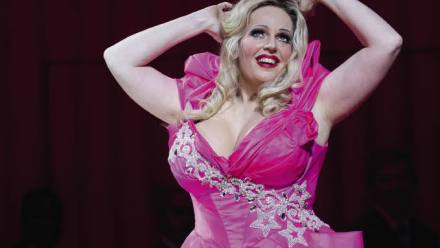
I have always suspected that, if you look for the black swan within yourself, it will end in tears, and now Darren Aronofsky has proved me right. It will end in tears, as well as bloody gashes, horrors glimpsed in mirrors, warped hallucinations of a sexual nature and breaking your mother’s hand in a door jamb. If you think you may have the black swan within you, just leave well alone. Go shopping. Play Scrabble. Clear out the hall cupboard, as you have been meaning to do for ages (I don’t think you can squeeze another thing in there, although, God bless you, you will keep trying). And if you

Still life

Ballet is a dying art, according to Jennifer Homans’s bestselling history of ballet, Apollo’s Angels. Ballet is a dying art, according to Jennifer Homans’s bestselling history of ballet, Apollo’s Angels. Sensationalist as it may sound, this claim is cogently argued at the end of the book, which turns dreary ballet history into an engaging narrative. Inevitably, the statement has ruffled many feathers, particularly among those ‘hyperspecialists’, ‘balletomanes’ and ‘insiders’ who, she says, speak an ‘impenetrable theory-laden prose’ and have reduced dance to a ‘recondite world’. Indeed, the worrying demise of classical theatre-dance depends greatly on the mental onanism of some scholars, as well as on the art-less vision of teachers

Gender problems

It’s sometimes intriguing to speculate, as you go to an opera in a fringe production of one kind or another, about how much messing around (used neutrally) this or that popular work can take. It’s sometimes intriguing to speculate, as you go to an opera in a fringe production of one kind or another, about how much messing around (used neutrally) this or that popular work can take. OperaUpClose scored an enormous success with its version of La Bohème in 2009/10 (though its claim to be the longest-ever run of an opera should be balanced by the fact that The Cock Kilburn could seat only about 40 people). At the

Writerly magic

A frock that shocks, a terror-filled red coat and diamonds of seductive power are all promised next week in an alluring late-night series on Radio 3 (produced by Duncan Minshull). Listener, They Wore It gives us five 15-minute essays about clothes. Not a subject I would normally bother with, never being someone noted for my sartorial elegance or originality. But by chance I opened up one of the preview discs and was hooked immediately. The novelist Tracy Chevalier is talking about the impact on her teenage self of Guy de Maupassant’s short story ‘The Necklace’. Chevalier based an entire novel on a pearl necklace so she knows the value of

Reality check

Horizon (BBC2, Monday) asked, ‘What is reality?’ and didn’t really have an answer. Horizon (BBC2, Monday) asked, ‘What is reality?’ and didn’t really have an answer. Well, it seems nobody does, though plenty of physicists, mathematicians and astronomers are working on it. As the voiceover told us, ‘Once you have entered their reality, your reality may never look the same.’ You can say that again. It appears that quantum particles can literally be in two places at the same time. But we are made up of quantum particles, and we are never in two places at the same time, even if that would occasionally be useful. So maybe there are

Best in show | 15 January 2011

Penelope Curtis, director of Tate Britain, talks to Ariane Bankes about the planned revamp of the museum and 100 different ways of showing sculpture The evening after first meeting Penelope Curtis, director of Tate Britain, I bumped into a mutual friend who told me, only half-joking, that she could be frightening. Fair enough, I thought: to become the first woman director of one of Britain’s pre-eminent public galleries you have to frighten a few people along the way. As it happened, I hadn’t found her alarming at all at the press briefing that morning: direct, brisk, purposeful — she was, after all, embarking on a wholesale top-to-toe redesign and rehang

The Spectator’s Notes | 15 January 2011

The question of what is art vexes the tax authorities as well as philosophers. Last month, the Art Newspaper reported the latest twist in a wonderful, long-running row. The European Commission has decided that two pieces of installation art — ‘Hall of Whispers’ by Bill Viola, and ‘Six Alternating Cool White/Warm White Fluorescent Lights/Vertical and Centred’ by Dan Flavin are not, after all, works of art. The first is classified as ‘DVD players and projectors’ and the second as ‘light fittings’. This makes them liable not for the 5 per cent VAT rate that applies to art sales, but the standard rate — now 20 per cent. In this month’s

Never the same

Simon Starling’s art often involves some form of recycling — his controversial ‘Shedboatshed’ won the 2005 Turner Prize – and his ‘new’ exhibition at Camden Arts Centre (until 20 February) is no different. Simon Starling’s art often involves some form of recycling — his controversial ‘Shedboatshed’ won the 2005 Turner Prize – and his ‘new’ exhibition at Camden Arts Centre (until 20 February) is no different. Never The Same River (Possible Futures, Probable Pasts) is Starling’s selection of 30 artists’ works exhibited at the centre over the past 50 years, installed in the same positions they originally occupied, juxtaposed with three new pieces referencing time by Sean Lynch, Jeremy Millar

More real art, please

Although I am an admirer of Dulwich Picture Gallery, and like to support its generally rewarding exhibition programme, I will not be making the pilgrimage to see its latest show, Norman Rockwell’s America. Although I am an admirer of Dulwich Picture Gallery, and like to support its generally rewarding exhibition programme, I will not be making the pilgrimage to see its latest show, Norman Rockwell’s America. This is not just because it’s quite a hike to Dulwich for me, involving a bus, a train, another bus and another train (anything in excess of three hours from door to door), but also because I don’t think the trip will be worth

Witch craft

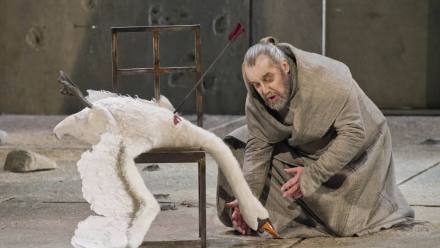
Is Humperdinck’s Hänsel und Gretel an opera for children of all ages, or for grown-ups and for children, or mainly for grown-ups? I went to the Royal Opera’s revival of it just after Christmas, to a 12.30 matinée (there were several), which I took to be for the benefit of children, as well as possibly being an unusual piece of thoughtfulness about transport on the part of the management. Is Humperdinck’s Hänsel und Gretel an opera for children of all ages, or for grown-ups and for children, or mainly for grown-ups? I went to the Royal Opera’s revival of it just after Christmas, to a 12.30 matinée (there were several),

Cruel cuts

You might be forgiven for thinking that the cuts to broadcasting have already been implemented, with nothing but Mozart on Radio 3 and the Bible on Radio 4 on Sunday. Meanwhile, we’ve discovered that the actor who played the unfortunate Nigel Pargetter in The Archers, Graham Seed, has lost 75 per cent of his income, with only a few weeks’ warning — is he another silent victim of the national overspend? Switch over to the BBC’s World Service and the New Year diet becomes even more stringent. No drama for at least a month, so that between the briefings on world news and sport there are instead endless repeats of

Waste not, want not

‘I want everyone to be as angry as I am,’ says Hugh Fearnley-Whittingstall, and I hope he succeeds for the thing that makes him so angry is one of the things that makes me most angry, too: the senseless eradication of the world’s fish stocks. ‘I want everyone to be as angry as I am,’ says Hugh Fearnley-Whittingstall, and I hope he succeeds for the thing that makes him so angry is one of the things that makes me most angry, too: the senseless eradication of the world’s fish stocks. All this week on Channel 4, HF-W has been campaigning in a series of programmes called Hugh’s Fish Fight. In

The crash from an Austrian perspective

It’s not all politics at Westminster. There’s a pretty good think-tank scene too, with lectures on topics that you’re unlikely to read about in the newspapers. One took place today: the Adam Smith Institute hosted a lecture by Steven G. Horwitz, from St. Lawrence University, entitled “An Austrian perspective on the great recession of 2008-09”. As many CoffeeHousers will know, “Austrian” refers to von Mises, Hayek and the others whose analysis of bubbles and crises certainly seems to fit current events. My colleague Jonathan Jones was there, and took some notes – which I have moulded into a six-point briefing.  It’s not often we do a post based on a

Death watch

Although I stopped watching TV some years ago, films are a continuing solace and pleasure. Among the Christmas treats was a previously unseen Jack Nicholson movie, entitled The Bucket List. The plot revolves around two very different Americans, Nicholson and Morgan Freeman, both of whom are suffering from cancer and are given a mere matter of months to live. The Bucket List is their wish list of things to do before they die, some of the more exotic of which the wealthy Nicholson enables them to achieve. The excellent Freeman, a poorer man but the greater philosopher, reminds Nicholson of a more important consideration: the two questions asked of Ancient

Twin peaks

It’s that time of year. The great reckoning is upon us. Insurance is being renewed. Tax returns are being ferreted out. Roofing jobs are being appraised and budgeted for. And spouses are being trundled into central London for the annual session of dialysis at the theatre. It’s that time of year. The great reckoning is upon us. Insurance is being renewed. Tax returns are being ferreted out. Roofing jobs are being appraised and budgeted for. And spouses are being trundled into central London for the annual session of dialysis at the theatre. And here to meet them is Ayckbourn’s yuletide comedy Seasons Greetings, which features three hilariously miserable families bickering

Film: Farewell to arm

Unless you’ve been living under a rock — in which case, keep it to yourself; I’m done with rocks — you’ll have already heard about 127 Hours. Unless you’ve been living under a rock — in which case, keep it to yourself; I’m done with rocks — you’ll have already heard about 127 Hours. It’s the latest film from Danny Boyle and is based on the true story of Aron Ralston, the poster boy of survival who, as a 27-year-old in 2003, went climbing in the Bluejohn Canyon in Utah and got his forearm trapped between a boulder and the canyon wall. After five days of shoving, tugging, chiselling, screaming,

Production values

In the absence of any operas to attend, I’ve been reading the most recent defence of ‘director’s opera’, a book with the characteristic title Unsettling Opera, by the American academic David J. Levin. In the absence of any operas to attend, I’ve been reading the most recent defence of ‘director’s opera’, a book with the characteristic title Unsettling Opera, by the American academic David J. Levin. Anyone braving one of these books — there are plenty of them now — needs to have a high tolerance for jargon, indeed for deformed prose of many kinds. They tend to rehearse the same basic argument, in Levin’s case with close attention to