Arts Reviews

The good, bad and ugly in arts and exhbitions

Away with the angels?

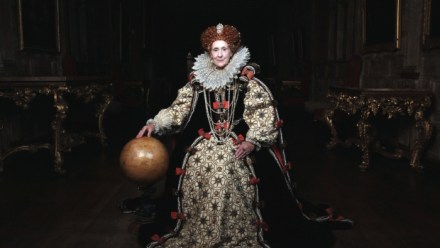
I remember the shock, like a jolt of static electricity. One day, between taking my degree and beginning my first job, while looking through a 16th-century book about numerology that had once belonged to John Dee in the British Library, I came upon an annotation in his own neat italic hand casting up the numerical values of the letters of his name. The total he wrote down came to 666. John Dee (1527–1609) was a magus, but we must not think that this made him a loony witch. An early Fellow of Trinity College, Cambridge, teaching Greek, he acquired a reputation for learning in mathematics, navigation and astronomy. But his

Disciple of Duchamp

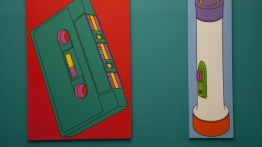
Michael Craig-Martin has had a paradoxical career. He is, I think, a disciple of Marcel Duchamp. But the latter famously gave up painting in favour of something more conceptual — ready-mades and whatnot — whereas Craig-Martin began with Duchampian concepts. He once exhibited a glass of water on a shelf together with a claim that he had mentally transformed these, by a kind of transubstantiation, into an oak tree. Then he metamorphosed himself into a still-life painter. As his current exhibition at the Serpentine demonstrates, for nearly 40 years Craig-Martin’s staple subject-matter has been everyday tools, gadgets and accessories. An early example, ‘Vertigo’ (1981), consists of elegantly pared-down line drawings

Compliance order

Never a man tortured by self-doubt, Derren Brown introduced his latest special Pushed to the Edge (Channel 4, Tuesday) as a fascinating psychological experiment about the dangers of ‘social compliance’ — our willingness to do what authority figures ask, however morally dubious. In fact, much of what followed was a weird, and itself rather morally dubious, mix of Candid Camera, Fawlty Towers and something pretty close to entrapment. But from time to time, it also proved, annoyingly enough, a fascinating psychological experiment about the dangers of social compliance. The central aim was fairly straightforward: to see if a member of the public could be persuaded to shove a stranger off

Chance encounters

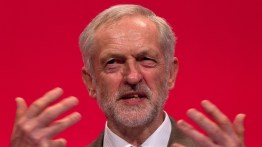
Some might say that Jeremy Corbyn is cloth-eared, tone-deaf, socially inept but on Monday morning, as the death of the pop artist David Bowie scrambled the agenda on Radio 4’s Today programme, he was as graceful and twinkle-toed as Bowie himself. The opposition leader had been invited on to the ‘big slot’ just after the eight o’clock bulletin to talk about his ‘shock’ reshuffle last week. David Cameron and the Archbishop of Canterbury, no less, had already provided their rent-a-quote verdicts on Bowie’s life and death. Nick Robinson asked Corbyn for his thoughts. Quick as a flash, he responded, ‘Does that mean I’m joining the great and the good…?’ Before

Gallows humour

It begins with a sketch. We’re in a prison in 1963 where Harry Wade, the UK’s second most famous hangman, is overseeing the execution of a killer who protests his innocence. The well-built convict effortlessly shrugs aside two burly but incompetent prison officers. ‘I’m being hanged by nincompoops,’ he laments. One of them helpfully points out that if he’d followed his instructions he’d ‘be dead by now’. Do these arch quips make you quiver with mirth? If so you’ll enjoy Hangmen, a slapstick comedy thriller by Martin McDonagh. The scene shifts to Oldham in 1965. Capital punishment has been abolished and the retired Wade has taken over a pub in

Endurance test

The Revenant is a survival-against-the-odds film that so puts Leonardo DiCaprio through it I bet he was thinking, ‘I wish I was back on that boat that went down.’ He is mauled by a bear. Viciously. He is buried alive. He eats still-throbbing, blood-dripping raw liver, and quite forgets his manners. (Wipe your chin, man; there’s never any excuse.) He cauterises his own wounds, falls off cliffs, spins down rapids, slits open a dead horse and sleeps within for warmth. The film recently triumphed at the Golden Globes — best film, best director (Alejandro G. Iñárritu), best actor (DiCaprio) — but all I was thinking was, ‘Oh God, please let

In two minds

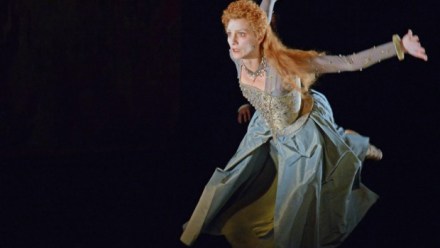
There are some operas, as there are some people, that it is impossible to establish a settled relationship with, and in my case Debussy’s Pelléas et Mélisande is one of them, in fact by far the most pressing one. I never know in advance how I’m going to react to it, and to some extent the actual performance I see is not the determining factor. I’d like, just once, to see the play and find out how I reacted to that. For Debussy offers such a vivid and sometimes perplexing counterpoint to Maeterlinck’s words that one’s reactions to the characters and their actions are always in flux — at least

Act of Faith

This winter morning between seven and eight, half a white moon still present, a ghost not shining on plentiful frost and mid-January, in the weeks when Christmas might as well be a lifetime ago, distant as dreams or fate; when journalists shore up columns by defining all the factors converging annually to load some blue Monday with the most misery. And waiting on the landing a fortnight too long decorations, boxes of lights, bauble heirlooms, time-travellers tissue wrapped to be put aside, a loft storage act of faith that all will abide another year, one more Christmas, our rooms blessed with what’s known, fresh each time like a song, or

The Lost Word

I know it cold, the scene in the woods, the grey-toned sky, and snow— the sudden clearing in the underbrush through which a fox now steps, her auburn brush a-ziggety-zagging, as if she would erase her trail, though her tracks in the snow are already lost in the layers of snow now spackling the hemlocks, the woodrush, the blackthorn and bracken, the half-seen woods, the snow-brushed woods.

Moving statues

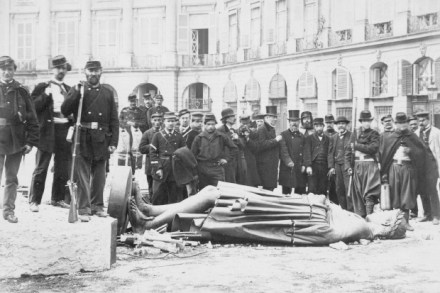
One of the stranger disputes of the past few weeks has concerned a Victorian figure that has occupied a niche in the centre of Oxford for more than a century without, for the most part, attracting any attention at all. Now, of course, the Rhodes Must Fall campaign is demanding that the sculpture — its subject having been posthumously found guilty of racism and imperialism — should be taken down from the façade of Oriel College. The controversy is a reminder of the fact, sometimes forgotten by the British, that public statues are intensely political. This was clear — until quite recently, at least — when one drove into the

Good cop, bad cop

One of the most shocking items of recent news has been the bald statistic that the number of people shot by law enforcement officers in the United States last year was 1,136. Not died by gangland shooting, domestic violence or terrorist attack. But killed by those who are meant to be preventing such deaths. Many of them are black or Hispanic. As if on cue, the World Service this week launched a documentary series to find out why this is happening. What are the deep structural issues that give rise to such inequalities of experience and opportunity in the (supposed) Land of the Free? The first episode of The Compass:

Double trouble | 7 January 2016

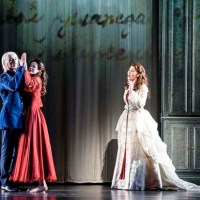
It’s scene five of Kasper Holten’s production of Tchaikovsky’s Eugene Onegin and Michael Fabiano’s Lensky is alone with a snow-covered branch and his thoughts. Well, not quite alone. At the other side of the stage stands the man he is about to face in a duel: his friend Onegin, who’s apparently arrived ahead of the appointed time and is listening to every word of Lensky’s anguished soliloquy. Except he isn’t: this is the Onegin of the present, looking back on a tragedy in his past. Or possibly imagining it? He can’t, after all, have heard Lensky’s words, for the practical reason that he wasn’t there. Can he? Oh, is that

Mad about the boy | 7 January 2016

This is the week of The Hateful Eight, the latest Quentin Tarantino film, but Tarantino being Tarantino, there were no screenings for reviewers, so I’ve yet to see it. There also seems to have been some falling out with the Cineworld, Picturehouse and Curzon chains such that their cinemas won’t be showing the film at all. Tarantino, such a pain, and if we were to meet, which I admit is unlikely —we move in very different circles — I would have no hesitation in telling him so. What’s he going to do? Slice off one of my ears, nail me to the wall with the other, stroll off to lunch,

Alice in cyberspace

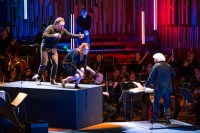
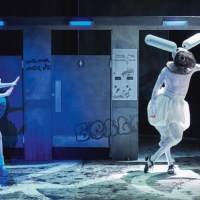
Damon Albarn and Rufus Norris present a musical version of Alice in Wonderland. A challenging enterprise even if they’d stuck to the original but they’ve fast-forwarded everything to the present day. The titular heroine, a trusting and solemn Victorian schoolgirl, has been recast as Aly, a wheedling teenage grump who loathes her mum, her dad, her comp, her teachers and her playmates. ‘I hate being me,’ she announces. And as we learn more about her we’re increasingly struck by the sagacity of this verdict. To escape her distress she downloads a game from www.wonder.land and creates a cyber-self, Alice, who goes on adventures. Hmm. A computer game. Parents have for

Eurovision

Before cheap flights, trains were the economical way to discover Europe and its foibles. Personally, I enjoyed the old fuss at border crossings. By the time I was 18, I had memorised those warning notices in the carriages: Nicht hinauslehnen; Defense de se pencher au-dehors; E pericoloso sporgersi. Those three different ways of saying ‘don’t stick your head out the window’, one bossy, the other pedantic, another gently pleading, summarised the nice subtleties of national borders that were philosophical as well as political. Europe is a marvel. Its busy inhabitants discovered private property, social mobility, romantic love, democracy, secularism, antiquarianism, nationhood, industry, capitalism, technology, domesticity, privacy, vanity, revolution, modernism, exploration

War & Peace is actually just an upmarket Downton Abbey

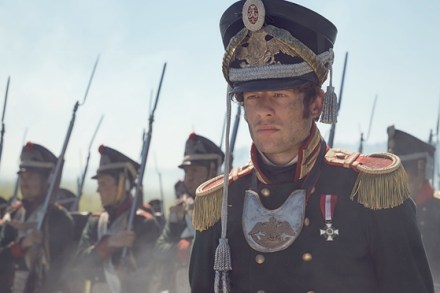
Gosh what a breath of fresh air was Andrew Davies’s War & Peace adaptation (BBC1, Sundays) after all the stale rubbish that was on over Christmas. There were times when the yuletide TV tedium got so bad that I considered preparing us all a Jonestown-style punchbowl. That way, we would never have had to endure Walliams and Friend nor the special time-travel edition of what everyone is now rightly calling Shitlock. Sherlock has a terminal case of Doctor Who disease. That is, it has become so knowing, so self-referential, so — ugh! — meta that it no longer feels under any obligation to put in the hard yards needed to

Best in show | 31 December 2015

Until a decade and a half ago, we had no national museum of modern art at all. Indeed, the stuff was not regarded as being of much interest to the British; now Tate Modern is about to expand vastly and bills itself as the most popular such institution in the world. The opening of the new, enlarged version on 17 June — with apparently 60 per cent more room for display — will be one of the art world events of the year. But, like all jumbo galleries, it will face the question: what on earth to put in all that space? Essentially, there are two answers to that conundrum.

Things we don’t mind paying for

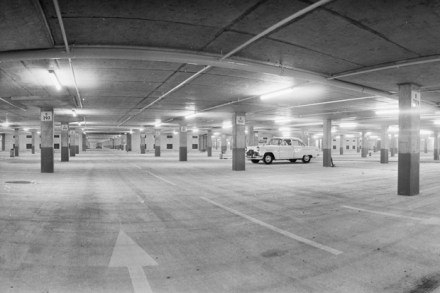
Here’s a challenge for film buffs: can anyone remember, from the entire canon of cinema and television, a single scene set in an underground car park in which something unpleasant or nefarious did not occur? Yet I still rather like them. By far the best car park in London is the one found underneath Bloomsbury Square, which is in the shape of a double-helix. This allows you to drive all the way down and all the way up again with your steering wheel in one position. About once a year I park in the Mayfair car park at the bottom of Park Lane. I recently noticed that an annual season