Arts Reviews

The good, bad and ugly in arts and exhbitions

Adapting Wodehouse for the radio is a challenge – but the BBC has succeeded brilliantly

Everyone knows a Lord Emsworth. Mine lives south of the river and wears caterpillars in his hair and wine on his shirt and has just occasionally written for this magazine. That doesn’t much narrow it down. When you look at him, you understand a little better why P. G. Wodehouse is topping the lists of authors to read during lockdown. It’s not just that the books are funny. With an Emsworth or a Bertie Wooster you’re guaranteed that idling and dithering will land you somewhere. Even if it is in the soup. Adapted for Radio 4 this fortnight, Leave it to Psmith, the second in Wodehouse’s Blandings series, sees the
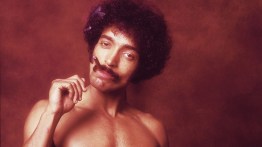
One of the more disturbing films I’ve seen: Arena’s The Changin’ Times of Ike White reviewed

Arena: The Changin’ Times of Ike White (Monday) had an extraordinary story to tell — but one that, halfway through the documentary, already seemed to be complete. So, you might well have thought at that point, how would it fill the rest of the time? The answer, it transpired, was by taking an even more jaw-dropping turn. In the 1970s, Ike White was serving life for murder in a Californian prison when reports of his musical talent reached the record producer Jerry Goldstein. A prodigy on guitar, bass, drums and keyboards, White had until then been making most of his music in the prison’s gas chamber, which he was allowed

The best Macbeths to watch online

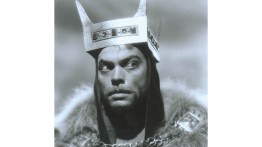
The world’s greatest playwright ought to be dynamite at the movies. But it’s notoriously hard to turn a profit from a Shakespearean adaptation because film-goers want to be entertained, not anointed with the chrism of high art. Macbeth is one of the texts that frequently attracts directors. Justin Kurzel’s 2015 version (Amazon Prime) didn’t triumph at the box office despite two fetching performances from Bamburgh Castle in Northumberland and the snow-wreathed mountains of Skye. The trailer is a marvel. Two exhilarating minutes of virile swordplay, ravishing scenery and dramatic cathedral interiors. The film itself is a cold, muddy slog. Michael Fassbender plays the thane as a gruff Celtic robo-hunk married

Why do they call it a game? It is servitude: Nintendo Switch’s Animal Crossing reviewed

Welcome to my debut as gaming correspondent, the apex of my journalistic career! And how witty of The Spectator to choose someone who has never played a computer game in her life. But luckily I have some grandchildren to advise me. First decision is what games console I want and the general consensus is Nintendo Switch, which has the advantage of being small and portable and not attached to the television. Then — what game? The experts recommend Animal Crossing because, they say, it is foolproof. (Ha!) So I order a Nintendo, which takes days to come (apparently ‘everyone’ is into gaming during lockdown) and go through the rigmarole of

'I’ve started talking to myself': Tamsin Greig interviewed

C4’s Friday Night Dinner was the nation’s stop off point for feeling a bit better about ourselves. It featured the Goodman family. Every week the Goodman’s two sons returned to their parents’ home for Shabbat dinner. Every week, things didn’t go to plan. Of course, the chaotic Goodmans stand in for all our chaotic families in these times. It is good to know that it isn’t only our own family that is a shambles. The guiding force, the everyday matriarch of that family, is Jackie Goodman – long-suffering mum, played by Tamsin Greig. ‘It is charming because it is all about coming home. I think that’s why people love it. The

The film that perfectly explains the moment we're in – and shows us a way out

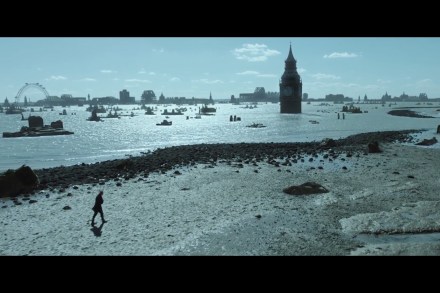
Is there a movie that perfectly fits the moment we are in? I finally discovered it: Paul Franklin’s ‘The Escape’ from 2017, based on Robert Sheckley’s famous sci-fi short story ‘Store of the Worlds’ (1958). Although only 16 minutes long, the movie is done very professionally, with well-known actors (Julian Sands, Olivia Williams) in the central roles. Sheckley’s story begins in what appears to be a destitute suburb of one of our megalopolises: ‘Mr. Wayne came to the end of the long, shoulder-high mound of gray rubble, and there was the Store of the Worlds. It was exactly as his friends had described; a small shack constructed of bits of lumber, parts of cars, a

Europe's eye-popping first glimpse of the Americas

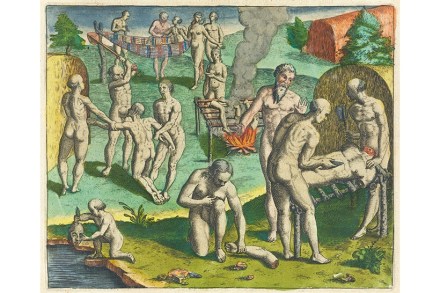
Coronavirus has cast a dampener over this year’s Mayflower 400 celebrations due to a hidden enemy with which the Pilgrim Fathers were all too familiar: within months of their arrival in America more than half of them had died of a disease whose principal symptom was violent coughing. There was no official artist on the Mayflower. Its ragtag party of Separatist Puritans had only been granted a charter on condition that their religious affiliation, banned in England, was not formally recognised. So we can only imagine how the New World looked to the cabin-feverish colonists who made landfall at Plymouth in December 1620, lustily shaking ‘the desert’s gloom/With their hymns

Why does anyone still rate Vertigo and its creepy, wonky plot?

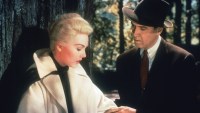
Here’s something that may interest you. Or not. (Could go either way.) I was looking over Sight & Sound’s ‘100 Greatest Films of All Time’, which has Alfred Hitchcock’s Vertigo (1958) at number one, having knocked Citizen Kane from the top spot in 2012. (That film always did need a more exciting reveal; would it have helped if Rosebud had turned out to be a massive fireball or dinosaur egg?) But back to Vertigo, which is now the best film ever made. Really? That worried away at me. Who rates this film and why? The storytelling isn’t up to much. It drags and drags. (The first half is a dull

Netflix’s Caliphate is all too frighteningly plausible

Sweden is now properly celebrated as the Land that Called Coronavirus Correctly. But in the distant past, those with long memories may recall, it had a less flattering reputation as the Land Absolutely Ruddy Swarming With Jihadists. Caliphate — an eight part Swedish-made drama on Netflix — takes you back there in vivid and compelling detail. Partly, it’s an edge-of-seat thriller about a major terrorist attack on Swedish soil —from its conception in Isis-held Raqqa to its execution (or its foiling by the security services: I haven’t got there yet so I don’t know) by a mix of radicalised locals and hardened Isis killers flown in from Syria. Partly, it’s

The National Theatre’s live-streaming policy is bizarre

The National’s bizarre livestreaming service continues. On 7 May, for one week only, it released a modern-dress version of Antony and Cleopatra set in a series of strategy rooms, conference centres and five-star hotel suites. The lovestruck Roman was played by a louche, gruff, brooding Ralph Fiennes. Why is this man so watchable? He lacks the least mark of distinction. Face, height, physique and vocal ability are all in the middling range. In real life he could easily have assumed the role of the research assistant’s deputy. Perhaps it’s the Reggie Perrin ordinariness that makes his presence bewitching. Shakespeare was on unusually patchy form when he assembled this huge, rambling

William Boyd on the miraculous snaps of boy genius Jacques Henri Lartigue

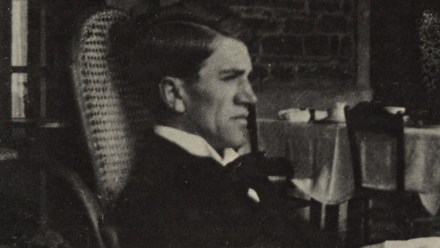
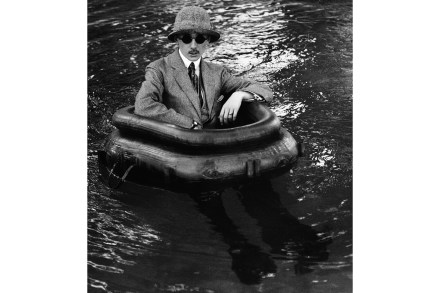
What must it be like for an artist to achieve success only at the end of a long, relatively ignored career? The word ‘bittersweet’ seems particularly apt. Yet, late recognition is better, I suppose, than dying in oblivion like Vincent van Gogh, Franz Kafka or John Kennedy Toole. One of my favourite photographers, Jacques Henri Lartigue (1894–1986), did manage to savour the sweet smell of success in his old age. Lartigue’s late flowering was down to New York’s Museum of Modern Art and its then director of photography, John Szarkowski. There’s a very good argument to be made that during Szarkowski’s tenure at MoMA (1962–91) his shows transformed 20th-century photography.

Riveting – and disgusting: BFI's 'Dogs v Cats' and 'Eating In' collections reviewed

This week I’d like to point you in the direction of the British Film Institute and its free online archive collections, which are properly free. There is no signing up for one of those ‘free trials’ which means that, somewhere down the line, you’ll discover you’ve been paying £4.99 a month for something you didn’t want. And it’s certainly excellent value for the money you don’t pay, as there are 65 of these collections, grouped under various headings — ‘Football on Film’, ‘Black Britain on Film’ — although I plumped for ‘Eating In’, because it’s all any of us do now, and ‘Cats v Dogs’, as if that were even

Not merely funny but somehow also joyous: Sky One's Brassic reviewed

Danny Brocklehurst, the scriptwriter for Sky One’s Brassic, used to work for Shameless in its glory days — although if you didn’t know that already you could probably guess. For a start, the central characters are another close-knit group of ducking-and-diving working-class northerners not overburdened with a social conscience. But there’s also the fact that, no matter what they get up to, they’re clearly supposed to be lovable — coupled with the rather more mysterious fact that they are. However dark the storylines theoretically become, the programme presents them with such an infectious swagger, and such a thorough blurring of realism and wild imagination, that the result is not merely

How Tom Stoppard foretold what we’re living through

A TV play by Tom Stoppard, A Separate Peace, was broadcast live on Zoom last Saturday. I watched as my screen divided itself into four cubes in which appeared the actors, performing from home. The play was written in 1964 and it’s well suited to the split-split screen format because no physical contact occurs between the characters. Director Sam Yates added some rudimentary music and a bit of wobbly background scenery. Mr Brown (David Morrissey) is a mysterious Englishman who asks to be admitted to a private hospital in the middle of the night. Though he has no symptoms he’s given a bed, and he pays his bills in cash.

The unstoppable rise of television-rewatch podcasts

Talking Sopranos — a new weekly podcast which launched this month— is another example of a seemingly unstoppable sub-genre occupying an ever-growing slice of the podcast market: the television-rewatch podcast. The format is simple: take any much-loved yet expired television series (the kind usually prefaced by words like ‘I can’t believe you haven’t seen…’) and scan the cast list until you find some former stars willing to work for an affordable rate. Record them giving an audio commentary on each episode and, bingo, you’ve got yourself dozens of hours of podcasts — and a massive fan base waiting to be converted to listeners. Add a few external factors — say,

A short history of the kimono

‘Fashions have changed’, said the Japanese writer Ihara Saikaku in 1688. ‘Certain shrewd Kyoto people have started to lavish every manner of magnificence on men’s and women’s clothes. By then, everyone in Japan was wearing a kimono. But it was the new, eye-catching, sumptuous ones wrapped around a flourishing breed of fashionistas that Saikaku was talking about. How to show off your wealth and status in Edo-era Japan? Wear the latest kimono. This was the starting point for the V&A’s exhibition Kimono: Kyoto to Catwalk, which opened, then hurriedly closed just days before the lockdown. Those of us lucky enough to catch it can tell you it would’ve been the

The importance of sadism in writing a great screenplay

How do you tell a great story? According to Craig Mazin, you have to be a sadist. ‘As a writer, you are not the New Testament God who turns water into wine,’ Mazin chuckles on his long-running podcast Scriptnotes. ‘You are the Old Testament God who tortures Job because, I don’t know, it seems like fun.’ Mazin wrote HBO’s horrifying, incandescent miniseries Chernobyl, and so knows of what he speaks. In the episode of this podcast titled ‘How to Write a Movie’, he describes how screenwriters build plot out of suffering. He outlines a scenario, making the stakes higher each time. Suppose our main character is a single father desperate

Too much photocopying but stick with it: The Assistant reviewed

First, the latest digital film release: The Assistant, starring Julia Garner in a slowly, slowly, catchy, catchy tale that won’t grab you from the off — I kept thinking: is anything actually going to happen? — but you must stick with it, you must. This is a film of quiet, cumulative power, which has much to say about serial sexual predators in the Harvey Weinstein mould, and how they get away with it. Or did. (Am hoping, praying, we can use the past tense now.) Garner plays Jane, who works for a Hollywood movie mogul, and events take place over the course of a single day. She gets into the