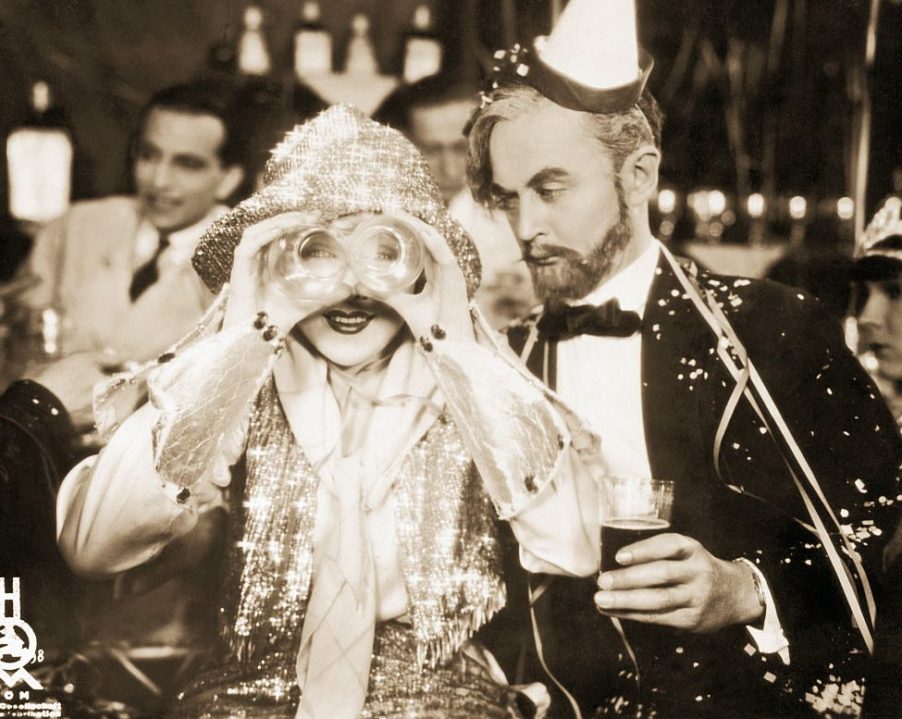
Prudes may insist otherwise, but parties in your 20s are about one thing: sex. If you come with someone you are going home with them; if you meet someone you hope you are going home with them. For a decade or so, parties are full of promise, purpose and possibility.
Parties provide essential external stimulus to married couples
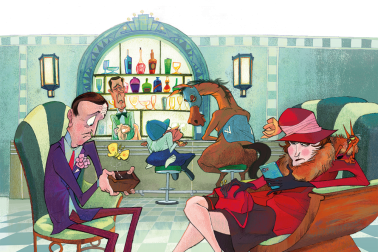
Then comes marriage, middle age and children. Parties start to mean something else. The first is money. A quick cocktail party is £60 at least in babysitting. The next thing they mean is negotiation with your spouse. Rare is the party that delights both husband and wife. There are parties of obligation: birthdays of family members, christenings and weddings. There are parties of professional preferment and dreaded networking dinners. There are parties of enrichment: friends’ book launches, gallery opening nights. There are top-drawer events: Buckingham Palace, film premieres, the Spectator Summer Party. Every single one of them requires managing into the family diary and reconciling with competing commitments. Even the most exuberant extrovert assailed by full-time work and family life will find their bed more appealing evening than a glitzy gathering.
For those who have not sworn off it already, a careful calculation needs to be made on the question of alcohol. None at all and the evening threatens longueurs and a lack of lubrication, but any more than a single glass of wine and the hangover next day risks being a full-body-and-soul experience.
For some, the pandemic’s long tail has been an excuse to stop socialising in numbers. Financial pressures, general gloom about the world and the siren calls of screens have only added to the introvert’s argument that parties are a lot more hassle than they are worth. This is perilous talk. Parties, like playing the violin or football, require practice. Stop entirely and in time you will find that you have gone odd or gone off. Eventually, you become unfit for public interaction altogether. That sort of person can only socialise with their own family, and even then with difficulty.
I have long experience of parties. My eighth birthday was held at the White City Pool (slides AND a wave machine). Half my class accepted; my parents catered accordingly. On the day, however, only my best friend turned up. I think that was only because his father’s chauffeur delivered him. My parents were seething, but I was delighted. I could hang out with my mate, eat as many chips as I liked and keep the party bags. The experience also functioned as a permanent vaccine against social anxiety. Living through every host’s worst nightmare is a surprisingly liberating experience.

Since that (literal) damp squib, I have given many parties, in different places of different sizes, although none with so select a guest list. I have learnt that if you want a party entirely to your liking then you have to give it. When I was at law school in London, I lived with my father in his Mayfair townhouse on Culross Street (Barbara Cartland was an erstwhile neighbour), which runs from Park Lane to the former US embassy. After 9/11, it was a fortified street. Everyone I invited turned up to parties there. So did many I had not. Now I’m in Zone 3, I know who my real friends are.
My father did not subscribe to the received wisdom of permitting student offspring to host at home: no red wine, paper plates and everyone out by midnight. He would insist on getting out the best silver, the most ornate china and fragile 19th-century glassware. Vindicating this trust, my friends neither pocketed the teaspoons nor smashed the plates. He taught me that it is impossible to have too many candles or too many flowers. Inspired by Lord Archer’s Shepherd’s Pie and Krug parties, I used to buy 100 sausages for bangers and mash with Cava. I once stretched to Bollinger, although a friend decanted a bottle of Lambrini into an empty bottle to mock my delusions of grandeur.
Once, I hosted a Cowboys & Indians party. Living within a police-guarded enclave, I impressed upon the guests how essential it was not to bring weapons. That did not deter a pair of twins from bringing with them Colt six-shooters which they got past the machine-gun-wielding officers.
Later, when I moved to a house share in Battersea, the parties shrank but increased in frequency. One week I resolved to give a dinner every single night but only got to Thursday before giving up in sheer exhaustion. Another time I participated in a Safari dinner when the party moved from house to house for different courses. All of this was good training for the parties of married life.
Parties provide essential external stimulus to married couples. They provide a source of conversation disconnected from humdrum discussions about drop-offs and secondary school choices. Some say that communication is the lifeblood of a marriage; actually, it’s gossip, and without parties the only tea you’ll be spilling is at the breakfast table. Parties are also for children in that they are definitely not for children. Children need to know and experience the fact that their parents have lives outside of them. When children see their parents go off to parties that readies them for the day when they too will have to clutch a glass of warm white wine at a book launch on the other side of town.
Some therapists advise married couples to schedule sex; they would do well to add parties to the list.





Comments