
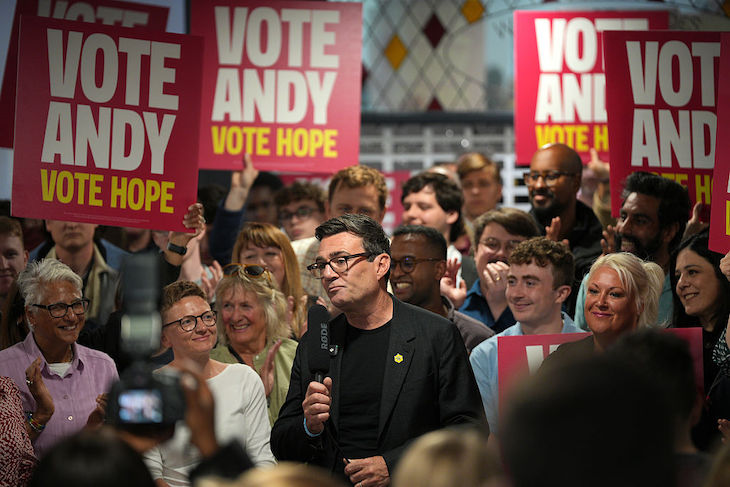
Voters in Makerfield haven’t even gone to the polling stations, but already the Labour leadership contest is well into a detailed exposition of what Andy Burnham – rather than any of the other contenders – might do.
A few ‘star’ new MPs had been promoted straight into government, but the rest hadn’t had an invite to Downing Street
Defence spending, welfare cuts, social care, immigration and the EU are all matters Burnham has pronounced on – and then changed his stance. The problem with WWAD (What Would Andy Do?), as the bracelets for Labour’s messiah might read, is that the answer really depends on the weather. Like Keir Starmer, Burnham has a habit of saying things that are right for the political climate at the time, rather than settling on policies that he’s prepared to see through to the end, regardless of how difficult it will be to do this.
Starmer quickly gained a reputation for saying whatever would get him what he wanted at the time, before junking it in the name of expediency. His own leadership campaign pledges became notorious, largely because so many of them disappeared after he was elected. Burnham could probably still be forgiven by Labour MPs for that kind of behaviour, though, if he managed to avoid the next pitfalls that really damaged Starmer’s authority.
The first was taking the loyalty of Labour MPs for granted, to the extent that many backbenchers hadn’t properly met Starmer a year after being elected. They were still grateful to their leader for rescuing the party from the depths of Corbynism and for getting Labour back into government, but were starting to feel as though he wasn’t remotely interested in them. A few ‘star’ new MPs had been promoted straight into government, but the rest hadn’t had an invite to Downing Street or a letter congratulating them on the speech they’d given in the Chamber, or all the other things that keep people loyal to their boss.
They’re the sort of thing that Starmer’s operation should have put far more effort into, not least because anyone watching the Tory party in government over the preceding 14 years would have noticed that backbenchers need to feel loved by their leader in order to keep marching through the lobbies in support of difficult policies.

By the time Starmer was asking those MPs to march through the lobbies, he’d already upset them with policies such as the cut to winter fuel payments. But they had also picked up something more damaging than indifference from the Number 10 operation: active derision. When aides and the whips tried to warn figures around Starmer that the parliamentary party was really, really uncomfortable with the welfare cuts proposed by the Treasury and Work and Pensions department (mostly the former), they were given the retort ‘we don’t give a fuck about what the PLP thinks’. So often when a party is in government, those around the leader develop a mentality that most backbench MPs are stupid and incapable of really thinking about the trade-offs that are necessary to get anything done.
Granted, a few MPs in all parties fit that description very well, but the rest are decent and thoughtful types. But even if you have ended up being extraordinarily unlucky and have a huge majority stuffed with numbskulls, the key is not to let them realise you think they’re stupid and not worth listening to. Labour MPs had worked out that they didn’t have sufficient respect from Team Starmer just at the point when the leader really needed them to back him.
Burnham pitches himself as an anti-establishment politician, but given he has really spent all his formative years in the establishment, it’s not yet clear how he would manage the Labour Party differently.
He is more personable than Starmer, and better-versed in the ways of MPs, having been one for far longer than the Prime Minister. But his reputation for flip-flopping suggests that while he might be more of a charmer than Starmer, he could still end up yielding to backbench pressure, rather than trying to persist with the welfare cuts, for instance, that he would have to make in order to fund defence. That last pledge was something he made at the weekend, arguing that getting people back into work would drive the benefits bill down. It’s true that proper welfare reform would have that effect – but only in time and after significant upfront investment, which isn’t going to help with defence spending now. So something will have to give – and unless WWAD turns out to be very different to the way Starmer has managed things, we know what it will be.

Comments