

“I don’t think there’s anything that’s going to get me into heaven,” Donald Trump told a group of journalists aboard Air Force One in October. “I think I’m not, maybe, heaven-bound.”
“My phone started blowing up,” says Paula White-Cain, Trump’s senior advisor to the White House Faith Office. “I went and looked at it because I didn’t see it live and I knew he was joking. People critique him if he’s too prideful. And then if there’s a part of humility in him, they’re critiquing him for that.”
Trump first called her in the early 2000s after seeing her preach on a Christian broadcast in Palm Beach. He thought she had the “It” factor. “It’s interesting because that’s what he called it,” she tells me. “I turned around and said, ‘Oh, sir, we call that the anointing,’ which simply means God’s presence… and that was our hello.”
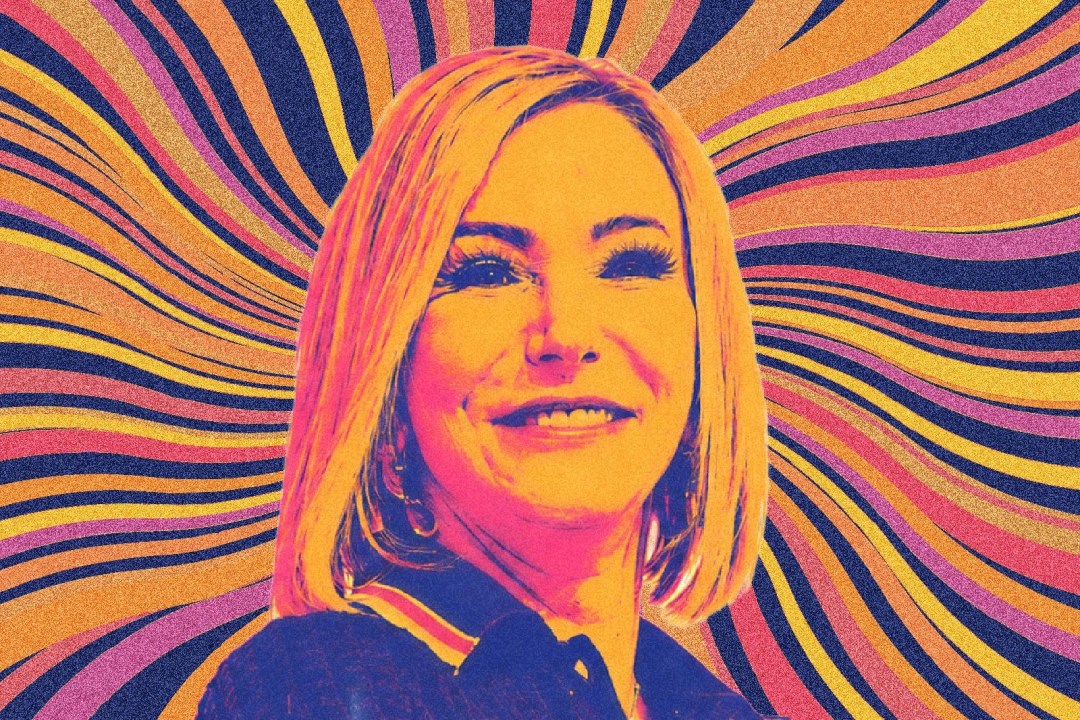
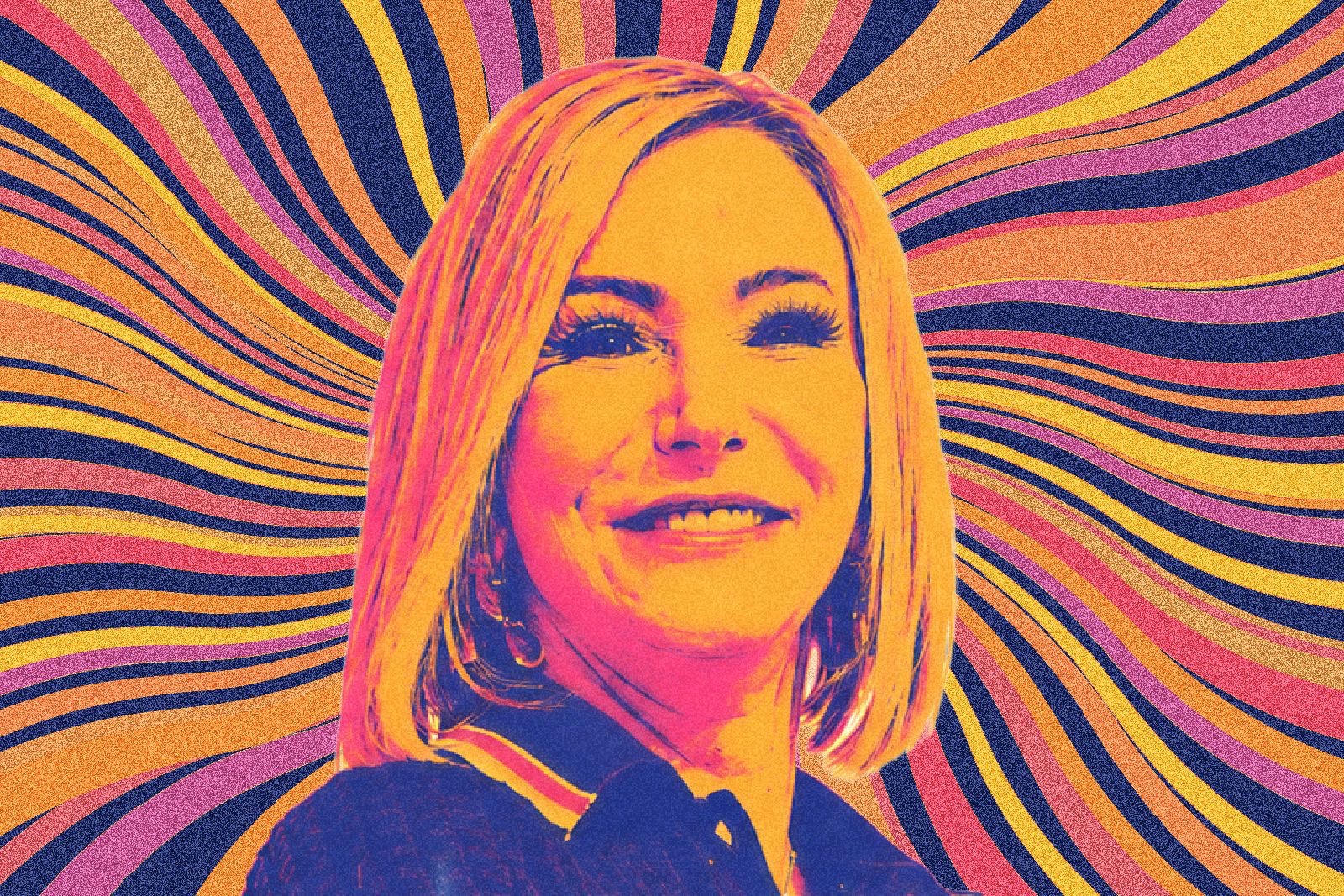
White-Cain has platinum blonde hair and a large, Spanish-style house in central Florida, where she spends the majority of her time. Her past two marriages ended but she is currently married to Jonathan Cain, who plays keyboard in the rock band Journey and co-wrote “Don’t Stop Believin’.” She is a televangelist, preacher, fundraiser and founder of Paula White Ministries, a global media and evangelical organization. Like the President, she is an outsider in the upper rooms of the Republican party. Trump appointed her to the White House Faith Office in both of his terms, though she was far from the obvious choice, and for all these years, he has relied on her to help him navigate the complex world of American evangelical elites.
It’s been reported that she represents one side of a theological turf war between Christians in this administration. “What’s interesting about Paula White is how much easier things would have been for Trump if he had not picked Paula White,” says Michael Wear, who worked in the Faith Office under Barack Obama. “Many conservative evangelicals and others will outright call her a heretic.”
White-Cain sees the world the way many Americans do: God, angels and demons all impact outcomes. She lacks the institutional or denominational background that would be expected of someone in her role, however. She has brought in more Pentecostals and members of non-denominational charismatic congregations, which are often racially diverse. She has also been accused of preaching a heresy called the “prosperity gospel”: the idea that in exchange for faith you might receive material blessings as well as salvation. She often asks people to give money to Israel, which triggers intense backlash from both right and left. There are many conservative Christian leaders who would be hesitant to share a stage with her. “And that would include me,” says Doug Wilson, Defense Secretary Pete Hegseth’s pastor.
Wilson occupies the other side of the administration’s theological turf war. His political satellite church meets above a restaurant in Capitol Hill; it was started at the start of Trump’s second term, for members of his small Reformed denomination (which he created) going to work for the White House. Wilson does not believe women should be able to hold pastoral positions. He is also among a group of evangelical Christians who view Trump as a political vessel fighting on their side of the culture war, rather than one of their own. This puts a fine point on the irony that Trump’s chosen leader for the Faith Office is a woman.
That White-Cain is “a woman and essentially Trump’s hand-chosen representative of faith in America,” as Wear says, is an issue for many evangelicals. For some, it is not far off on the progressive scale from Texas Senate hopeful James Talarico describing God as non-binary. But White-Cain’s sex isn’t the only issue. As Wear puts it, “she doesn’t have the ideological bona fides.” “I didn’t grow up with that background,” White-Cain says. “I got saved when I was 18 years old and had a real encounter with God. And it just forever changed me.” She grew up in Mississippi, in difficult circumstances – “my father committed suicide young,” she tells me – but a key part of her journey began in the nation’s capital.
“I was in the DC area working with an advocate by the name of Mitch Snyder,” she says. Snyder was a social justice-oriented Catholic, focused on anti-war activism and homelessness in Washington. “He was feeding the homeless… I mean, that was in 1984, so murder capital of the world, and I was left feeling so much joy. It was the greatest experience I’d had.” She speaks in a voice that is calm and hyper-attentive, the opposite of her exaggerated preaching style. It’s easy to imagine her reassuring the President in a similar tone.
While in Washington, White-Cain hosts contemporary worship in the Indian Treaty Room of the Executive Office Building. Christian influencers post videos of the services on social media, an unusual form of White House outreach.
‘I got saved when I was 18 and had a real encounter with God. It just forever changed me’
Strangely, White-Cain did not attend “Rededicate 250,” a large-scale event on the National Mall on May 17 with the sole purpose of recommitting America to Christianity, in person: she appeared via video on a large screen. This has caused some in the evangelical world to wonder if deals are being struck behind the scenes to keep White-Cain away from certain events.
Though he acknowledges God in public, Trump has never put his own faith at the center of any of his campaigns. It turns out that White-Cain advised him to keep matters of personal religion relatively private. “I actually told him, prior to 45, ‘Sir, this is really brutal out here,’” she says. “‘They’re going to come after you with some theological questions.’ I recommended… that he holds that close to his chest.”
It was after Trump went to the Christian Liberty University during his first campaign, that she came to that conclusion. Asked about the Bible, he’d said “Two Corinthians” instead of “Second Corinthians” in reference to the Pauline Epistle: a minor error but a sure tell that he was an outsider in that world. Trump was teased for it and White-Cain had a hunch he had been led astray. “That’s when I realized that even people… in ministry…” she trails off, alluding to the fact that he might be easily sabotaged if he wasn’t careful. “You know, maybe it was innocent, maybe it wasn’t,” she adds. She told Trump she believed it would be smart to focus on policy. By following her advice, he has been able to court favor with evangelicals who have little in common with him.
It’s generally accepted that Trump doesn’t care much about theology. So, what does Wilson advise his congregants working in the administration to do if they run into religious conflicts with the President? “Well,” Wilson says, “roll with it.”
Other senior Christians who were uneasy with White-Cain must have done the same.



Comments