
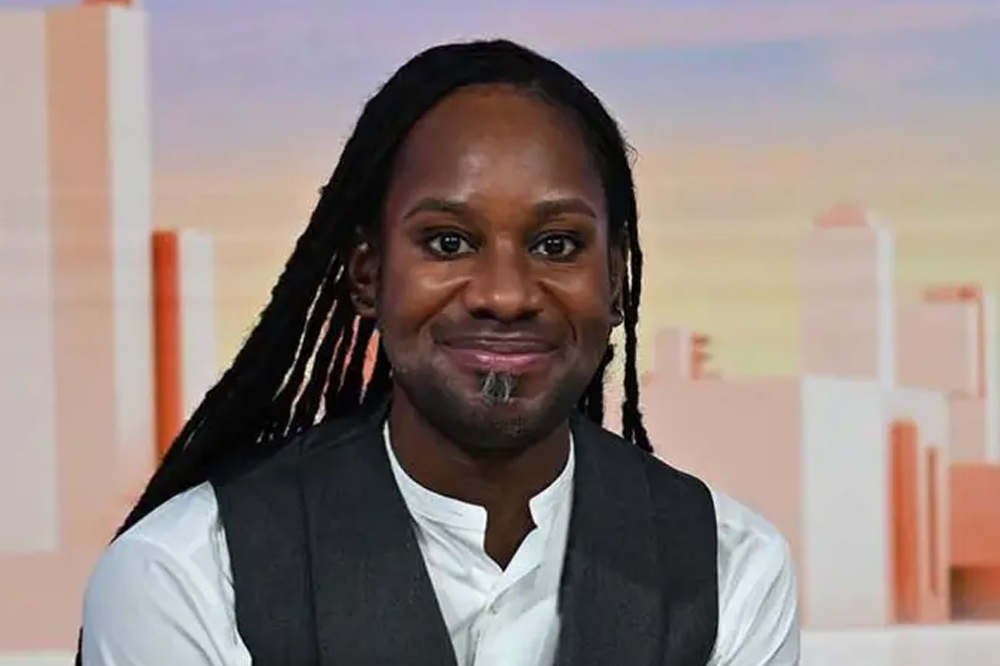
The Jason Arday affair has been a great revealer. On the one hand, it is a glorious romp that has brought much-needed mirth to Britain. On the other, the exposure of Professor Arday isn’t really about the guileless Arday himself, but the establishment that elevated him. It has served up a moment of unavoidable clarity in which the nonsense of progressivism stands exposed like the imperial scrotum.
Arday himself can hardly be blamed for this scandal. Like Puff the magic dragon, he is notable only for the effect he had on others
It is a perfect storm. We have a fantasist in an environment where, for political and social status reasons, everyone takes his claims at face value, or pretends that they do because to express doubt would be to invite unwanted attention. In such fertile ground the fantasist’s claims (which he continues to deny fabricating) inevitably become increasingly outlandish – epic marathon runs, prophetic blessings, an appearance in a television program that began 20 years before he was born – because he is increasingly secure that they will never be questioned. This is what inevitably occurs when a fantasist encounters people who want, for whatever reason, to believe his fantasies.
It can be quite uncanny to see a fantasist at work. I once heard of a TV project that met for its first big production meeting. It was only then, after weeks of prep across different departments, that it gradually occurred to everybody that the show hadn’t actually been commissioned. The writer had just told everybody that it had. And they’d wanted to believe.
Arday himself can hardly be blamed for this scandal. Like Puff the magic dragon, he is notable only for the effect he had on others. Who would dare to speak up against a wunderkind that made a lot of powerful people feel better about themselves? Like love, mediocrity will always find a way. DEI is its great enabler, but this can never be acknowledged.

Even now we can see the reluctance of Arday’s cheerleaders to throw in the towel. LBC’s James O’Brien, for example, who at the height of Arday’s fame nodded along to his rambling tosh, is currently fighting a desperate rearguard action, telling his Bluesky followers that the Telegraph and the Times of London have crossed the line into “studied [and] deliberate ignominy” with their Arday stories. I love how O’Brien goes all Victorian in his vocabulary on these occasions. He must think it makes him look very serious. He goes on, “If there is any case to answer here, it is about Liverpool John Moore’s supervisory failure of an obviously unique PhD student. Something, I imagine, their own exhaustive investigation concluded… [it] would be comical if the motivation of Jason’s enemies were not so hideously obvious.”
Like all of Arday’s fans, O’Brien’s only remaining option is to throw murky aspersions of racism on the people who have revealed him to be such a colossal, credulous prat.
And of course, O’Brien has form on this as long as your arm, with his enthusiastic vaunting of the claims of the fantasist and later convicted pedophile Carl Beech. In both cases, O’Brien wanted very badly to believe a very obvious fantasy.
Such scandals can often be mistaken optimistically for an end to the whole shebang of progressive nonsense – for who could ever take them seriously again? But the roots of progressivism are too deeply embedded in the soil of public life. These hilarious exposures – see also Jussie Smollett – are not strong enough to dislodge them. The daring young man on the flying trapeze may fall to the ground with a splat, but the progressive circus is so big that it just moves on.
People who want to believe are easy marks for the not-very-good and delusional. The Labour party is currently in the grip of just such a mania. Andy Burnham is only another kind of fantasist. According to him, after all, the big problems facing Britain in 2026 are Mrs. Thatcher, Sainsbury’s and not enough mayors. Is that really much less bizarre than Arday’s claims? It feels a bit like he’s pulled three things out of a hat. Another dip would have brought up unicycles, Toyah and not enough people called Steve. And on the right, enough people want to believe in Rupert Lowe as the next prime minister, despite his actual status as nothing much more than an electoral irritant to Reform.
As Arday shows, we need safeguards against that common human failing: ignoring the truth in favor of what we’d prefer to be real.




Comments