Academia

Ghent University shouldn’t have suspended Nathan Cofnas

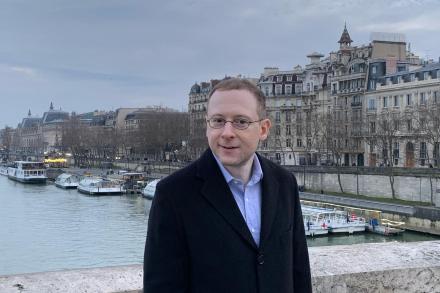
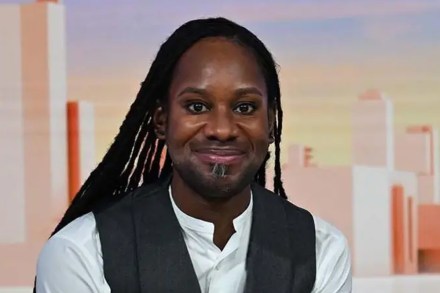
It is ironic that the “be kind” brigade beating their breasts and wailing about the "lynching" and "assassination" of Jason Arday think the appropriate response is to whip up hatred against Nathan Cofnas, the scholar who exposed Arday's academic misconduct. At the vigil for Arday at Trafalgar Square in London, several speakers singled out Cofnas for blame, including Diane Abbott MP, who described him as a “racist.” Nathan contacted me shortly afterwards worried that he risked being murdered if he set foot in London.

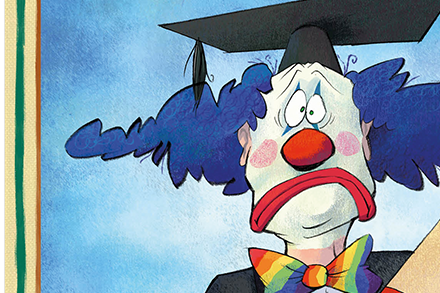
Class clowns: the triumph of inanity over British academia

Daniel Defoe observed that plague victims “never perceiv’d that they were infected” until they discovered the “tokens” on their skin. By that point, “nothing could follow but certain Death”. Something similar might be said of Britain’s universities. In recent days, the Jason Arday affair has captured the world’s attention because of its absurdity. But the humiliation of Cambridge is not an early sign of infection. It is just a particularly visible bubo. At one level, Arday’s fall reveals how, even in the most elite universities, DEI (diversity, equity and inclusion) dogma has warped intellectual standards to the point of madness.

academia

Why progressives were desperate to believe Jason Arday

The Jason Arday affair has been a great revealer. On the one hand, it is a glorious romp that has brought much-needed mirth to Britain. On the other, the exposure of Professor Arday isn’t really about the guileless Arday himself, but the establishment that elevated him. It has served up a moment of unavoidable clarity in which the nonsense of progressivism stands exposed like the imperial scrotum. Arday himself can hardly be blamed for this scandal. Like Puff the magic dragon, he is notable only for the effect he had on others It is a perfect storm. We have a fantasist in an environment where, for political and social status reasons, everyone takes his claims at face value, or pretends that they do because to express doubt would be to invite unwanted attention.

jason arday

Cambridge is coming out very badly from the Jason Arday affair

I’ve never met Professor Jason Arday. I don’t know whether he has genuinely run 600 miles in six days. I also genuinely don’t know the truth about the remarkable similarities between parts of his doctoral thesis at Liverpool John Moores, which helped propel him rocket-like up the academic greasy pole to a chair at Cambridge, and passages in a dissertation written six years earlier by someone at Brunel. From the parts of Arday’s output I have seen, I have found some fairly thin gruel It is undoubtedly possible that this is nothing more than an honest, if rather careless, omission to acknowledge earlier work: academics are, after all, proverbially absent-minded, and writing theses is stressful.

jason arday

How useful is AI for research?

Late last year, I published the first theoretical physics paper in which the main idea originated from artificial intelligence – from an AI. And my experience working with the most powerful AI models left me both impressed and wary. The most accurate analogy I can offer is that it’s like something familiar to anyone who has done research: a brilliant colleague who is also unreliable. This colleague can produce deep insights at surprising speed – and then, the next second, make an error that ranges from the trivial to the profound. That tension – capability versus reliability – has shaped how I now use these systems in mathematics and theoretical physics. It is also what will shape how they affect scientific research over the next few years.

Slipshod: a short story by Sarah Perry

It was months before the difficulty with Marnie and Addison was talked about, or even alluded to. The sight of their names in emails circulated around the department was enough to cause a pall to settle on everything, like ash from fires only just put out. Besides, the nature of the difficulty (that was the word we all used) was both so opaque and so distressing we’d have had trouble talking about it, even if we’d wanted to. It fell to me to piece things together. My brief from Helen was simply to satisfy the university that nobody in the department was to blame. It fell to me because I am, she tells me, part of the furniture: unremarkable, functional, predictable.

slipshod

The battle to stop US universities aiding Chinese repression

It goes by an innocuous name – “Integrated Joint Operations Platform” (IJOP) – but it’s one of the most sinister components of China’s surveillance state, managing what has been described as a genocide against the Uighurs. The IJOP combines multiple systems of repression – location, messages, contacts, social media and other data from phones, together with information from checkpoints, cameras and biometric records. It then flags “suspicious” individuals for detention and forced labor. Now leading US universities have been accused of extensive collaboration with Chinese laboratories which develop technology that may be deployed or adapted for use in this system.

The steady erosion of academic rigor in German schools

German teachers are a privileged species. Most of us enjoy the status of a Beamter, a tenured civil servant. We can be dismissed only after a serious criminal conviction, we are exempt from social-insurance contributions and even our mortgage rates are lower. Such comfort discourages dissent. Yet, after more than 25 years as a pampered Beamter, I find myself overwhelmed, not by the teaching load or the students, but by the accelerating erosion of academic standards. Having taught English, history and Latin at four different Gymnasien, I have learned that challenging students is now frowned upon by both bureaucrats and politicians. Nearly all my colleagues agree that standards have plummeted.

Hell is other academics: Katabasis, by R.F. Kuang, reviewed

From our UK edition

‘Katabasis, noun, Ancient Greek: The story of a hero’s descent to the underworld.’ R.F. Kuang’s latest novel is a promising adventure story full of magic and maths but let down by florid prose. When Alice Law, an American postgraduate student of ‘Analytic Magick’ at Cambridge, learns of the death of her chauvinist thesis supervisor Professor Grimes, she and her peer, Peter Murdoch, must rescue his soul from the eight courts of hell. Their journey comes with the debt of half a lifetime. But without Grimes, Alice is stuck in academic limbo on Earth, so she must pay this penalty and ‘beg for his life back from King Yama the Merciful, Ruler of the Underworld’. The hellscape they encounter differs from Dante’s vision.

The students bullied into being woke

If, as Shakespeare observed, “all the world is a stage, and all its men and women merely players,” no place is that truer than the modern American university. In the first study of its kind, 88 percent of Northwestern and University of Michigan students admitted they “have pretended to hold more progressive views than [they] truly endorse to succeed socially or academically.” While the phenomenon of college students pretending to be more liberal than they actually are to make life easier for them as they attend these hotbeds of radicalism is not surprising, the true scale of it is. But how have we got here? If you’re looking for a single explanation, I’m sorry to disappoint you. The modern college environment is a perfect storm of several factors working together.

College

Studying Dickens at university was once considered demeaning. Now it’s too demanding

From our UK edition

Any consideration of Stefan Collini’s subject has surely to address a major recent issue. The academic study of English, both at school and university, has fallen away significantly, with the numbers opting for it greatly diminishing. Anecdotal evidence from even the most serious institutions suggests that many students are now finding previously accessible texts impossible to read or understand – because of their length (Charles Dickens), their complexity of meaning (Alexander Pope) or remote sensibility or politics (Joseph Conrad). Collini has been given a generous amount of space to write his history. Despite this, he has chosen to end it more than 50 years ago. His subtitle is quite misleading.

The reviving of the American mind

In his 1987 book, The Closing of the American Mind, Allan Bloom argued that higher education no longer taught US citizens how to think. “We are like ignorant shepherds living on a site where great civilizations once flourished,” he wrote. “The shepherds play with the fragments that pop up to the surface, having no notion of the beautiful structures of which they were once a part.” Now, almost 40 years later, we’re even more clueless. The rot in academia has spread throughout the education system and can be found all over American life. Rational thinking has now been almost entirely usurped by the baser passions of anger and grievance, as we saw all too clearly in the collective insanity of the Black Lives Matter riots of 2020.

Trump

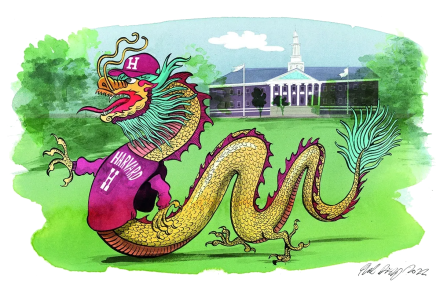
Harvard’s intricate China ties

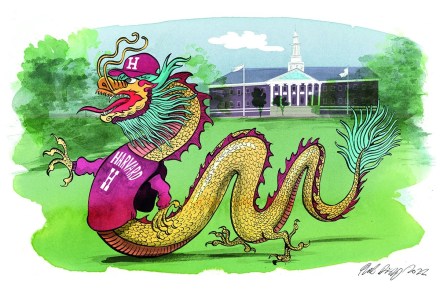
Scratch almost any major US political story and sooner or later you’ll hit a big red nerve that belongs to the Chinese Communist party (CCP). Tariffs, energy, TikTok, the border, Fentanyl, Greenland, Panama, the Gulf of America – on all these subjects the Trump administration is, one way or another, trying to limit Beijing’s power in the West. And Donald Trump’s "war on Harvard," it turns out, is no exception. It’s clear that the President is pushing against anti-Semitism and the Diversity, Equity and Inclusion madness on America’s most famous campus, as well as in countless other colleges and universities.

Harvard

Harvard against America

This is drumming season.  That’s the time of year when the woodpeckers stake out their territories by tapping out tattoos on hollow trees.  Road signs or “no trespassing” edicts make an even more impressive racket.  I come to Vermont to get away from Midtown Manhattan’s horns and sirens – but this time of year, it’s just a visit to the percussion section.  But the real racket isn’t from the birds declaring their sovereignty over the woods.  It is from Harvard declaring its sovereignty over American higher education. In a letter dated April 14, the principals of two Washington law firms wrote a brief letter to three officials in the Trump administration telling them they need not worry about antisemitism at Harvard.

harvard

The vagaries of laboratory experiments

From our UK edition

One usually likes to think that scientists know what they’re doing. Here’s something that might shake your confidence. In bio-medical research, scientists often use cell lines. These are in vitro cells, originally taken from a human or animal donor, which can be experimented on to help develop new drugs or treatments. The problem is that, according to one review, in ‘at least 5 per cent’ of studies, the scientists have totally mixed up where the cells came from. This means that in at least one in 20 studies that were sent off for peer review the scientists were completely confused about the most basic element of their research. They thought, for instance, they were doing research on lung cells when they actually had pancreatic ones.

David Lodge, the master of Anglo-American campus humor

"Literature is mostly about having sex and not about having children.” So said the British novelist, occasional screenwriter and literary critic David Lodge, who died at the beginning of 2025 at the age of eighty-nine. Lodge, who had suffered from encroaching deafness for several decades, had not, in truth, been a major literary figure for a considerable period before his death. This retreat into obscurity had not been helped by a trio of memoirs, beginning with 2015’s Quite a Good Time To Be Born, which perplexed critics — including this one — with their dour, downbeat and decidedly un-humorous tone. Few would have known, from reading them, that their author had once been regarded as one of the late twentieth century’s most accomplished comic novelists.

Lodge

Disgusted of academia: a university lecturer bewails his lot

From our UK edition

There’s a beautiful moment in I Am the Secret Footballer (2012), a Guardian column turned whistle-blower memoir, when the anonymous author is momentarily freed from an enveloping depression caused by his career as a professional sportsman. He’s at Anfield to play against Liverpool in one of the biggest games of the season when he picks up a pristine, unused football before a warm-up drill and, inexplicably, sniffs it. With that inhalation he’s transported from the corruption, pressure, scandalous abuse and monstrous egos of elite sport and for a few seconds becomes a kid uncontainably excited at the prospect of kicking a new ball around his council estate.

An explanation of the campus protests

A friend wrote me to ask, “Why is this mess happening on campus?" Here is my response.  Let me offer some thoughts, as a long-time professor, in hopes they spur your own.  Let's begin with something apolitical: young people love expressions of group solidarity. Some protests are like football games, held conveniently in the spring when spirits soar. Let's all join in, especially if it is costless virtue-signaling. And in the absence of any serious punishment, that's what it is.  These demonstrations happen a lot more often when the weather is nice. It's a lot easier to pitch tents on the quadrangle in April or October than in January and February. It’s a lot easier to sit on the Golden Gate Bridge, too.  But why the hatred of Israel and so often of Jews?

campus protest

Want student loan forgiveness? Make universities pay

At the turn of the twentieth century, Saturday Evening Post editor and Yale dropout George Lorimer bitingly summed up academia when he said “colleges don’t make fools, they only develop them.” On the heels of yet another multibillion-dollar Biden administration college bailout, it seems we haven’t learned the lesson: colleges might not make fools, but they’re certainly trying to make fools of us. The bailout projects come from a Biden campaign promise: “I will eliminate your student debt.” Half-slogan, half-bribe, this resonated with millions burdened by the unpayable debt brought on by liberal arts degrees that may barely be worth the paper they’re printed on.

debt

The fight for civilization in higher education

The idea that Western civilization ushered in an age of oppression, cultural destruction, environmental degradation and all manner of human exploitation, is bittersweet. I don’t mean that it tastes like coffee or dark chocolate. I mean bittersweet the vine, Celastrus orbiculatus, with the colorful orange-red berries. This kind of bittersweet grows at a phenomenal rate, ascending into the canopy and strangling trees. If you drive north out of New York City, you will pass endless miles of arboreal carnage. Tens of thousands of roadside trees are draped in the deadly vine. It is an invasive Asian species that, once established, is impossible to eradicate. And while its fall berries are attractive and make for good floral arrays, they are inedible.

civilization higher education