The credit for defeating Sir Keir Starmer’s Chagos surrender bill goes to its political opponents who waged a relentless and diligent campaign. They got almost zero help from a group that should have been even more against the bill than anyone: environmentalists.
When Starmer government suggested handing over the islands to Mauritius – a nation that had campaigned against the designation of the archipelago as one of the world’s largest marine protected areas (MPAs), had partly ruined its own coral reefs, and was proposing to allow ‘traditional’ fishing in the archipelago, possibly including European fleets – I expected howls of protest from environmentalists. Instead, silence.
I can find no direct statement from the WWF (World Wide Fund for Nature) regarding the 2024-2025 UK-Mauritius agreement on the Chagos Islands. ‘Sorry, but nothing matched your search terms,’ laments Oceana UK (‘Protecting the World’s Oceans’) when I search for ‘Chagos’ on their website. Much the same from Birdlife International. As for the Green party, it prefers mosques to reefs.
Where are greens when you finally need them? Anticolonialism trumps the environment even for them and conservationists fear loss of funding if they appear to take a side on Chagos
I turned to the Blue Marine Foundation, which led the campaign for designation of the MPA. ‘While concerns have been raised that the recent Chagos sovereignty deal might allow fishing in the Chagos Islands marine protected area,’ waffles its website, ‘others emphasise that the Mauritius government has set ambitious conservation goals…blah blah blah’. The chair of the Chagos Conservation Trust has more to say in his latest newsletter about the first sighting of a sliteye shark in Chagos than the hand-over of the islands to Mauritius.
Where are greens when you finally need them? Anticolonialism trumps the environment even for them and conservationists fear loss of funding if they appear to take a side on Chagos. It has mostly been left to political critics of the Chagos surrender treaty to raise the risk to turtles and corals. For example, Lord (Zac) Goldsmith tells me he is ‘disappointed by the almost total silence from the conservation groups. They – or many of them – had held this up as one of the great conservation wins of the last few decades.’

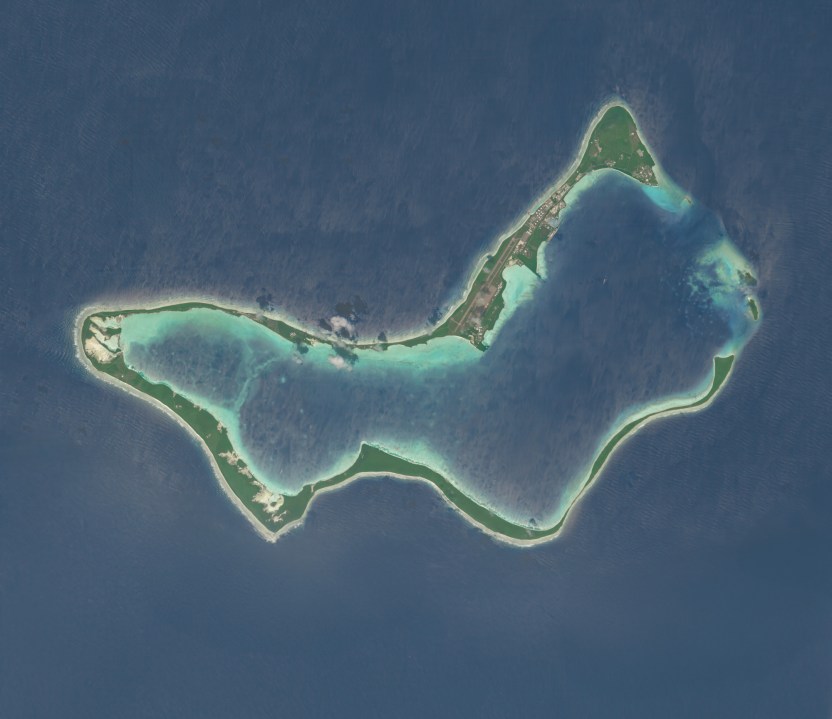
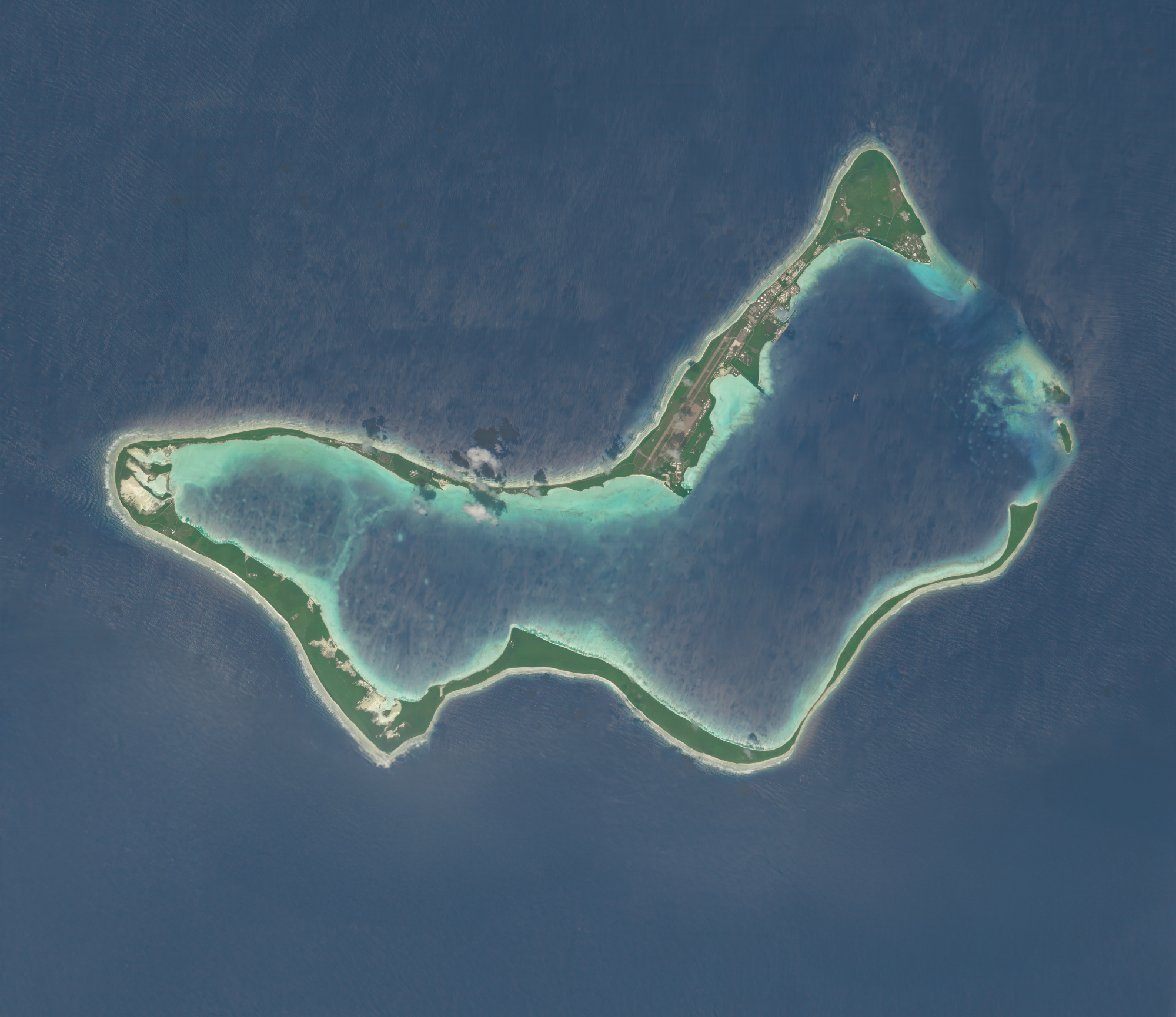
Covering a quarter of a million square miles of sea, reefs and lagoons, the Chagos nature reserve is larger than the North Sea. It contains some of the most pristine and extensive coral ecosystems on the planet. Clive Hambler, an Oxford biologist who has studied Indian Ocean atolls, reckons that ‘a case could be made the Chagos is the most important Marine Protected Area on Earth.’
By accident, military occupation was probably a good result for the ecology of the Chagos reefs in the twentieth century. The islands were uninhabited when first visited by Europeans and the military’s exclusion of fishermen has left the coral ecosystems of Chagos almost untouched. This came at the cost of ruining some of the land ecosystems on the atoll islands themselves, especially Diego Garcia – but Chagos’s environmental jewels are under water, not on land.
True, there are rare species on the islands, including robber crabs, tropicbirds and nesting hawksbill turtles, but none are unique to these islands. Also, some of the islands have rats, cats, donkeys and other invasive aliens that must be extirpated to help the seabirds breed – and on some islands eradication has already happened. But the really precious thing about the archipelago is the vast extent of coral reefs and all the marine life that lives on them. These can act as a reservoir to help replenish damaged reefs elsewhere in the Indian Ocean.
In the 1960s Britain proposed an air base on the isolated atoll of Aldabra, now part of the Seychelles, but conservationists objected on the grounds that Aldabra is home to many endemic species of land animal, found nowhere else: including a giant tortoise, a drongo, a fody, a rail and a gecko. So attention switched to the Chagos islands, which lack endemic land species. This is because they appear to have been fully submerged in previous episodes of global warming, around 125,000 years ago and possibly 7,000 years ago as well. Aldabra was under water in the first of those warm spells but not the second.
This second period, known as the Holocene Thermal Maximum, lasted until around 5,000 years ago and saw the oceans warming up so much that evaporation fuelled monsoons which filled lakes in the Sahara desert where hippos swam. Until recently it was widely believed that sea levels were no higher then than now, but more and more evidence is emerging that sea levels in some areas were around two metres higher in 4,000BC than today because of melting ice caps.
This is not very long ago. Egypt’s first dynasty dates from about 5,000 years ago. Had the pharoah Narmer sent a naval expedition to the middle of the Indian ocean, he might not have found any islands where the Chagos archipelago now is. But the reefs would have been fine: they can grow upwards as fast as sea levels rise, at least when they are rising slowly. And then spread out and down as sea levels sink.
If you want to get the attention of environmental activists, the words ‘climate change’ act like a magic spell, because they translate directly into the word ‘money’. The flooding at the end of the last ice age of the poor little Chagos islands, which had withstood the waves for more than 100,000 years, must surely merit a mention from green groups?
No? You see, it was caused not by the exhaust fumes from ancient Egyptian chariots, but by natural shifts in the earth’s orbit, so it does not count and must never be mentioned. I often reflect that life would be so much more interesting if we were allowed to discuss the implications of natural climate change as well as the man-made variety.




Comments