

Dante’s Beach, Ravenna
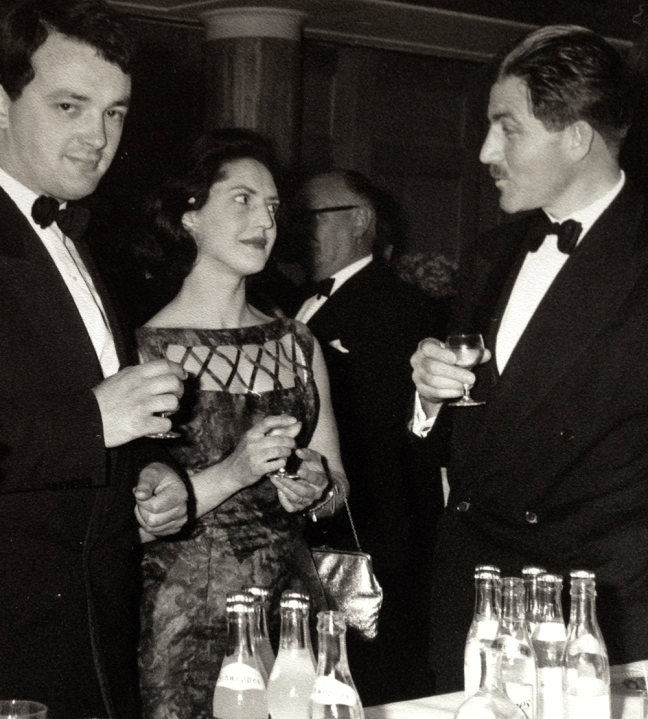
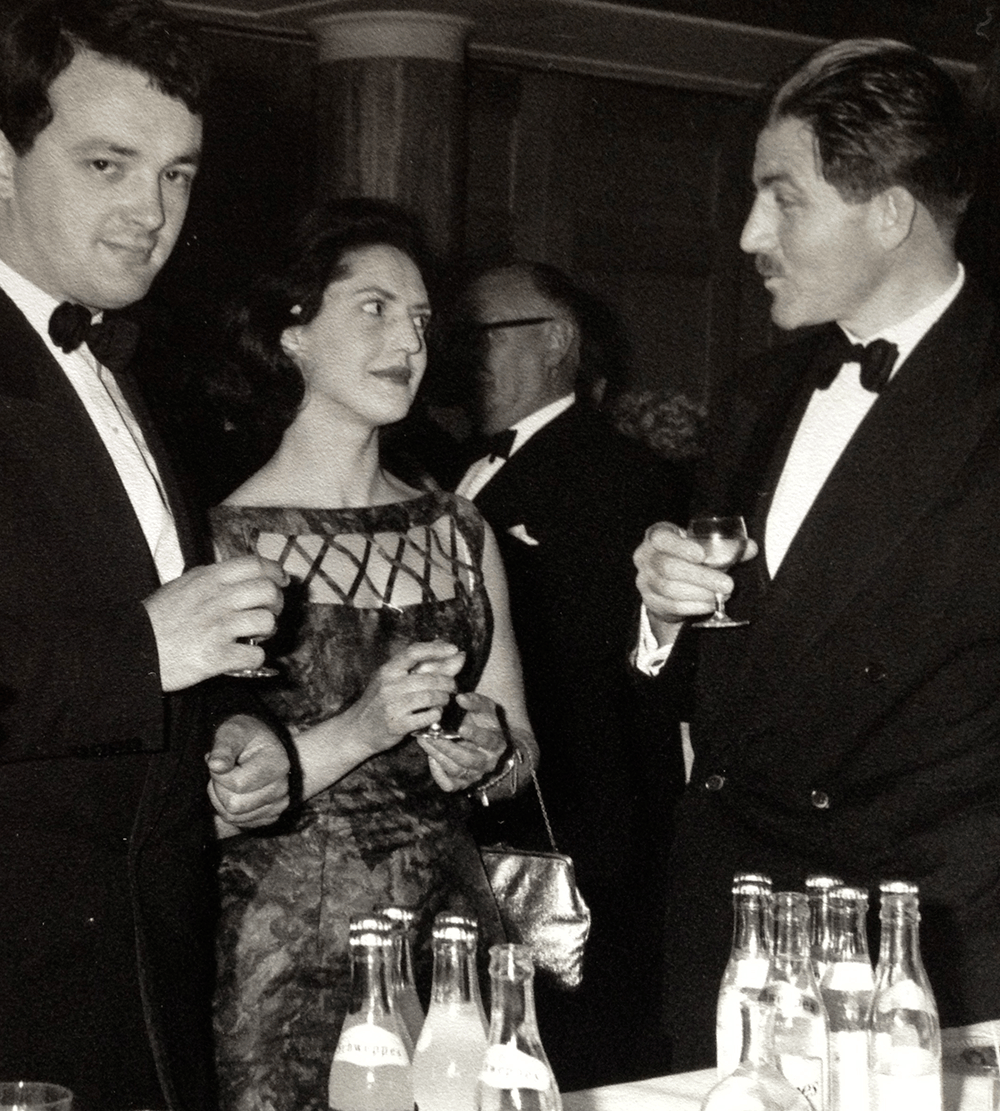
My mother Joyce was a very beautiful woman who became what “normal” people call “mad.” My question has always been: why did she go mad? But also: did she in fact go mad?
She had meditated under a blanket with the Beatles and the Maharishi in Bangor in 1967. She had been the life and soul of every party. But that was not, I feel, the explanation.
She died in poverty in 1982, aged just 50, in a hospice in distant Newcastle upon Tyne where she had returned from Kent in desperation to live in the derelict two-up two-down where she had grown up. I was there with her throughout that final year. “Paranoid schizophrenic,” some doctor once told me, whatever that means. For let us not forget the Russian proverb: “The paranoid is always right.”
Her only sibling, her brother Arnold, had died, shot down over Stuttgart in July 1944. Her father was long dead, her mother senile.

The cause of death was lung cancer. She was a heavy smoker. But what really killed her, I am sure, came much earlier. She believed that my father Tom, a successful dentist and qualified hypnotist, was behind a conspiracy to destroy her. I try to believe that this was not his intent. But it was certainly his effect.
When I came back to Britain in late 1981 from Bari in the deep south of Italy, my mother told me on the phone she had cancer. My father, by then remarried and living in a lovely country cottage on the North Downs, told me: “Don’t go. You have your own life to live.”
But I could not let my mother die alone. I was 23. In that tiny Newcastle house I found desolation. There was, for instance, what looked like 20 years of washing up in the little kitchen. Her mother – my nana – was there too. “How long is it you’ve been married to our Joyce, then, Nicky?” she asked. I had hardly ever been to Newcastle and knew no one. How had it come to this?
My mother had lost her beautiful ground-floor flat in a Queen Anne mansion in the village of Barham near Canterbury because she defaulted on a loan secured on the property. As a last throw of the dice she had driven north in her Mini to the nursing home where her mother lived. She had taken her out for tea and not taken her back. At least her mother owned a house. After about a month, I managed to get my grandmother into a free state-run hospice, thank God.
That left my mother. I too signed on the dole. I went to pubs and clubs and loved the Geordies and their sing-song way of life. But I felt so low that I could not connect. I still have a 65-page account of her marriage she wrote for a solicitor during her divorce in the early 1970s. It is a harrowing read. She was a radiographer and had met my father at a summer cricket dance in 1956 at King’s College Hospital, London, where he was, she writes, “something to do with mouths.”
He asked her to marry him after three weeks and she agreed “since we were attracted to each other.” He needed it done before the rugby season began, as he was captain.
His family were not present at the wedding. They were dirt-poor and lived in Woolwich, where as a boy he had delivered bread by cart. He had long since cut off contact with them. Indeed, I have never met them though, after his death last year, two days short of his 100th birthday, have thought I must try. He cut off not just them, but emotion.
The honeymoon was a rugby tour in France. She writes: “I found him most uncommunicative conversationally, always preoccupied with rugger matters and didn’t have time or inclination for me other than bedtime.” And: “He started telling me I was mad and I started to believe him.” And: “I am unable to ignore the fact that he hates me when I’m happy.”
They are living in an isolated house in the woods in the countryside between Edenbridge and Cowden in Kent and she descends into a doom loop of sleeping pills and tranquilizers, and desperate calls about him to doctors, vicars, the police, even the Samaritans.
The rows, as I remember only too well when I was back from school, were endless. She would shout and shout and he would say: “You’re mad, you’re mad!” I used to pray in bed every night: “Please God, make Mummy and Daddy happy again.” To no avail.
In Barham, her marriage over, she believed someone – somehow manipulated by him – was stealing her electricity, chucking urine in her Mini and tapping on the windows. One night, aged 15, I plucked up courage and opened the door leading out into the garden and went out. “There’s no one here, Mum!”
The only person to come to her funeral in Newcastle, apart from my younger brother Simon, was Sir Reginald Goodall, the great Wagner conductor. Reggie, as we called him, lived in the east wing of the mansion in Barham and had fallen in love with her but was 30 years older. His speech would often trail off into a murmur as if words, mankind and life itself were futile, and he pretended to be deaf to most human voices. But not hers. Two years later, I saw him conduct Die Walküre in Cardiff. Afterwards we had dinner. “Your mother was one of the most wonderful women I ever met,” he said. “She understood the stars.”
On her gravestone I put a quote from Hermann Hesse’s Steppenwolf: “Let the little way to death be as it might, the kernel of this life of mine was noble.” I could not afford the rest of the quote: “It had purpose and character and turned not on trifles, but on the stars.” The stone mason had wanted a pound a letter.





Comments