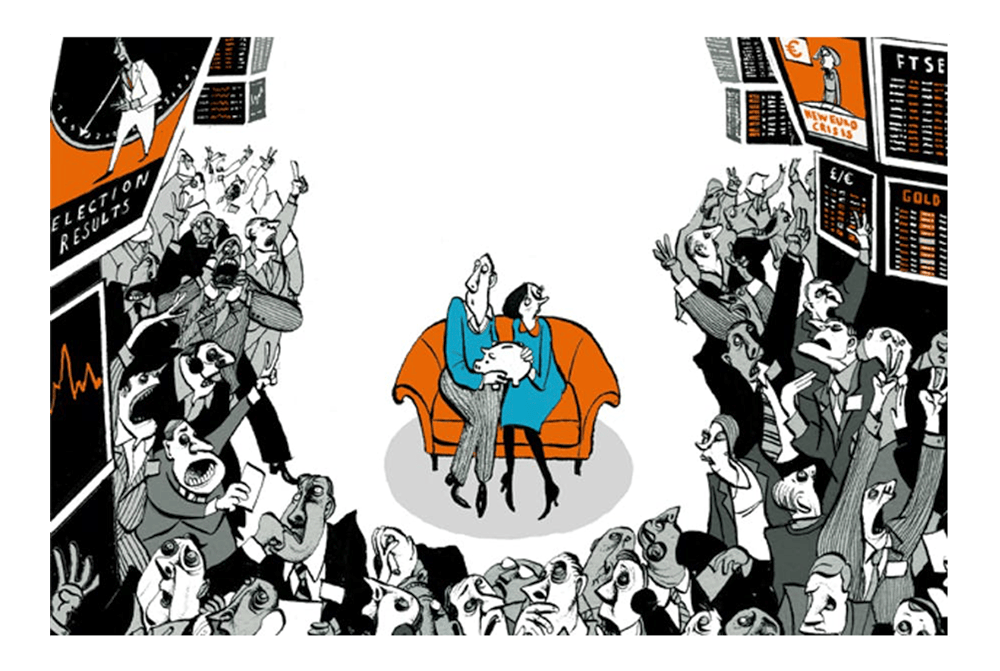
Looking around Britain today, we can identify plenty of three-letter initialisms making our lives miserable. The BBC, with its hand in your pocket and potently mad programming; the NHS, which sucks in an ever-growing £205 billion a year of taxpayers’ money but seems to be incapable of reform; the WFH epidemic, which is devastating to productivity. However, there is one three-letter acronym which could solve a lot of our problems as a nation – the Individual Savings Account, or Isa. Previously, it was Sid.
In 1986, the Thatcher government launched a highly effective campaign advertising shares in British Gas called Tell Sid. It persuaded some 4.5 million people to consider investing in this newly denationalised utility, reintroducing the British public to retail investing. Banks and financial institutions such as Barclays called for a similar campaign to be reintroduced to discourage households from keeping their savings as cash. I haven’t yet seen a change in perceptions among the British people, although in April Barclays got what it asked for in the form of the industry-funded Invest for the Future campaign. Barclays is right: we need to reintroduce retail investing to the masses, for the social and economic good of the country.
We are a nation that prefers sitting on bricks and mortar to putting our spare cash into innovative companies
At 8 per cent, British adults hold the smallest share of their wealth in equities and mutual funds, outside pensions, in the G7, according to Aberdeen – the investment company, not the city. We have become a nation that prefers sitting on unproductive bricks and mortar to putting our spare cash into innovative companies. That is not to say we don’t need to build more housing, but it is not healthy that households hold 50 per cent of their wealth in housing and 15 per cent in cash.
Names such as Northern Rock and Woodford ring loudly in the ears of retail investors. Despite years of strong returns for those with pensions and no financial crises (outside of those created by our governments), Brits still do not trust the financial services industry with their increasingly hard won savings. Indeed, once they have a cash buffer for emergencies, they should pile into stocks and shares Isas to get the economy growing a bit more.
In the most recent Budget, John Healey reversed Rachel Reeves’s correct move to make cash Isas less attractive: her cut to the cash limit for under-65s, from £20,000 to £12,000, will no longer go ahead. The Treasury puts the cost of the U-turn at just £70 million a year by 2031/32, so the cap was never about revenue, but instead a nudge towards investing. The Lifetime Isa is also being replaced from 2029 with a First Time Buyer Isa, funnelling bonuses back into housing rather than corporate capital.

Although there has been a transition to saving, it has favoured cash. HMRC’s figures show savers subscribed £95.6 billion to cash Isas in 2024/25, up 38 per cent, against just £37.2 billion for stocks and shares Isas, up 20 per cent. Cash Isas, like premium bonds, are terrible places for long-term investment.
Since 2010, according to Moneyfacts, stocks and shares Isas have turned £100 into about £233 on average, against £130 for cash Isas, even though cash came out ahead in five of those 15 years. Why? Because they are in growing assets (companies) rather than being eroded by inflation, as is the fate of cash.
Even worse, the Pension Schemes Act 2026 has a reserve power which, from 2028, could allow the government to force the default funds of workplace pensions into the government’s preferred asset choices. At a time when we are being called to be more resilient as households in the short and long term, the looming state debt bomb (with net debt just past £3 trillion, or 94 per cent of GDP) means we must ensure we are as financially resilient as possible. That requires economic growth and taking some chances with what we have left in the kitty at the end of the month.
Unfortunately, we have as a nation become risk averse. A June study by the Productivity Institute found British managers are as ambitious as those in 15 peer economies, but more averse to risk and loss. They partly reflect a more risk-averse population. When we look at our political class, it is dominated by consultation, can-kicking and lethargy, even over the most minor of policy decisions, never mind national projects. Whenever significant ambitions are announced, they are often derided as unworkable.
While Michael Simmons, this magazine’s economics editor, can usually be found highlighting the government’s maddening red-tape and procurement rules, the Financial Conduct Authority (FCA) is also inflicting well-meaning rules that lead to damaging outcomes. Financial products are being treated like cigarettes, but without the sex appeal. The FCA does not prescribe the wording for mainstream investments, but firms wary of the regulator still fill their adverts with boilerplate warnings. This has the effect of putting people off investing. Aviva has found 41 per cent of Brits compare investing to gambling. Betting adverts, meanwhile, carry a four-word slogan: ‘Take Time To Think.’

I am not calling for even stricter warnings on tobacco, vapes, or gambling, but I am asking why we overload our financial products with such stern warnings when we are crying out for investment. Once again, the government has its foot in its mouth and ‘asks’ the public to contribute more to remedy the problem.
‘You can just do things’ has become a meme among younger, frustrated workers, such is their exhaustion with our country’s circumspection. Even Martin Lewis has called on those who have savings they can lock away, beyond an emergency fund, to invest. If the Money Saving Expert is asking us to invest, perhaps it’s best to listen.
A virile society is one which embraces risk and profits. Perhaps it is Sid who can once more come to our aid.






Comments