Money

The ‘Trump sleaze factor’ grows and grows

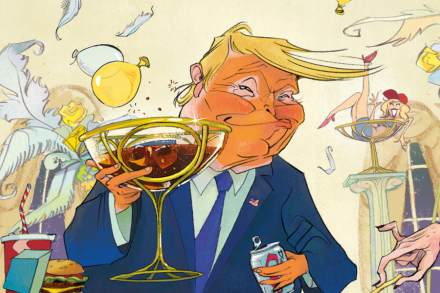
Earlier this month, I wrote a cover story for The Spectator warning that Donald Trump’s increasingly brazen flouting of ethical standards portended a political disaster for Republicans in the midterms. Since then, the corruption news has only gotten worse.   Just this week, the financial disclosure form Trump quietly filed for the first quarter of 2026 revealed his personal account had made an eye popping 3,600 stock trades valued at between $220 million and $750 million (his corporate holdings aren’t subject to disclosure).

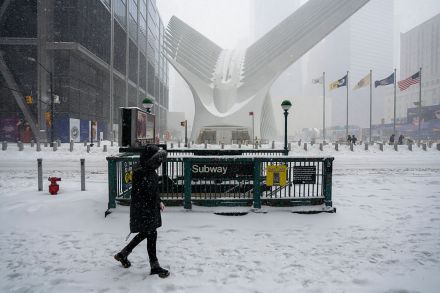
The subway deserves some respect

A few weeks before the end of the year, I was invited to a house party at which I had the misfortune of becoming embroiled in a conversation with a man I’ll call Joe, because his name was Joe and I don’t feel inclined to offer him the dignity of a pseudonym. There’s a theory I’ve corroborated since moving to New York in 2020. Every conversation at a party in this city eventually gravitates toward one of five subjects: traffic, the weather, real estate, sex or the mayor. The ultra-rich are among the subway’s most devoted riders Joe told me he works in finance (which he pronounced “fin-ants”) and it seemed he wasn’t bothered about the weather. He wasn’t a tax-optimizing Connecticut commuter, so had no unsolicited opinions to share about traffic.

The golden rule: there’s no reason to stop buying precious metals

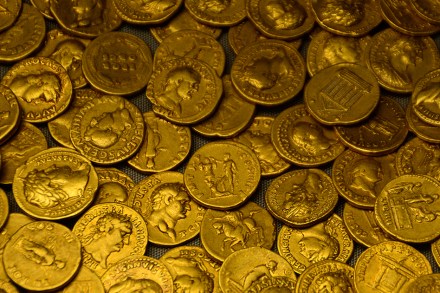
Last year might have proved a good time to own shares in the chip-maker Nvidia, along with the booming American tech giants. Or a piece of the defense manufacturers as the world re-arms. Or to hold a position in some of the rapidly growing economies of South America or Asia, or even one of the hyped-up crypto currencies. There were plenty of places investors expected to make money over the past year. As it turned out, however, there was one asset that outpaced them all, even though it generates no income: gold, and to an even greater extent, its junior sibling silver. With government debt soaring out of control, the precious metals are more valuable than ever – and so long as that is true, they will keep on climbing. There is no question it was the stand-out asset of last year.

What makes money ‘short?’

I heard on the wireless a reference to the growing number of small political parties getting funds from short money. I’m afraid I let it slide past me as one of the many things about money that I don’t understand. Short is an extremely productive element in English vocabulary. Short-haul journeys preceded by decades the invention of airplanes. The unlikely sounding shorthorn carrots have been with us since the 1830s. The Americans favor short hundredweights, which are only 100lb instead of the Imperial 112lb; worse, the standard ton is consequently a short ton of 2,000lb, a long way off the metric tonne, to which British tons approximate.

Masa Son: the world’s most reckless investor

For a few days in February 2000, Masayoshi Son was the richest person in the world. A risk-taker and showman, universally known as Masa, he had long been disdainful of Japan’s staid "salaryman" business culture and was riding the wave of dot-com mania. His company SoftBank, founded in 1981, had bet big on the growth of online shopping. The bullish mood didn’t last, and Masa slunk away from the limelight — but only for a while. A techno-optimist, the now sixty-seven-year-old has repeatedly reinvented himself, urging doubters to see beyond the immediate: "You’re limiting your field of vision to thirty years… Start bold and think 300 years ahead.

Masa

The cashless lobby is cashing in on the COVID-19 crisis

Coronavirus, we have been warned many times, has brought scammers out in force. But lobbyists are not far behind. Their activities may not be illegal, but they are pretty disgraceful nonetheless. Hardly had the coronavirus outbreak begun in January than my email inbox began to fill up with press releases claiming that the contagion was being spread by banknotes and coins — coming, er, from businesses with a vested interest in cashless payments. In Britain, the payments industry seized the moment to lobby the government — successfully — for the limit on payments via contactless cards to be raised from £30 to £45. The new limit duly came into effect on April 1.

cash

Progressives should now admit their outrage about ‘money in politics’ is confected

There’s a funny silence where the complaints about ‘money in politics’ used to be. The latest numbers on amounts spent on TV ads have billionaires Mike Bloomberg and Tom Steyer at $153.1 million and $116.5 million, respectively. Yet no viral pieces have been written, no passionate speeches given about their corrupting influence. Elizabeth Warren and Bernie Sanders have given lip service to them, sure, but it’s been very muted. Warren told Rachel Maddow that Bloomberg is ‘skipping the democracy part of this’ because his lack of fundraising means he can’t participate in the debates. Of course, anyone who tells you they believe Warren actually would want Bloomberg in the debates is lying to you.

money

Where are world leaders educated?

This article is in The Spectator’s October 2019 US edition. Subscribe here. Leading minds Where are world leaders educated? According to an analysis by the UK-based Higher Education Policy Institute, the US has just overtaken Britain in the number of world leaders educated at the country’s universities. — 62 world leaders (monarchs, presidents or prime ministers) were educated at US universities. — 59 were educated at UK universities. — Two years ago, the respective figures were 57 and 58. — 40 current world leaders were educated in France, 10 in Russia and 9 in Australia. The burning question Is climate change making wildfires worse? Acres burned in US wildfires: 1928 43.54m 1938 33.81m 1948 16.56m 1958 3.28m 1968 4.

leaders

Foreign takeover bids prove Brexit Britain is flourishing

The Hong Kong Stock Exchange has tabled a $37 billion bid for its London rival. Li Ka-shing is buying the pub chain Greene King for $3.3 billion. The American buy-out firm Advent has offered $5 billion for aerospace supplier Cobham. On an almost weekly basis, foreign predators are swooping on one British company after another. But hold on: the UK is meant to be plunging into an economic abyss. A chaotic departure from the European Union, a political system in meltdown and the looming threat of a Marxist hard-left government have made Britain the one country that investors don’t want to touch. To many, the ZAVs — Zimbabwe, Argentina, and Venezuela  — look attractive by comparison. And yet, the flurry of buyouts by foreign firms is not as odd as it may seem.

The Democrats’ phony war on corporate PACs

It is the other litmus test for Democratic candidates for president. As well as embracing Medicare for All, we know by now that the progressive 2020 runner must also oppose corporate political action committee (PAC) donations. What better way to show disdain for Wall Street and the big donors? Cory Booker didn’t need to make his pledge when he tweeted his hat into the ring this morning. He took the vow last year. So too Kirsten Gillibrand, Elizabeth Warren, Kamala Harris, Julian Castro and the rest. Some in that list don’t need to burnish their Leftist bona fides. But Booker, like Gillibrand, has centrist credentials (the horror!) and is frequently accused of being a Wall Street lackey. At one time he received more cash from financial institutions than any other senator.

PACS cory booker