
In the aftermath of Putin’s February 2022 invasion of Ukraine up to a million of Russia’s brightest and best fled into exile. Among them were a significant proportion of the country’s leading theater and film directors, writers and artists. Surely such a cataclysm as Russia’s descent into madness and fascism would generate an epochal and tragic artistic response from these thousands of talented exiles?
Alas, anyone looking for a contemporary equivalent of Picasso’s “Guernica,” Koestler’s Darkness at Noon or Costa-Gavras’s Z will not find it among the work of today’s Russian émigrés. Andrey Zvyagintsev, whose 2014 film Leviathan was a terrifying portrait of the cruelty and callousness of Putin’s corrupt state, was tipped by many as the leading candidate to hold a mirror to today’s horrors. Unfortunately Minotaur, despite winning the Grand Prix at Cannes this year, fails to rise to the challenge.
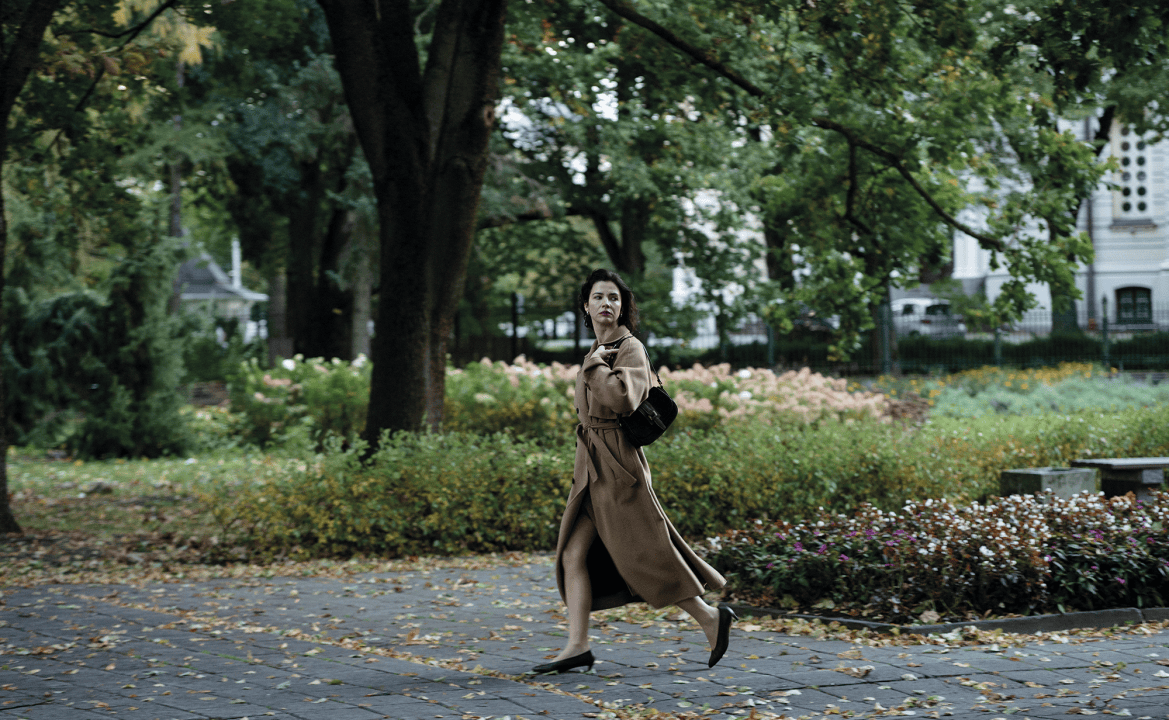
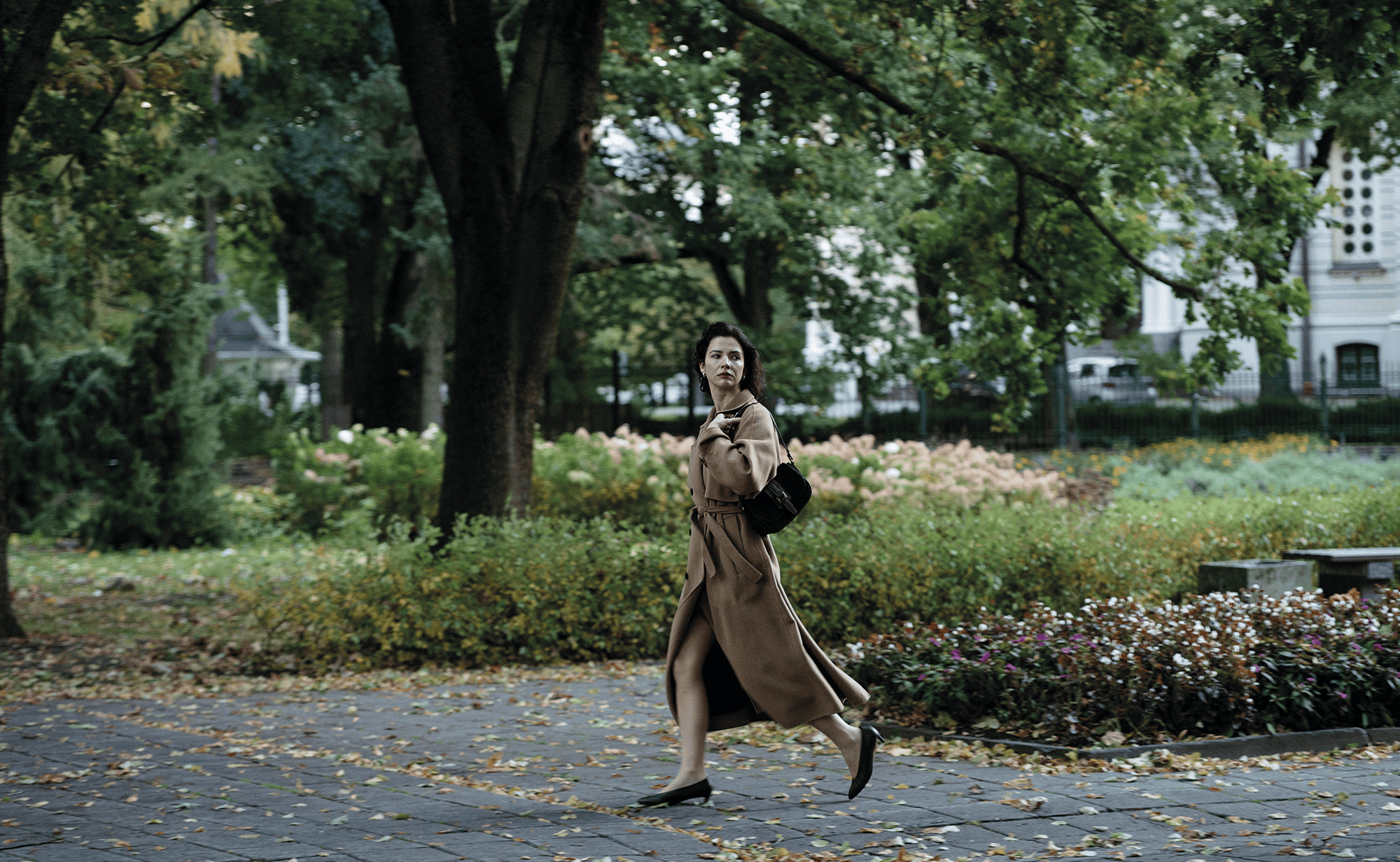
The film follows the travails of Gleb Morozov, a small-town entrepreneur in provincial Russia, who comes under the squeeze of local authorities as they struggle to fill quotas of men to send to the front line in Ukraine. However neither the war, nor the grim prospect of choosing which of his employees to hand over to the mobilization campaign, are Morozov’s big problem. Rather, the main drama of the film follows his disintegrating marriage, his spoiled wife’s infidelity, and his murder of his wife’s photographer lover. Thus, bizarrely, Minotaur is for the most part a crime-procedural portrait of a couple’s ultimately murderous mid-life crisis, with the war a mere drumbeat in the background.
In one sense, this portrait is grimly accurate. The film is set during the Kremlin’s single attempt to introduce involuntary mobilization of military reservists in September 2022. I was in Moscow at exactly that time, and indeed up to that point the war seemed impossibly distant and irrelevant to the gilded lives of the Russian elite. Putin’s “special military operation” was for the little people, the poor provincials dumb and desperate enough to take the state’s fat bounty in exchange for their lives. The brief mobilization campaign did focus minds – but it applied only to men with previous military service. And as the film shows, most employers easily, if expensively, obtained exemptions for their own employees. The war, then, is the Minotaur of the title – but one only hears the beast’s roar echoing faintly from a distant corner of the labyrinth.
One might ask whether this distant corner, whose inhabitants are for the most part blithely indifferent or willfully ignorant of what is going on, is the best vantage point to tell the story of modern Russia’s agony. It is profoundly puzzling that Leviathan, made in Russia, took the state’s victim as its hero and confronted his destruction in grim, unblinking detail, yet Minotaur, made in exile, is oblique and coy about confronting today’s political reality head-on.
This aversion is weirdly near-universal among the prominent directors and writers of the new emigration. Maxim Didenko has directed brilliant and searing theatrical portraits of communities destroyed by war and terror – but the subjects have been the ghetto of Lodz in the second world war and Stalin’s purges, not modern Russia. The brilliant Kirill Serebrennikov’s latest films have been about the writer Eduard Limonov and Josef Mengele. Dmitry Krymov, a giant of Russian theater, gestured obliquely towards the war in his Cherry Orchard in Philadelphia in April 2022, replacing the sound of chopping axes at the end with bombs falling on Kyiv; he’s now directing a play based on a medley of Dickens novels.
Only Dmitry Glukhovsky has taken on the war’s effect on Russia directly with his recent novel Registration – the story of a girl whose quest to get married at all cost to her mortally wounded soldier boyfriend is motived by the promise of a huge widow’s payout if he dies. And the most honest and shocking portrait of wartime Russia is not an artistic work but Mr Nobody Against Putin, winner of last year’s documentary Oscar, a self-filmed story of one provincial teacher’s small but futile stand against the war.
Zvyagintsev’s reluctance to get overtly political is a pity, because in the rare moments when he does confront the reality of war the depiction is devastating. Morozov solves his mobilization problem by recruiting 14 new delivery drivers – all with military service – and secretly sends off these poor suckers’ details to the conscription office. The scene where an uncomfortable Morozov is forced to meet his new employees, all unaware of the fate he has planned for them, is a long and unbearably poignant panning shot across the faces of the doomed men. Another brilliant scene shows hundreds of newly mobilized soldiers getting a lecture from a religious pep-talker. He tells the impassive recruits that they are fighting to defend their country and their values, for a world where “a family is mum and dad, not dad and dad.” Military music blares from speakers as the men board buses, making their farewells from weeping wives and children.
But all this hard reality is incidental to the main action of Minotaur. The hapless Morozov’s character is frustratingly one-dimensional, his whining adulterous wife’s pretty much zero-dimensional. Why does Morozov kill his love rival? How does he feel about the war? What does his wife Galina have to complain about in their wealthy, stylish life? All this is left unexplained. At the end of the film, as police investigators close in, Morozov gets them off his back by promising to donate equipment for the mobilized soldiers. But there is no jeopardy in the situation, just a brief chat over cognacs with the mayor. The stakes are life or death, yet the dénouement falls utterly flat.
In August, Russia designated Zvyagintsev a “foreign agent,” and critics have made much of the fact that Minotaur will never be shown in Russia. That is doubtless the case. But this is not a film that fearlessly tells truth to power. With Minotaur, Zvyagintsev has not given the Kremlin much to worry about.






Comments