Foreign affairs

How the Washington Post became a liability for Bezos

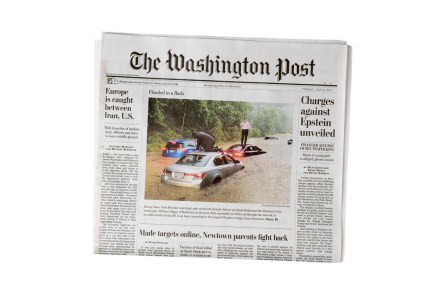
What does Jeff Bezos’s gutting of the Washington Post say about America’s sense of itself and of its place in the world? Bezos has scrapped much of the paper’s foreign coverage, as well as the books and sports sections. Over three hundred reporters and editors have been fired – including publisher Will Lewis. The Ukraine bureau has been closed, along with Berlin and the entire Middle Eastern and Iran team. You’d think there wasn’t much going on in the world. Does that mean that American readers are no longer interested in books or foreign news? That doesn’t sound true. The numbers of literate, educated and interested readers in the US who were devoted followers of the Post’s world-class books section and prizewinning foreign coverage haven’t collapsed.
The Tucker Carlson and Ted Cruz roast

Tucker Carlson teased an upcoming podcast with Senator Ted Cruz Tuesday night by posting a short, fiery clip from the two-hour interview. The clip spotlights Cruz's alleged ignorance of basic information about Iran. But, after Cockburn watched the much anticipated episode, he is sad to say that the grown men's yelling competition featured in the teaser turned out to be a faithful representation of the podcast as a whole. Here are Cruz and Carlson's zestiest and best delivered zingers: When discussing the Iran-backed assassination attempt of the former secretary of state Brian Hook, Cruz said, "Killing terrorists is a good thing.

Tucker Carlson screenshot

How Harvard lost America

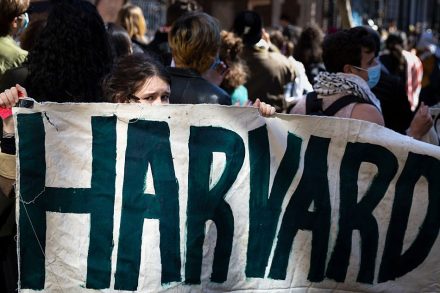
President Trump’s proclamation, “Enhancing National Security by Addressing Risks at Harvard University,” pays a compliment to that crossroads of brilliance and turbidity. It treats Harvard as a serious educational institution, and one that in its misbehavior “presents an unacceptable risk to our Nation’s security.”    Trump was not referring to the risk of immersing some of America’s brightest and most ambitious students in a toxic soup of anti-Semitism, DEI and disdain for our republic. Nor were the “risks” he had in mind “everybody-gets-an-A" grade inflation or a curriculum that wastes the students’ intellectual talents on courses that sound more like entertainment (e.g.

harvard

Why Washington should make Latin America a priority

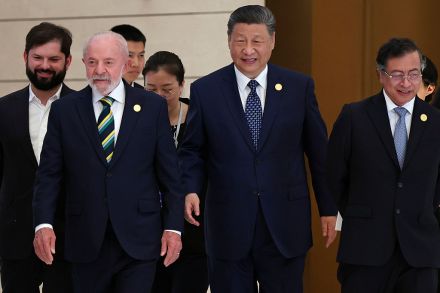
As American eyes remain fixed on the Middle East — understandably so — China has been rolling out the red carpet for Latin America, and we have barely noticed. While Xi Jinping welcomes Colombia, one of Washington’s historically reliable allies, into the controversial Belt and Road Initiative, he’s also introducing visa-free entry for South America’s largest economies and greeting regional leaders in Beijing with billion-dollar credit lines and lavish, all-expenses-paid political junkets. Washington, meanwhile, was… busy. If this sounds familiar, it’s because it is. The US has been snoozing through Latin America’s strategic realignment for years, occasionally waking up to mutter something about narcos or illegal migration, then hitting the snooze button.

washington

The Democrats need a new rulebook

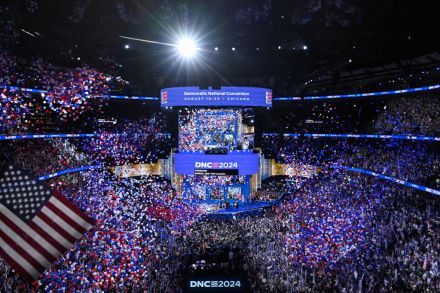
Donald Trump’s triumphal return to the White House is the end of more than just the Joe Biden era. Since Bill Clinton’s presidency, Democrats had adhered to a formula they thought unbeatable: They would be socially progressive, economically centrist and staunchly internationalist. Republicans, they thought, had staked their future on demographics that were in decline — whites and the most conservative Christians. Democrats were the party of twenty-first-century America, an ethnically diverse and more secular, or at least religiously liberal, land. What went wrong? When Trump won in 2016, Democrats dismissed it as a fluke.

Democrats

Seized Russian assets should be used against Putin

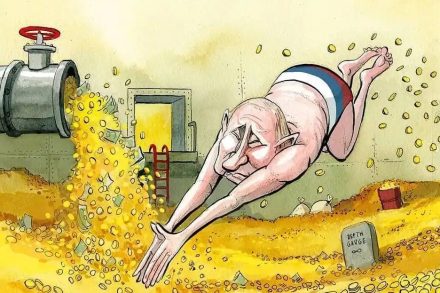
The seizure of enemy treasure, formerly known as plunder and pillage, is an ancient tool of war. Though still practiced in the world’s nastiest conflict zones, it’s a tricky business within a rules-based international order. The G7’s agreement to lend $50 billion to Ukraine — using income from $300 billion of frozen Russian assets to cover interest and repayments on the loan — is a vivid case in point. And some would say, a lily-livered half-measure. The key feature of the deal is that it does not actually claim ownership of Russian loot — which however ill-gotten is mostly held in EU banks in the form of western government bonds. It merely diverts interest payments due on the bonds from the issuing governments.

Russian

Is Venezuela preparing for war?

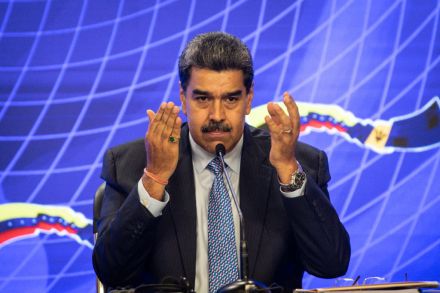
Earlier this month, two American supersonic fighter jets flew over Georgetown, the capital city of Guyana. The US show of force is not only for the attention of Venezuela’s socialist regime who has been escalating toward a military conflict with its smaller neighbor since at least September 2023 when Nicolás Maduro returned from Beijing. The message of sending two F/A-18 Super Hornets flying from a nuclear-powered aircraft carrier sailing in the Caribbean Sea is also for the Islamic Republic of Iran. At first glance, the Venezuela-Guyana conflict is about a century-old border dispute of a dense territory called the Esequibo that makes up two-thirds of Guyana’s land mass but only 15 percent of its population.

nicolas maduro venezuela

COP28 is nothing but hot air

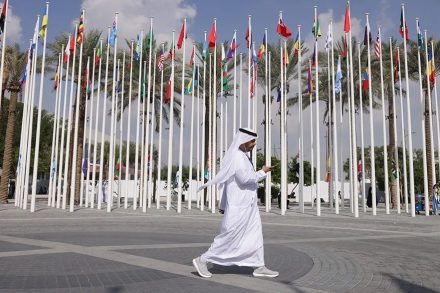
What position should the distant observer take on the COP28 conference in Dubai? That the sight of 70,000 delegates flying into a desert oil state from around the world to discuss human impacts on climate change is beyond satire and that its proceedings are never likely to rise above Greta Thunberg’s encapsulation of all such jamborees as “blah blah blah?” Or that the climate problem is now so obvious and urgent that all efforts towards global action, however small, should be uncynically applauded? I leave that choice on the table.

COP28

One year of war in Ukraine: six experts predict what will happen next

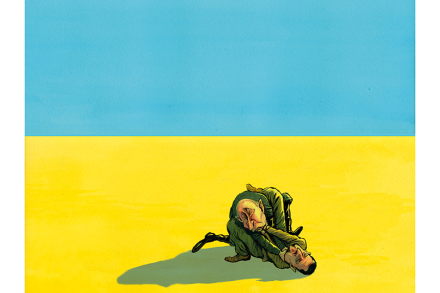
As the war in Ukraine enters its second year, today seems as a good time as any to reflect on its first, and see what the future might hold. Six foreign policy experts from across the spectrum of opinion offered their thoughts to The Spectator. As the war in Ukraine enters its second year, how do you foresee the conflict ending? Ted Carpenter: There are several possible outcomes, but the most likely is a ceasefire without a formal peace accord. That move would end the bloodshed, but it would leave the underlying disputes unresolved. Such an outcome would be similar to the armistice that ended the Korean War. It also would create the world’s largest and most dangerous “frozen conflict.

ukraine war nato

Shinzo Abe was Japan’s indispensable conservative

Shinzo Abe, who was assassinated today while electioneering, was his country's indispensable man. Prime minister of Japan for much of this century, from 2006 to 2007 and 2012 to 2020, Abe's stature on the world stage eclipsed that of other post-war Japanese leaders, just as his time in office surpassed them all. For a taste of the shock of his murder, look back to the surprise and incredulity which met his resignation from office in the pandemic's worst days. Plagued by a debilitating health condition which had earlier caused him to leave office in 2007, Abe concluded he did not have the stamina left to rule.