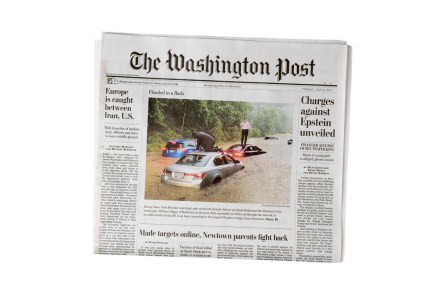
Washington Post

The Bezos-Musk rivalry and the changing power of media

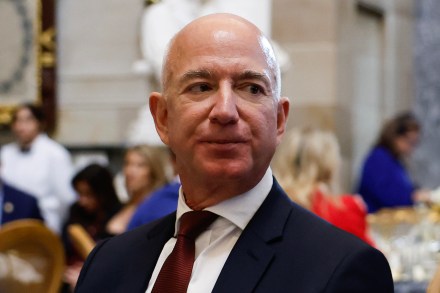
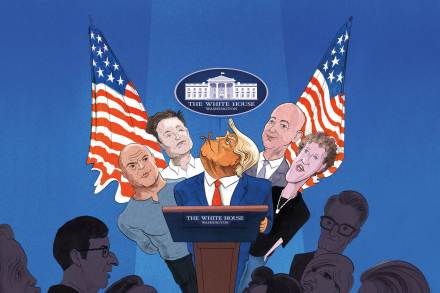
Elon Musk knows something Jeff Bezos doesn’t. Each has had turns as the world’s richest man, and both are media overlords. But whereas Musk’s purchase of Twitter arguably won a presidential election and briefly put the fate of the United States federal government in Musk’s hands, Bezos’s purchase of the Washington Post has bought him nothing but grief. No election victories, no sway in Washington, just the hatred of the journalists he subsidizes to the tune of hundreds of millions of dollars. Media power in the 21st century is about platforms, not publications. Bezos shouldn’t have needed Musk to teach him this: the whole strategy behind the business that made him rich, Amazon.com,

Bezos

How Jeff Bezos destroyed the Washington Post

The debacle of the Washington Post’s hara-kiri last week dispatched the myth that a tech billionaire could save journalism. Jeff Bezos’s purchase of the paper in 2013 was greeted with euphoria, not just because he was a big fat wallet who would absorb the losses, but because we thought his Amazon wizardry was transferable to journalism’s battered business model. The man was a digital titan, for God’s sake. He started selling books online from his garage and built it into a $2.2 trillion consumer nirvana, with a Blue Origin side hustle of suborbital rockets. Surely he would figure out innovative new ways to bring the Post’s rigorous reporting to hungry

The end of Will Lewis’s Washington Post experiment

And now his watch is ended. Sir Will Lewis fell on his sword last night, resigning as CEO and publisher of the Washington Post. “After two years of transformation at the Post, now is the right time for me to step aside,” Lewis said in an email to staff. In his note, Lewis thanked only the Post’s proprietor Jeff Bezos. Cockburn hears that least one journalist replied to Lewis’s email, “Bye, bitch.” Lewis had a troubled and confusing tenure. In his final week, the Post cut 30 percent of its staff, including the full books section and scores of foreign reporters. The publication also folded its vaunted sports section into features. “I believe the new tagline

How the Washington Post became a liability for Bezos

What does Jeff Bezos’s gutting of the Washington Post say about America’s sense of itself and of its place in the world? Bezos has scrapped much of the paper’s foreign coverage, as well as the books and sports sections. Over three hundred reporters and editors have been fired – including publisher Will Lewis. The Ukraine bureau has been closed, along with Berlin and the entire Middle Eastern and Iran team. You’d think there wasn’t much going on in the world. Does that mean that American readers are no longer interested in books or foreign news? That doesn’t sound true. The numbers of literate, educated and interested readers in the US

The dying art of sports journalism

Late in January, while the Washington Post was gearing up for the Olympics, staffers got an email from managing editor Kimi Yoshino. “As we assess our priorities for 2026,” she wrote, “we have decided not to send a contingent to the Winter Olympics.” A few days later the Post announced that it would send four journalists to Italy after all – down from more than a dozen. That’s four people to cover a two-week event with more than 116 medal competitions. Then at the start of this month, all 45 members of the sports team were told the section was being shut down. “We will be closing the Sports department