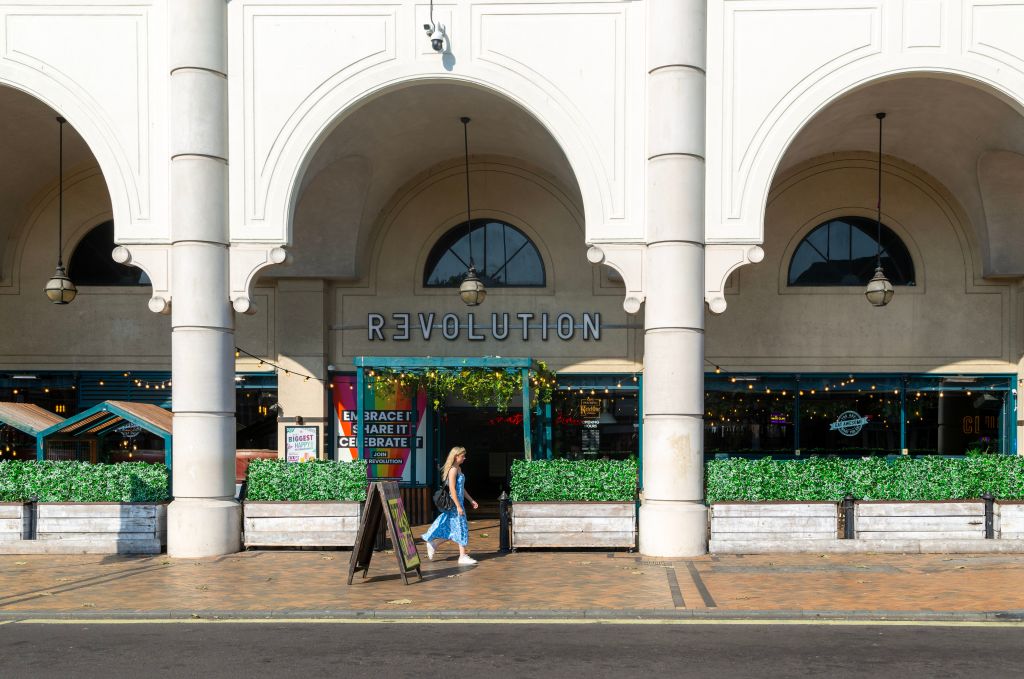
The news that the Revolution chain of bars has gone into administration may not immediately fill Spectator readers with sorrow. When the Revolution group began in the early Nineties, their raison d’etre was to pump young people full of as much strangely flavoured vodka, in as many different permutations, as they could, all the while playing music at side-splitting volume. It was very successful, for a while, but now the group, under the stewardship of the Revel Collective, is facing a decidedly bleak future. Unless a new owner can be found soon, it looks like the Revels are over.
Before we know it, there will no longer be any affordable places left for anyone to go for a drink in our towns and cities
The free marketeers will shrug and suggest that the potential end of a group of high street bars synonymous with insane amounts of dubious spirits and the usual cycle of drunkenness, idiotic behaviour and vomiting is not something to be mourned. Even the potential loss of over 2,000 jobs amongst the Revolution bars and their more self-consciously upmarket brethren, the Peach pub group (which are said to serve ‘good quality, fresh, honest food and drink in relaxed, welcoming surroundings’ – no toffee apple-flavoured vodka there) will not especially vex those who look at the likes of Revolution, Walkabout, All Bar One and their ilk and find them both depressing and past their prime. Let them close, and something better – something more appropriate for 2026 – will take their place.
That’s the Panglossian way of looking at it, but on the other hand I prefer the approach, in the vein of John Donne, that no chain bar is an island, and that every watering hole’s demise diminishes Britain. It is easy to suggest that the only places that should be allowed to flourish are the artisan cocktail bars that charge £15 for a drink with a bougie name, and that, if you want something cheaper or more unsophisticated, you should either get a jug of something brightly coloured at Wetherspoons or learn how to make your own concoctions at home. But such an attitude has led to a decline in the hospitality sector over the past decade, with restaurants and indeed pubs forced to hike their prices to eye-watering degrees simply to survive – let alone make a profit. Before we know it, there will no longer be any affordable places left for anyone to go for a drink in our towns and cities.

The government does not appear to have a clue how to deal with the situation. While Rachel Reeves is today supposedly announcing a £100 million business rate support package for pubs, as a direct response to the imbecility and meanness of last year’s botched Budget, the cost of VAT on beer, wine and – disastrously for such institutions as Revolution – spirits shows no signs of being lowered, which means that a combination of nanny state initiatives such as mooted minimum unit pricing and the time-honoured tradition of making bars too expensive for the impecunious but thirsty young to drink in will, in time, kill off the high street chain bar altogether.
Personally, I cannot foresee the next time that my chums and I will be having it large in a Revolution bar at 1 a.m. on a Saturday morning, flaming Sambucas held aloft like torches. But just because it isn’t to my personal taste does not mean that I will be rubbing my hands together in glee when the near-inevitable happens and these once-vibrant places become yet more abandoned high street husks. People deserve a place to go for a drink, let their hair down and relax. But they are living in a society where fun is frowned upon, and where the chance to consume esoteric beverages is vanishing. I may regard the great British pub with a sacred reverence that most Englishmen reserve for their nannies and old schools, but the great British chain bar has its place, too. We may well miss them more than we expect when they’re gone.




Comments