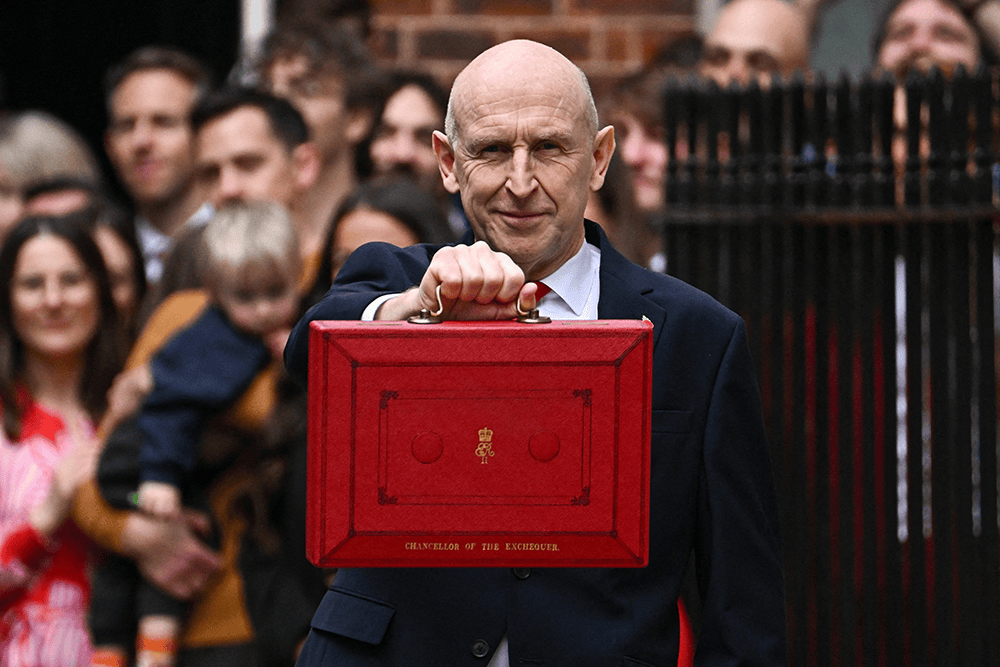
So damaging was Rachel Reeves’s tenure that a Budget from her successor aimed at doing as little as possible seems almost an improvement. Under John Healey, businesses and taxpayers have escaped relatively unmolested. A glancing blow to the banks, a minimum wage – interventionist, certainly, but not socialism red in tooth and claw. Labour MPs hoping for wealth taxes and mass nationalisation must make do with £27 off energy bills and cheaper marmalade. But minimising harm is not the same as doing good.
If Healey refrained from further weakening Britain’s position, he stopped short of taking the essential action required to improve our sclerotic economy. A ‘steady as she goes’ Budget means sticking to the path that Labour has already set us on: ever-higher taxes, ballooning welfare spending, anaemic growth and interminable regulation. Four decades on from Nigel Lawson’s ‘Big Bang’, this Chancellor presided over a damp squib; rather than removing barriers to prosperity, he capitulated.

Andy Burnham has often spoken about tackling Britain’s biggest challenges: persistent regional disparities, exorbitant social care costs, debilitating youth unemployment. His ambitions are not meagre, from ‘good growth in every postcode’ to ending neo-liberalism. Burnham has inherited Keir Starmer’s landslide and as much goodwill as can be expected from a country sick of the No. 10 carousel. Yet our new premier seems unable to put our money where his mouth is.
Burnham and Healey are more engaging than Starmer and Reeves. But the Gods of the Copybook Headings do not care about TikTok videos. Britain’s national debt has passed £3 trillion and hovers around 94 per cent of GDP. This is still a way off France’s 120 per cent. But a similar reckoning between spending, voter expectation and the bond markets is unavoidable on our current trajectory.
A government paying out more than £100 billion annually on debt interest is ill-equipped to weather the ‘difficult moment’ of which Healey spoke, let alone invest. With welfare expenditure alone heading towards £400 billion by 2030 – including more than £100 billion on sickness and disability benefits – Burnham will find himself unable to fund his ambitions without cutting spending. But what will he sacrifice?
Last summer, Labour MPs proved unwilling to stomach a £5 billion reduction in disability spending. Even Burnham’s much-hyped departure from the triple lock was designed only to fund a ‘National Care Service’ and won’t happen until after the next election. A spending review isn’t due until next year; planned cuts to departmental budgets, inherited from Reeves, have been downplayed. As Tim Shipman notes in his article, Healey’s inactivity may reflect a desire to postpone difficult decisions until after an early election. Burnham may want to avoid scaring the voters until he has secured his own mandate. But an election would leave Labour, at best, with a slimmer majority and still dependent on MPs reluctant to cut spending – a crisis deferred, not avoided.
Five decades ago, a previous Chancellor Healey cut spending only at the IMF’s behest. Is a similar humiliation the only way in which Labour will be forced to face reality? For now, ministers still have room to choose what to prioritise, rather than having their hands forced by our creditors. A prime minister who once hoped to ‘get beyond…being in hock to the bond markets’ would not want his premiership to be defined by proving their inescapability.
Back in 1976, a Labour prime minister was willing to tell his party conference that you could not ‘spend your way out of a recession’. As Britain faces growing economic uncertainty, Burnham is instead promising a commission on proportional representation and is hinting at a return to EU membership. Ironically, the only significant liberalisation announced by Healey was the lifting of a series of tariffs, ranging from marmalade to gherkins – a benefit of our freedom over trade policy that would be surrendered if Burnham’s dream of reversing Brexit was realised.
Burnham may want to avoid scaring the voters until he has secured his own mandate
One suspects that his desire to return to Brussels is cover for a lack of new ideas. Reindustrialisation, reimposing freedom of movement, quieter train carriages: all point to a better yesterday, not a brighter tomorrow. Greater radicalism is needed.
Unfortunately for Burnham, the clearest ideas are coming from the right. Reform has outlined 64 measures to kickstart growth, including £40 billion in spending cuts. Not to be outdone, the Conservative party has promised £71 billion in reductions, with half of the money saved contributing towards deficit reduction. Behind the personality clashes, both parties agree on the need for planning reform and a simplified tax system.
There is, of course, a difference between making promises in opposition and delivering in government. But both Reform and the Conservatives are at least being honest with voters. The Labour party, despite a new leader and improving opinion polls, is unwilling to consider radical prescriptions. Labour can’t even bring itself to promise jam tomorrow. The best it can do is a few pence off marmalade today.




Comments