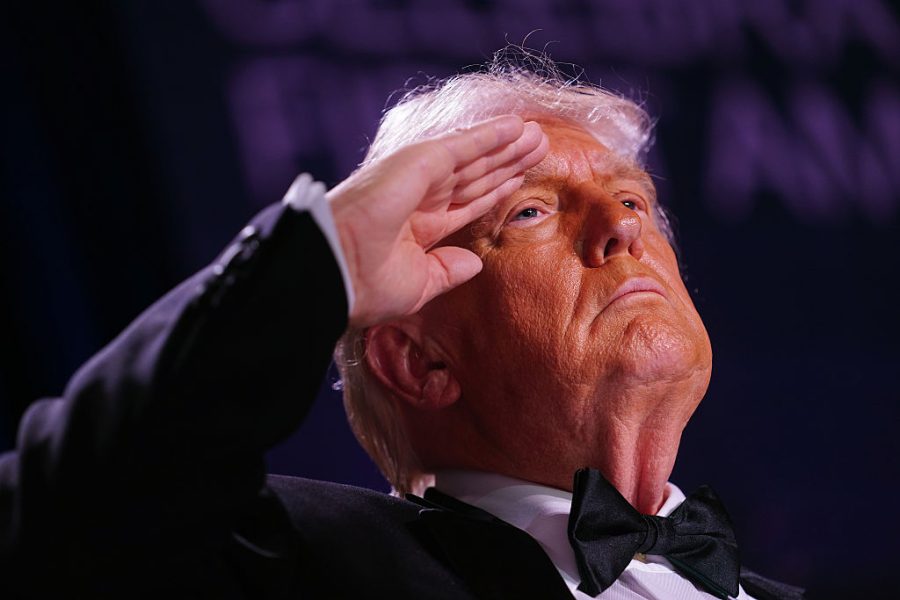
President Donald Trump cancelled a planned trip to Islamabad by his envoys Steve Witkoff and Jared Kushner over the weekend. The move followed the departure from the Pakistani capital of Iranian Foreign Minister Abbas Araghchi. Following the cancellation, the two sides traded rival accounts of the current state of affairs in their ongoing stand off.
Trump, speaking to Fox News, professed himself in no hurry for diplomatic progress, saying that ‘We have all the cards. They can call us anytime they want.’ The US President suggested a version of events in which Teheran, pressured by the US blockade of its tankers in the Strait of Hormuz, was showing increased flexibility regarding the issue of the future of its nuclear programme. Trump said:
The Iranians gave us a paper that should have been better and interestingly, the minute I cancelled it, within 10 minutes, we got a new paper that was much better… They offered a lot but not enough.
Iranian officials, meanwhile, painted an opposing picture of the dynamic. An Iranian defence ministry spokesman quoted by Reuters said that:
The Iranian regime is good at dragging talks out
The enemy, whose objective of crippling Iran’s missile and military capabilities has failed, is now seeking an honorable exit from the quagmire of war…Iran is today in firm control of the Strait of Hormuz.
In the latest development, Iran appears to have come up with a new proposal which delays any talks on the subject of nuclear weapons, while floating the reopening of the strait. This proposal seeks essentially to reward Tehran for the seizure of the strait by re-establishing the status quo ante bellum.
The Iranian regime, as two decades of nuclear negotiations will attest, is good at dragging talks out. They can feign interest in finding agreement, while in practice pursuing a quite different agenda. One does not have to reach for cliches about Persian carpet weavers to make this point. The recent record is quite clear. The Iranian stance in the talks with America, which opened with a demand for $270 billion (£199 billion) in compensation from the US and Israel for damage inflicted in attacks since 28 February, was clearly not intended to facilitate their rapid conclusion. Neither is the latest proposal.

Trump’s position reflects a cost-benefit analysis which accurately notes that, objectively, the Iranian regime is vastly inferior to its opponents in conventional military capacity and in its ability to inflict harm. Given this, such a view concludes, what remains is for the Iranians to draw the same sensible conclusion and reach a deal based on the relative balance of forces. It is, according to some accounts, a matter of some bewilderment to the US President that Tehran has failed to understand the situation in a similar way.
The current level of pressure on Iran is indeed considerable. US central command announced today that it has turned around 38 vessels seeking to enter or exit Iranian ports since the blockade began. The Iranian fleet of ghost tankers is certainly getting some oil through – around 10 million barrels since the blockade began, we are told. The reserves held by Iran on the high seas will enable Tehran to continue supplying its customers for a few months hence. But without a doubt Iran’s capacity to export oil has been severely constrained by the blockade.
This level of pressure, however, is unlikely to make Iran come anywhere close to conceding to the US’s demands. Here, the administration appears to be succumbing to the recurrent thought mistake to which western governments are prone when looking at the Middle East. Namely, the assumption that the other side ‘thinks like us’. That inside every religious or ideological extremist is a pragmatist fighting to get out.
Israel, its worth noting, has proven particularly susceptible to this error. A few previous examples: In 2000, Jerusalem withdrew its forces to the international border of Lebanon. The prevailing assumption was that since the IRGC proxy Hezbollah organisation presented itself as engaged in resistance to Israeli occupation, the removal of said occupation would end the resistance to it. The fact that Hezbollah itself never promised this but made clear that by ‘occupation’ it meant the existence of Israel in any form did not dissuade Israeli decision makers. They assumed that behind the rhetoric, a pragmatic outlook was hiding which would dictate practical decision-making. It was not. Hezbollah continued its long war against Israel after the 2000 withdrawal. It continues to this day.
In 2005, Israel withdrew unilaterally from Gaza. After Hamas took power in the area, an Israeli policy emerged which sought to incentivise the de facto governors of Gaza, assuming that their quiet could be bought. During that time, pointing out that Hamas was an Islamic jihadi group and hence unlikely to be amenable to a cost-benefit analysis was regarded in mainstream Israeli circles as evidence of a kind of gauche naivete.
The US administration currently appears to be operating along somewhat similar lines. In this case, the cause appears to be a kind of incuriosity regarding the enemy’s outlook, rather than an overly optimistic misreading of it. The same baseline assumption – that everyone surely must broadly think along similar lines and want the same things – however, appears present in some form.
None of this means that one should take the Iranian regime at its own reckoning, of course. Its bombastic rhetoric is accompanied by brutal repression against its own people, most of whom loathe it. It has mortgaged Iran’s economy and the management of its natural resources to its regional ‘resistance’ project, which in turn exports misery and failed governance to other regional countries – to Yemen, Lebanon, Iraq, Gaza, and for a time Syria. But it is important to understand that whatever we might think of the Iranian regime’s outlook, its own leaders do believe in it, and are not in the mood for accepting something they regard as surrender.
This means that, as shown in Islamabad, the current level of pressure is unlikely to bring results. The choice facing the US therefore is to intensify and escalate the pressure, including the renewal of major military operations and including the opening of the Strait of Hormuz by force, or to accept at a certain point a face-saving deal likely to leave the regime’s regional project intact. If the latter course is followed, it will no doubt be presented as victory. The Iranian regime’s long war for supremacy in the region will then continue.





Comments