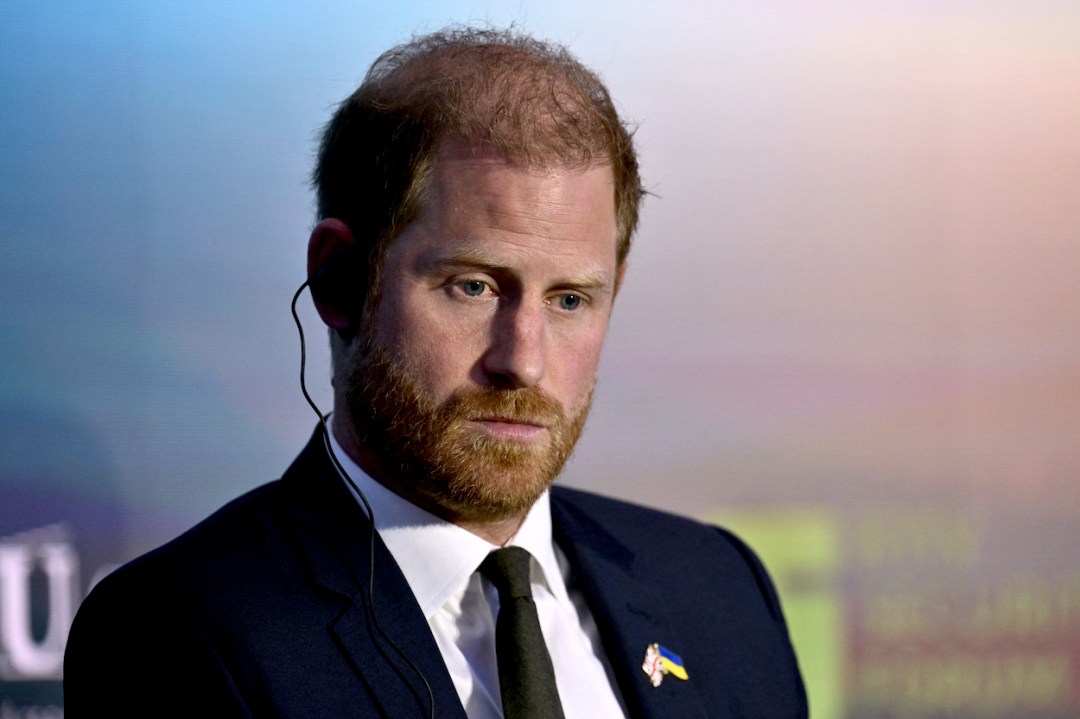
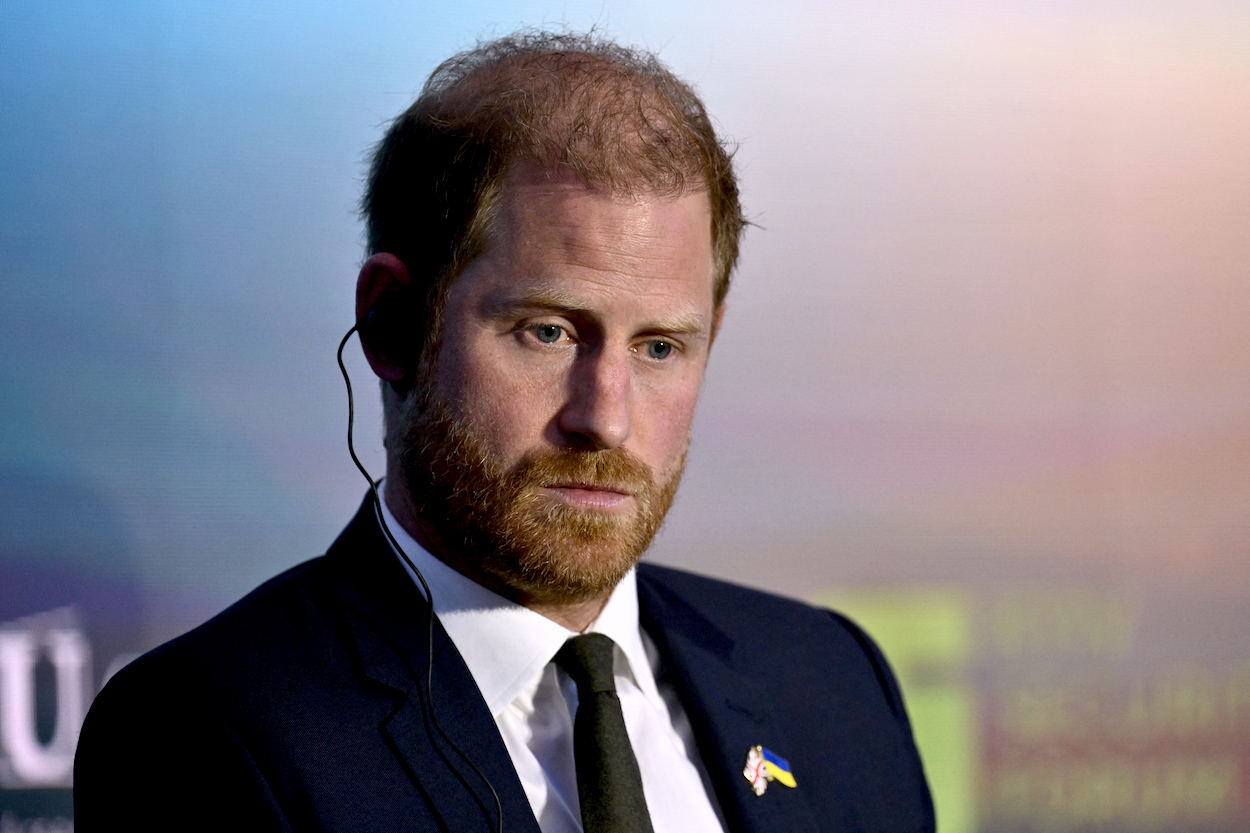
It was always going to go this way. Every gambler eventually loses, and the higher profile that loss, the greater the eventual humiliation. But today’s judgment that Prince Harry as well as his other high-profile litigants – including Elton John, Elizabeth Hurley and Baroness Lawrence – have lost their claims completely against Associated Newspapers for unlawful information gathering, thereby bringing to a deeply humiliating and unimaginably expensive end to their crusade against the British media, represents the end of the biggest gamble that this litigation-prone prince has ever taken.
Anyone watching the trial will be unsurprised by the verdict. It was commonly taken as read that Associated, publishers of the Daily Mail and Mail on Sunday newspapers, among others, did not use phone hacking but instead obtained their stories by good old-fashioned journalistic methods, some of which might seem crass, even tawdry – witness the story of the writer Charlotte Griffiths snuggling up to Prince Harry – but are tried and tested means of putting information in the public domain. The case, which was at times farcical, did not paint an emotional Harry in a good light, but he must have hoped that it would not go as badly as it has done. Alas.
It was possible that Harry and his co-plaintiffs might have won on at least a couple of counts, thus sparing them from a complete bloodbath, legalistically speaking, but Mr Justice Nicklin’s forensic and unsparing judgment suggested that they had entirely failed to prove their claims, bar a technical detail about those brought by Sadie Frost and Simon Hughes, which would, in any case, have been time-barred. He was scathing about what he described as a near bait-and-switch by the plaintiffs – “suspicion, even where understandable, was not enough” – and stated that “The Court rejected the argument that, simply because information was private, and because Associated could not positively explain how it had been sourced, the relevant article must have been unlawfully sourced.” In other words, the idea that phone hacking had to have taken place was simply not proven. Cue an egg on face moment for the ages.
Harry himself was especially criticized for what Mr Justice Nicklin called how “he wished the court to understand the personal impact of the matters in issue. At times, this led him beyond giving factual evidence into advancing arguments on the issues, and exchanges followed with Mr White KC in that vein.” In tactful legalese, he suggested that Harry and his fellow plaintiffs “feel a strong instinct to argue their case themselves” but that this “is not a burden they are required to carry.” He concluded that “As with each of the claimants, Prince Harry has limited evidence to give on the contentious matters in dispute.” In other words, for all of Harry’s anger, there is nothing much from a legal perspective to say.
It is now likely that other newspaper groups, such as the Mirror Group and News UK, who had faced legal action from Harry, may regret settling out of court and thereby implying that they had something to hide. Associated Newspapers chose to stand and fight and they will now be reaping the benefit of a courageous decision that will, undoubtedly, see their newspapers regard their potential persecutors with contempt. The headlines tomorrow in the Daily Mail will be suitably triumphalist, and few will be able to blame the journalists and the editors. They have already declared “an overwhelming victory for the free press” and have leveled the first public attack on Harry for his “egregious” decision to fight this unjustified case.
Harry is not used to taking no for an answer
The question remains what the Duke of Sussex, who is by pure coincidence in Britain on what is itself a vexed and already controversial visit, does next. He and his fellow plaintiffs will be facing a legal bill that runs into tens of millions of pounds, and while the deep-pocketed Sir Elton might be happy to cover the entire tab, it is more likely than not that Harry will talk angrily of appeals and unfairness and the way that the British state has somehow conspired against him, ignoring for a moment that as fifth in line to the throne there is perhaps no more exclusive representative of that state. A humbler and more measured man might now accept a seismic loss and seek to move away from the field of litigation, licking the inevitable wounds that this comprehensively damning judgment has inflicted upon him.
If we know anything about Prince Harry, it is that he is not used to taking no for an answer, and so is likely to keep on coming back, with new lawyers and an ever-present sense of righteousness. But this case was always a gamble, the biggest one he has taken, and it looks as if he has lost, wholly and embarrassingly.




Comments