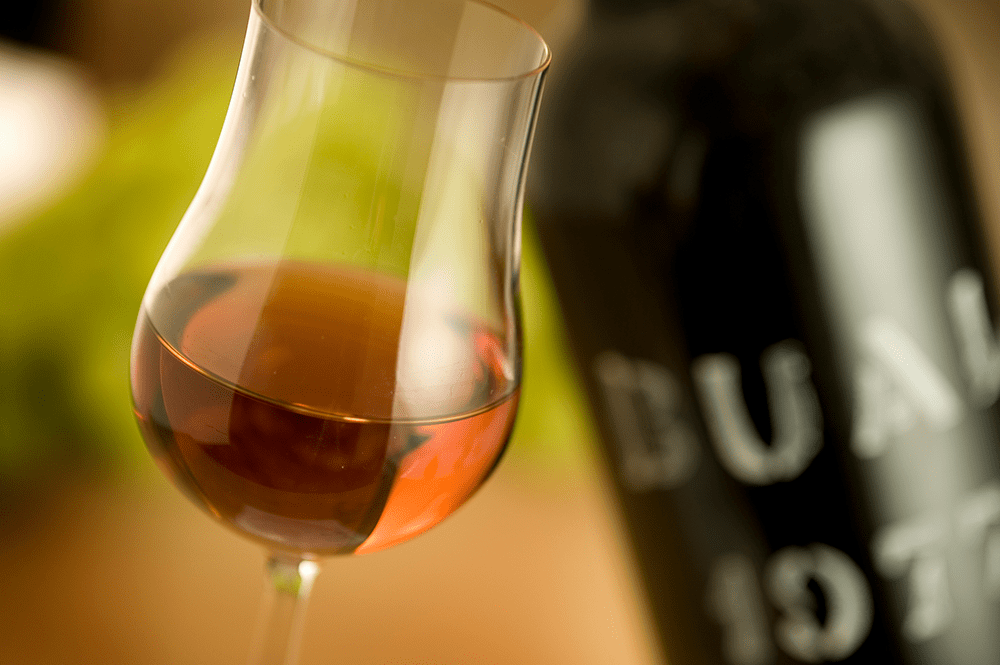
Perhaps because of the Flanders and Swann song in which a louche older gentleman tries to lure a younger lady to bed with Madeira wine, the drink has unfairly acquired a fusty image. While port and sherry have experienced a resurgence, Madeira remains underappreciated despite the fact it stands as a proud monument to the grand old Anglo-Portuguese alliance.
One man, Jamie Allsopp, is intent on fighting a noble battle to promote the virtues of Madeira. And so to the Blue Stoops, Allsopp Brewery’s newish pub on Kensington Church Street, for their second annual Game and Madeira Dinner, named after the site in Burton-on-Trent where Jamie’s ancestors first brewed Allsopp’s Ale in 1730. He sees similarities in the way the Madeira families and Allsopp’s had to work out how to export their drink long distances, by ship.

Allsopp’s revived and renewed Double Diamond, of which some readers may have consumed their fair share when it dominated the beer market in the 1970s, provided a splendid pre-dinner palate cleanser to set the stage for the fortified delights to follow. Head chef Jacob Farley prepared an exquisite set menu, consisting of game consommé, venison tartare with pickled mushrooms, roasted partridge with red cabbage, and a quince crumble to finish, served with Madeira custard. The food was magnificent. But what took the evening from spectacular to superlative were the Madeira wines served with each course.
The Blandys are the last of the original British winemakers on the island of Madeira, and their bottles featured most heavily. Proceedings opened with a negroni in which the vermouth was replaced with a Madeira wine, outlasting the bitterness of Campari in a way vermouth doesn’t manage. The ten-year-old Sercial was light, nutty and peachy, the perfect accompaniment to the consommé, whereas the ten-year-old Verdelho was longer, woody and with a shade of orange. The star of the show was the 1981 Malmsey that accompanied the quince crumble. Aged in oak, it provided a sweet, rounded end to the meal, with length that left you savouring its taste. A 1945 Bual – dark, almost caramel and balanced – brought dinner to an end, along with a 1932 Malvasia that provided a welcome hint of bitterness. For £75 a head, we lucky few who got to dine that evening might regard ourselves as getting some of the best value in London.
Madeira allows one to reflect on a time when government promoted expansion

One of the beauties of Madeira is that its fortification means it can last much longer than almost any rival, with vintages from the 18th century still drinkable, if you can find them.
While the Chancellor continues to find new ways to hammer the hospitality industry, Madeira allows one to reflect on a time when government promoted expansion and the growth of British industry. When in 1662 the restored Charles II married Catherine of Braganza, the sister of the King of Portugal, the marriage solidified the alliance between two great nations, and led to an increase in the production and trade of Madeira. This was consolidated by the Methuen treaty in the early 18th century, which, by lowering import duties on Portuguese wines, made port and Madeira wines much cheaper than their French counterparts. By 1717, Portuguese wines accounted for two-thirds of all wines imported into England. By 1780 it is estimated that up to 70 British houses had been established to trade and export wine on the island of Madeira.
This fine, historic drink deserves more acclaim and appreciation, and we are lucky to have places like the Blue Stoops prepared to celebrate it. So go out, try it, and savour it in all its nutty, sweet, dark, complex glory. There really is nothing to fear.

Comments