Like many families, we used to have a TV in our kitchen. But the default response when there was nothing immediately to be done became to reach for the remote. This suggested we were all developing a woeful lack of gumption so, when we moved house several years ago, I became a television dictator: it’s verboten Monday to Friday, and our 15-year-old monitor, with its cracked screen and unreliable controls, has long been relegated to the sitting room.

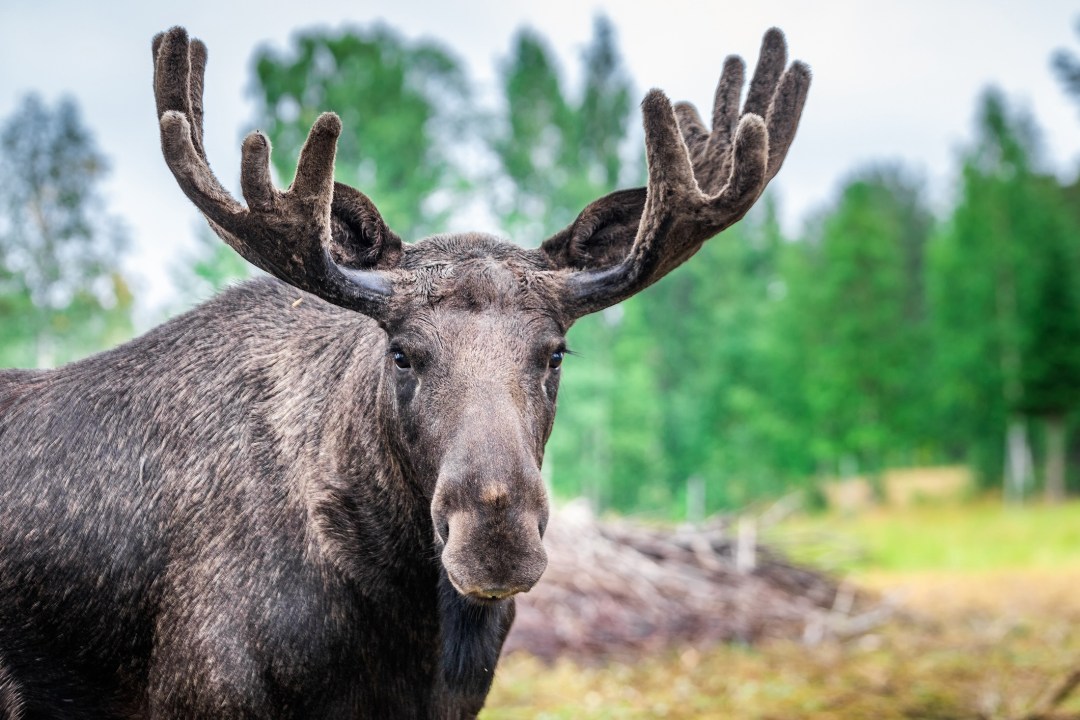
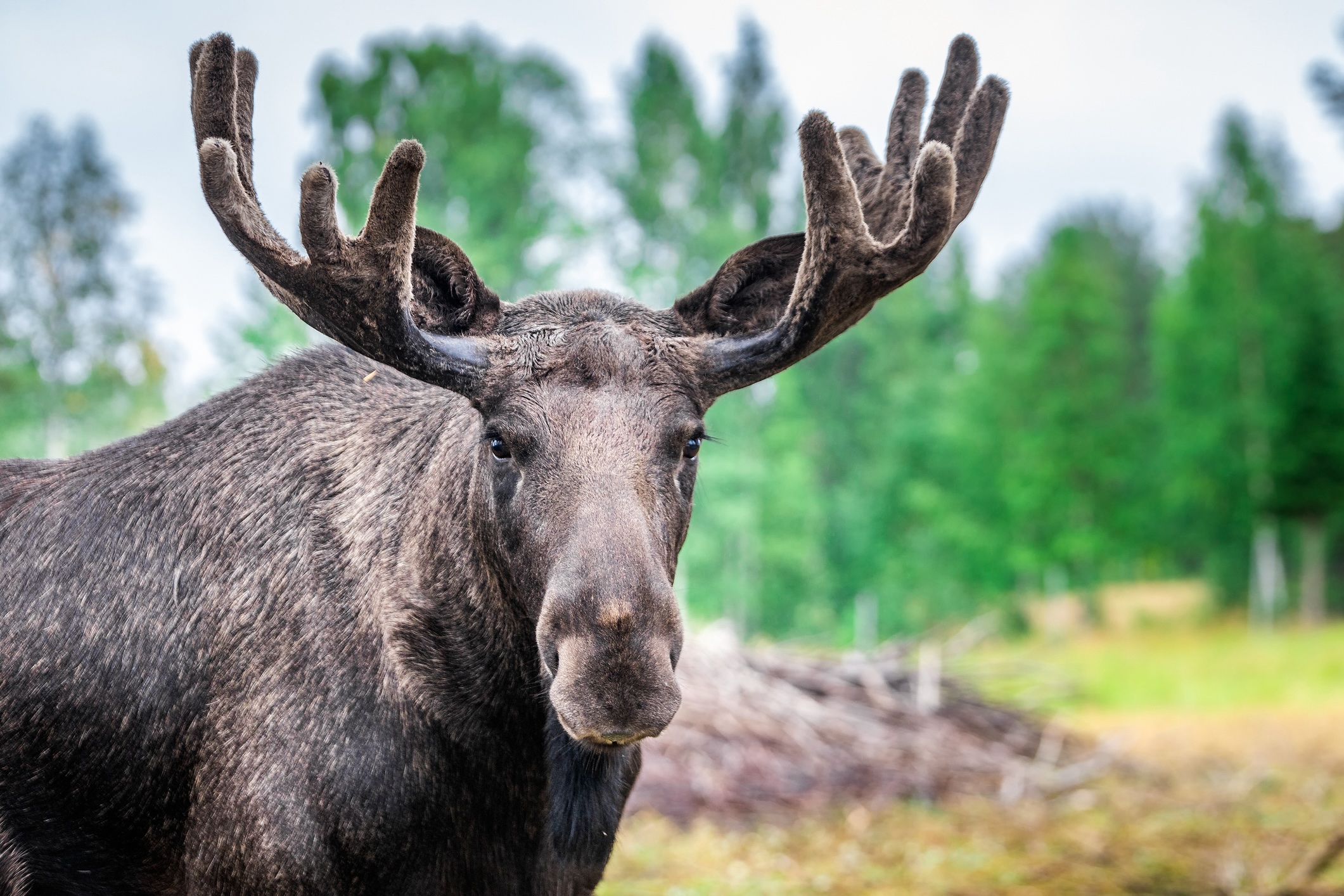
Every so often, however, I find my own resolve weakening. This happens every April when SVT, the Swedish national broadcaster, streams The Great Moose Migration, all day, every day, for three weeks. This 500-hour TV odyssey tracks the sedate journey of these massive and charmingly ugly beasts as they move from their winter-feeding ground in northern Sweden across the Ångerman river to their summer pastures in the north-west.
Covering some 56 miles in three weeks isn’t exactly speedy (though it feels depressingly familiar to anyone who drives in London). But The Great Moose Migration is a first-rate example of ‘Slow TV’: the real-time screening of a marathon event. And, while it may not sound like adrenaline-fuelled viewing, its meditative calm has proven to be the welcome antithesis to much of what we see on our screens.
While 21st-century examples of Slow TV have come out of Scandinavia, it seems we have the Yanks to thank. It was Andy Warhol who pioneered this particular phenomenon back in 1964 with his five-hour film Sleep, showing his boyfriend John Giorno, well, sleeping. Warhol then followed this up in 1965 with Empire – more than eight hours of footage of the Empire State Building.
There were further American forays into Slow TV, including The Yule Log of 1966 (a four-hour loop of a crackling Christmas fire). However, its modern iteration really kicked off in 2009 with the broadcasting of a seven-hour train ride along the jaw-dropping Bergen Line in Norway. A fifth of the country’s population watched it and NRK, the Norwegian broadcaster, doubled down on its success, producing minute-by-minute railway journeys, cruises, salmon fishing, bird feeding and even a 12-hour ‘knitathon’. All of these got a hell of a lot more than their 15 minutes of fame.
While it may not sound like adrenaline-fuelled viewing, its meditative calm has proven to be the welcome antithesis to much of what we see on our screens
Slow TV remained a Norwegian niche until 2011 when the broadcasting of the 134-hour MS Nordnorge cruise along the country’s west coast, from Bergen to Kirkenes, somehow caught the eye of viewers further afield. While nearly half the Norwegian population watched it at some point, 46 per cent of the audience was overseas. Other countries then decided to have a crack at Slow TV. Though West Country Farmhouse Cheesemakers had already produced a one-year live stream of a truckle of cheddar (I missed it too), the success of the MS Nordnorge broadcast inspired even Auntie to launch its own Slow TV series in 2015. Episodes of BBC Four Goes Slow included uninterrupted footage of a two-hour barge trip and an hour of birdsong. The French also got all arty in 2014, running a nine-hour programme of a man walking backwards through Tokyo.
It was the Swedes, however, who really tapped into something magical with their annual moose migration. It’s been streamed every year since 2019 when it was watched by one million viewers, and last year, that figure had grown to nine million. With those sorts of numbers, many a production company would be tempted to throw money at it. But not the phlegmatic Swedes. This isn’t David Attenborough. Adhering to their famous concept of lagom (meaning ‘just the right amount’), the 15-strong crew tie robotic cameras to trees across a 250-acre forest patch by the river – and that’s it. There’s no editing, no narration, just moose after moose marching past.
Therein lies the charm of The Great Moose Migration. Beyond the birdsong and the breeze and the lapping waters, it’s very quiet. Very, very little happens. There are around 400,000 moose in Sweden but it’s only a subset that migrate across the Ångerman River, meaning fewer than 100 are usually caught on camera. While we get to see swans, foxes, beavers and bears, we get to glimpse a moose only once every four-and-a-half hours. It’s not so much suspenseful as a suspension of your televisual expectations. We’re all so used to being bombarded with action in the news headlines, the TV programme schedules and on social media, that waiting for a moose to heave into view – or even swim across the river (apparently viewing figures soar when they moose-paddle to the other side) – is utterly therapeutic.
You may imagine, then, how short-changed I felt this year when the march finished three days early. The moose set off sooner than anticipated and moved more quickly, though their speediness wasn’t immediately obvious to me as they meandered through the sunlit Swedish landscape down to the thawing riverbanks. April 2027 can’t come soon enough. Until then, our TV returns once again to its sitting room corner.




Comments