American Life

What have Britons got against America?

35 min listen

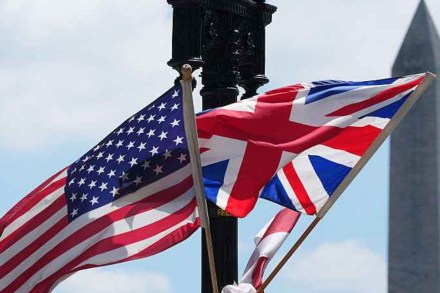
British favorability dropped sharply sometime around 2016 and then further declined in 2024. Trump is clearly the main driver of negative feelings, although not the only one. There was much antipathy in 2020, which may have been related to the election but seems more likely due to the chaotic scenes that followed George Floyd’s death. To discuss this, Freddy is joined by Ed West, who has written about this for his Substack The Wrong Side of History. https://www.youtube.com/watch?

What have Britons got against America?

Is Sean Strickland the redneck hero America needs right now?

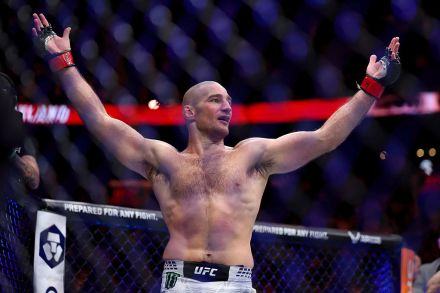
Is charismatic UFC middleweight contender Sean Strickland the last American hero? This weekend he fights terrifying undefeated Chechen killing machine Khamzat Chimaev for the UFC world championship. If he wins, immediately he will rival Conor McGregor as the sport’s most famous face. Given Strickland’s proclivity for at every opportunity saying the most politically incorrect thing imaginable – he has taken lately to calling Chimaev a "goat fucker" – there are many for whom this will be an outrage, presumably not least Paramount, who recently paid $7.7 billion for the rights to broadcast UFC events. All sport is political to a greater or lesser extent In his own mind, Strickland is a throwback to a time before liberals monkeyed with prevailing Western cultural values.

sean Strickland

Pope vs Trump: why Trump picked a fight with Pope Leo

Donald Trump’s latest clash with the Catholic Church stunned even the most hardened veterans of culture-war X. According to the President of the United States, the Chicago-born Pope Leo XIV, the conspicuously holy spiritual leader of 1.3 billion people, is “WEAK on crime and terrible on foreign policy.” He also claimed, “If I wasn’t in the White House, Leo wouldn’t be in the Vatican.” Spectator associate editor Damian Thompson joins Freddy to discuss the dispute.

European culture is being Americanized

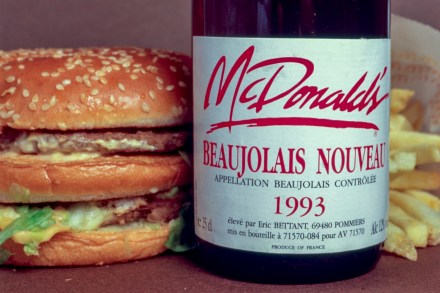
Did Mariah Carey mime or not when she headlined the opening ceremony of the Winter Olympics in Milan? That was the main takeaway from last month’s jamboree. Organizers have since suggested that the US singer did indeed lip-sync to Domenico Modugno’s “Nel Blu, dipinto di Blu” and the song that followed, her very own, “Nothing is Impossible.” “The technical, logistical and organizational complexities of an Olympic ceremony are not comparable to a live performance by a single artist,” said a spokesperson for the organizing committee.    Was there also a linguistic complexity in the decision? Perhaps Carey didn’t feel confident singing live in Italian in front of 75,000 spectators in the San Siro Stadium, plus the 9.

Une bouteille de beaujoulais nouveau à côté d'un repas McDonald's, France, 1994. (Photo by Robert DEYRAIL/Gamma-Rapho via Getty Images)

Why I’m a proud Zionist

The bomb shelter reserved for ‘volunteers’ at Kibbutz Dafna near the town of Kiryat Shmona in northern Israel was definitely substandard. It was damp and smelly, more like a lavatory than a fortified bunker, and not considered fit for the kibbutzniks: a pampered species compared to us. But when the Soviet-built ordnance started raining down on us, it did its job. We emerged, unharmed, the following morning, blinking into the dawn light. The terrorists had not succeeded in hitting the kibbutz with a single Katyusha rocket. No, I’m not embedded with the Israel Defense Forces on the Lebanese border, although the area surrounding Kiryat Shmona was under fire from Hezbollah earlier this week. This was in 1981 and I was just 17.

Who is the real Melania Trump?

14 min listen

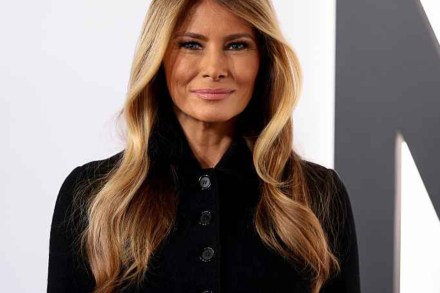
Freddy speaks to the documentary maker Fernando Sulichin who produced Melania, soon to be released on Amazon Prime. They discuss the First Lady, how the ten days leading up to the inauguration unraveled, her relationship with Donald Trump and whether she was sidelined by the fashion industry.

The pros and cons of losing my hearing

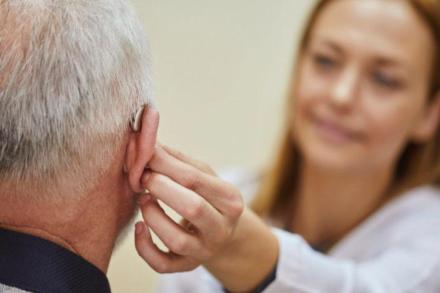
Ah, the indignities of age. Over the past year I’ve suffered significant hearing loss. “Huh?” has become my favorite word and I’ve developed a strange new respect for the loonies who hear voices. Aspiring to stoicism, I informed Lucine, my wife, “When I hit 60 I figured that I was entering a stage in which the physical setbacks, some quite unexpected, would mount. So I told myself that I could either whine about it or I could accept all this with grace and good humor.” Lucine didn’t miss a beat. “Then why have you chosen to whine?” Thanks, dear! I mean no disrespect to the late Freddie Mercury when I say ‘We Will Rock You’ sounds better muffled I confess to the occasional maudlin moment.

Spending the last penny

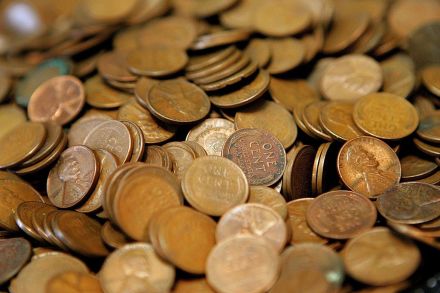
I once knew a man so cheap he would call my dad to report that he’d found a nickel on the pavement of the local racetrack’s parking lot. I don’t know if Jim would have stooped to conquer a penny as well – I wouldn’t put it past him – but I like to think he’d join me in lamenting the demise of the American cent, our humblest coin, burked by order of President Donald Trump at the urging of Elon Musk, neither of whom will ever be mistaken for a small-is-beautiful fan. The last Lincoln cent headed for general circulation was struck at the Philadelphia Mint in November last year, ending a 232-year run for my favorite coin.

The anti-Masonic roots of the Republican party

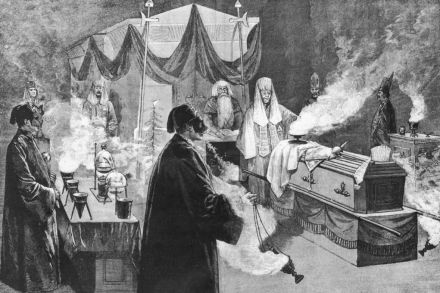
I suppose the big anniversary event of the coming new year is the semi-quincentennial of the American Revolution. I’m all for celebrating revolution and secession but spare a good thought for the bicentennial we’ll be celebrating hereabouts in 2026: that of the Morgan Affair, featuring betrayal, a possible murder, an enduring mystery and a political eruption whose ejecta would one day help form the Republican party. I’m writing this while sitting on the polished granite bench in the Batavia Cemetery dedicated to my late friend and swimming teacher Catherine Roth, grande dame, who waged a righteously “wrothful” battle against the urban renewers who razed and ruined so much of downtown Batavia, New York, in the 1960s and 1970s. (Greatest Generation my ass!

anti-masonic

Has Los Angeles killed America’s imagination?

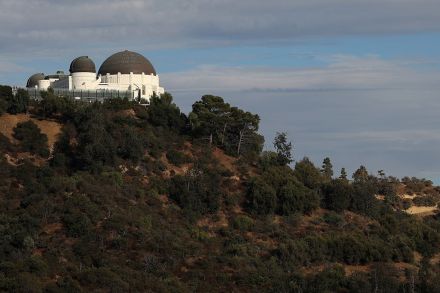
The magnificent Griffith Park Observatory turned 90 this year and, as fans of nonagenarians, my wife and I hiked up the south slope of Mount Hollywood – well, our rental car did the hard work – to pay our respects. The city of Los Angeles sprawled out before us; the Hollywood sign loomed ominously above us. I suppose I should hate this city, the Typhoid Mary of cultural imperialism, infecting and deadening imaginations from Bangor to Bend. As Morrissey crooned: “We look to Los Angeles for the language we use/ London is dead.” But I dunno: it’s my wife’s hometown, I love her Armenian relatives and I’ve always been a sucker for the movies, at least in their pre-CGI, pre-Marvel, pre-woke, pre-franchise age.

los angeles

A Neil Young concert in the waning days of summer

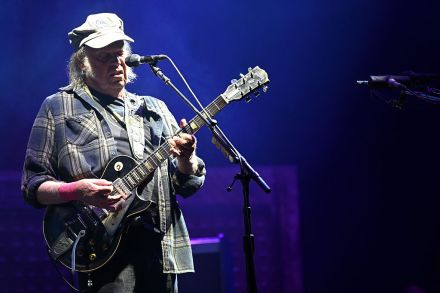
By the time we got to Woodstock… actually, we never got to Woodstock. Bethel, the town in which the fabled festival of mud and myth took place, is about 50 miles as the crow flies from the famous musical happening’s eponym, and it was at the Bethel Woods Center for the Arts that we saw and heard Neil Young in the waning days of summer, when melancholy always spices the air. It boggles the mind that half a million kids – the youngest of whom are now hoary-headed septuagenarians – flooded Sullivan County on a rain-soaked weekend in August 1969, but it is almost as remarkable that despite the drugs and unhygienic conditions, only three concertgoers died.

Young

Thoughts on moving houses

“A house for sale is not a home,” says Wendell Berry, which is perhaps why we have delayed putting our home up for sale as we slowly move, box by box, the five short – long? – miles down the road to the house my grandfather built in 1938. We are moving from Chapel Street to Bank Street, which I trust does not indicate a moral demotion from my lofty spiritual perch to the world of grubby materialism. I know for certain it does not augur riches. We are holding off on selling our Chapel Street home till we’ve cleared it out and are fully moved into Bank, though I nurture a ridiculous hope that before then I might unearth a rusted coffee can filled with 19th-century gold pieces that will enable us to keep both.

moving

It’s a frustrating time to be a college football fan

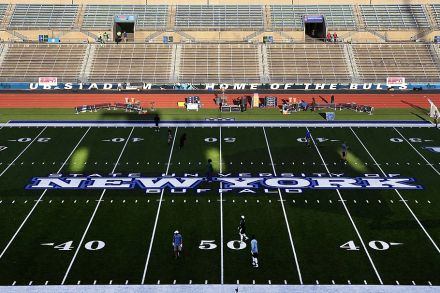
Another pigskin season kicks off, and despite the multitudinous sins committed against the game and its culture by ESPN, university presidents, major conference commissioners, take-the-money-and-run athletes and other votaries of Mammon, I’m once again giving it the old college try. Which is why I picked up my copy of Lindy’s College Football Preview the other day. (Lindy’s ranks my local team, the University of Buffalo Bulls, 85th in nation –we’re movin’ on up!) It’s a frustrating time to be a college football fan. Tradition is sacked by the almighty buck, as it typically is in the land of the dollar bill, and healthy sentiments and institutional affections are warped, processed and sold back to us in tawdry and expensive packages.

football

The Erie Canal at 200

I’ve got a mule, her name is Sal              Fifteen miles on the Erie Canal               She’s a good old worker and a good old pal              Fifteen miles on the Erie Canal I’ve a pal named Sal – he’s no mule, alas – but it’s only a 15-mile trip for me, too, up Route 98 to the Erie Canal, which turns 200 years old this October 26. I while away the occasional summer morn sitting by its banks, editing or writing or reading, coffee washing the donuts down my maw. I love the old canal town of Albion (where perfidy has no place!), its tumbledown Main Street blessed by the silver-domed Orleans County Courthouse. The Upstate New York folklorist Carl Carmer grew up here, as did the sleeping car magnate George Pullman.

Erie

Remembering Jackson C. Frank

Before venturing to the North Park Theatre in Buffalo to catch a one-night-only showing of Blues Run the Game: The Strange Tale of Jackson C. Frank, the new documentary about the Queen City’s doomed native-son folksinger, I shared Frank’s most famous number, “Blues Run the Game,” with our friend Pat. “That could be the saddest song I’ve ever heard,” she said. Yet Frank wrote it during his very brief wine, women and musical heyday. One shudders to imagine what he composed as an obese, one-eyed, homeless paranoid-schizophrenic. Frank’s western New York contemporary, the novelist John Gardner, said that “art begins in a wound, an imperfection, and is an attempt either to learn to live with the wound or to heal it.

Frank

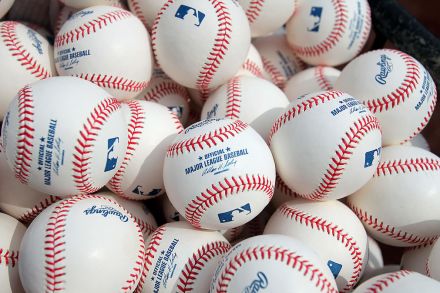
How Major League Baseball lost its soul

I highly recommend Homestand, Will Bardenwerper’s new book contrasting the community-enhancing qualities of grass-roots baseball with the soulless corporate product that Major League Baseball has become – and it’s not just because I am a central character therein. The book is at once a beautiful portrait of bleacher-level society and a scathingly effective indictment of the automatons who are destroying the American game. Will spent the summer of 2022 in and around Dwyer Stadium, home of the Batavia Muckdogs, an independent team of college ballplayers. This amateur ball club was the feisty successor to professional teams that had graced our fair city since 1939.

baseball

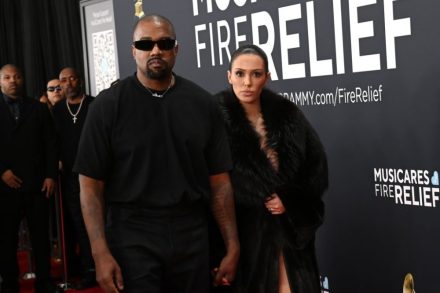
Is Kanye West more powerful than Donald Trump?

There are powerful men, and then there is Kanye West. Or Ye, as he now calls himself. While the world spends its energy analyzing the muscle of nation-states, few seem willing to grapple with a far more disturbing, modern form of power: cultural invincibility. In that particular department, Kanye West is in a class of his own.How, I ask, are we to define power in the 21st century? Is it the ability of world leaders like Donald Trump to impose tariffs, pass legislation, launch missiles, control borders? Or the ability to say the unspeakable, do the unacceptable, and still survive – but thrive? If the latter, then it’s time we admit something uncomfortable: Kanye West may be the most untouchable man on the planet.Let me be very clear. This is not a celebration; it’s a diagnosis.

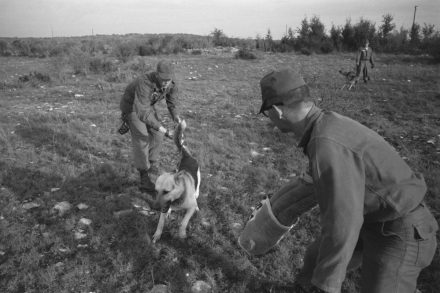
The dog that haunts Russ Benzin

Batavia, New York Fifty-five years after his Vietnam-era military service ended, Russ Benzin remains haunted. Not, thank God, by memories of the state-sanctioned mass murder that is war, but by a seemingly intractable and feral military dog he came to love. I met Russ years ago in the third-base bleachers at Dwyer Stadium, where we whiled away many summers watching a set of trained canines – the Batavia Muckdogs of the (now defunct or, rather, exterminated) New York-Penn League. In the manner of ballpark friendships, ours developed over the years: from nodding acquaintance to grumbling exchanges (“why the hell didn’t the third-base coach send that guy?”) to friendship.

dog russ benzin

Asteroid 2024 YR4 and the geekoisie

"Giant Asteroid" has been a popular also-ran in the last three presidential elections, at least judging from bumper stickers, and those wiseacres who preferred planetary annihilation to Hillary, Biden, Kamala and Trump may finally get their wish in 2032, when the newly discovered asteroid 2024 YR4 has — according to current calculations, liable to change — about a 3 percent chance of hitting Earth. The geekoisie has been all a-twitter over this forecast, as visions of tsunamis and extinction-level events and the hot astrophysicists who adorn disaster movies dance in their heads.

asteroid

The controversy of Daylight Savings Time

Batavia, New York I bear no ill will against golfers — I triple-bogey easy holes and miss gimme putts with the worst of them — but President Trump’s demand that we eliminate Daylight Saving Time (DST) is a double eagle out of the blue, especially as Trump had earlier advocated a move to year-round DST. Although Benjamin Franklin is often credited as its progenitor, the real father of Daylight Saving Time, according to Michael Downing, author of Spring Forward, was the golfing British architect William Willett, who deplored “the waste of daylight.” The British Royal Astronomer dismissed Willett’s idea with the counterproposal that “between the months of October and March the thermometer should be put up ten degrees.

daylight