Music

The Super Bowl halftime show gets lost in translation

Bad Bunny strolled into a tropically transformed Levi’s Stadium for his first ever Super Bowl halftime show and kept his promise: He sang all of his songs as written, en Español. If a healthy swathe of English-speaking Americans stared blankly at their screens wondering, “what am I watching?” Bad Bunny was undeterred. The same man who boycotted the contiguous United States just eight months ago due to the perceived prospect of ICE raids at his concerts looked confident and ironically, smug, commanding America’s musical zeitgeist moment on the mainland. He began his show strolling through a quickly assembled Latin Margaritaville. Visually, the camera zoomed way too close to Bad Bunny’s face. We get it: The guy has a near-immaculate face card.

The golden years of David Bowie

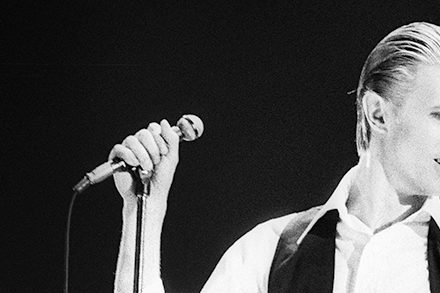
This year marks the anniversaries of two of David Bowie’s most compelling and powerful albums: 1976’s Station to Station and 2016’s Blackstar. Given that they are often – rightly – described as Bowie’s crowning artistic achievements, amid severe competition from his other releases, they also have the intriguing fillip that both were originally released in January: a fortunate time for the musician, who was born on January 8, 1947, even if it was also the month in which he finally departed this Earth. Yet the comparisons between Station to Station and Blackstar, which came out 40 years apart, are far more pervasive – and persuasive – than the serendipity of their release dates.

david bowie

The predictable politics of the 2026 Grammys

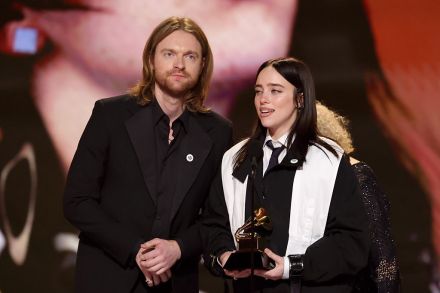
When Billie Eilish declared, during her acceptance speech for song of the year with “Wildflower” at last night’s Grammy awards, that “I feel like we just need to keep fighting and speaking up and protesting, and our voices really do matter,” she was speaking in the approved register. "Fuck ICE," she added but it was more of the same. In contrast to the Golden Globes, where the neutral tenor of the event was made up of tame jokes about the age of Leonardo DiCaprio’s girlfriends, the Grammys have turned into an opportunity for musicians to express political outrage. The awards themselves went as expected last night. Kendrick Lamar and Bad Bunny were the big winners of the night along with Eilish.

How mediocrity took over the Grammys

Is music getting worse? Rick Beato is a musician, producer and critic with more than five million YouTube subscribers. His answer would be: yes, pretty much. In a recent video, he compares the 2026 Grammy Song of the Year nominees to those of 1984. There are a few bright sparks among the slate of new songs, but Beato regards most of them as derivative, unoriginal and unlikely to be remembered past the end of the awards show. In contrast, 42 years on, all the 1984 nominees – Michael Jackson’s “Beat It,” The Police’s “Every Breath You Take” and Lionel Richie’s “All Night Long” among them – are firmly embedded in the popular music canon. One could ask the same question about science: has it gotten worse? My answer, I have to say, reflects Beato’s for music.

Kanye West’s anti-Semitism apology isn’t enough

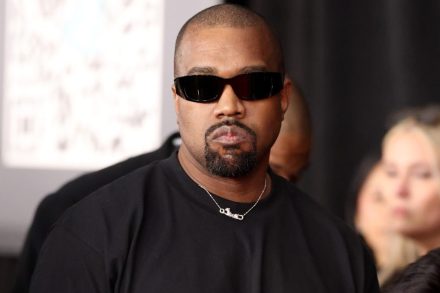
When one of the 21st century's most acclaimed music artists takes out a full-page advertisement in the Wall Street Journal to apologize for his anti-Semitic behavior, deny that he is a Nazi and ask for understanding as he works on himself, what do we owe him? Mercy, punishment, or neither? In his letter, titled "To Those I’ve Hurt," Kanye West, now legally known as "Ye," writes that he is "not a Nazi or an anti-Semite" and that he "loves Jewish people." He attributes his anti-Semitic remarks, offensive use of Nazi symbolism and erratic conduct to an undiagnosed frontal-lobe injury from a 2002 car accident and to bipolar type-1 disorder that went largely untreated until recently.

kanye

What is Travis Scott doing in The Odyssey?

As far as teaser trailers for summer blockbusters go, it takes quite a lot to make jaded audiences – or cynical critics – sit up and say, “What the hell?” But what’s exactly what the latest trailer for Christopher Nolan’s eagerly awaited The Odyssey has done. Not because it has featured a couple of new shots of Tom Holland’s Telemachus squaring off with Robert Pattinson’s villainous Antinous, or Matt Damon’s Odysseus participating in the bloody sack of Troy with his fellow Greeks, but because it introduces the most unexpected cameo of the year, possibly of the decade. Ladies and gentlemen, enter the latest feature of Nolan’s all-star cast: the hip-hop artiste Travis Scott, appearing in the somewhat unlikely role of a staff-beating herald.

travis scott

The pros and cons of losing my hearing

Ah, the indignities of age. Over the past year I’ve suffered significant hearing loss. “Huh?” has become my favorite word and I’ve developed a strange new respect for the loonies who hear voices. Aspiring to stoicism, I informed Lucine, my wife, “When I hit 60 I figured that I was entering a stage in which the physical setbacks, some quite unexpected, would mount. So I told myself that I could either whine about it or I could accept all this with grace and good humor.” Lucine didn’t miss a beat. “Then why have you chosen to whine?” Thanks, dear! I mean no disrespect to the late Freddie Mercury when I say ‘We Will Rock You’ sounds better muffled I confess to the occasional maudlin moment.

Spotify wouldn’t exist without the musicians it exploits

It used to be said that you could walk from the west of Ireland to Nantucket on the backs of the cod, so thick was the Atlantic with the fish. But as readers of a certain age will remember, by the last decade of the last century, it was looking doubtful that the cod population would see this century out to the end. By 1992, the cod population was one 100th of its historic level.   We knew that the way we were fishing was, in that unappealing but apt vogue-word, unsustainable. The fishermen themselves knew that it was unsustainable – that they were destroying the very resource on which their livelihoods and futures depended; that they were, in effect, sawing off the branch they were sitting on. And yet, for years, the overfishing... just sort of happened.

What makes a ‘survivor?’

Are you a survivor? We are not, luckily, all Gloria Gaynors. She declared in 1979: “I’ve got all my life to live, and I’ve got all my love to give/ And I will survive.” Gaynor has, so far, made good on her promise. Surviving afflictions unscathed is not always an unmixed virtue. “She would be earning a good living somewhere… The Mary Taylors of the world were natural survivors,” wrote P.D. James in Shroud for a Nightingale in 1971. Now, even a new biography of Lady Margaret Beaufort (1443-1509) is subtitled Survivor, Rebel, Kingmaker. But what of those poor people who have gone through the misery of child sexual “grooming?” Are they victims or are they survivors? Or should they be neither?

content potash survivor fresh hell

Drowning in the neon swamp of Tron: Ares

Sitting in the nearly empty movie theater at which I saw Tron: Ares, I found myself swamped by neon. Its hues are unappealing in real life – redolent of dive bars, arcades and other unsavory venues – but neon is downright unbearable when experienced in a movie theater, where you have no choice but to stare at the screen unless you want a perfectly good $21.51 to go to waste.

tron ares
los angeles

Has Los Angeles killed America’s imagination?

The magnificent Griffith Park Observatory turned 90 this year and, as fans of nonagenarians, my wife and I hiked up the south slope of Mount Hollywood – well, our rental car did the hard work – to pay our respects. The city of Los Angeles sprawled out before us; the Hollywood sign loomed ominously above us. I suppose I should hate this city, the Typhoid Mary of cultural imperialism, infecting and deadening imaginations from Bangor to Bend. As Morrissey crooned: “We look to Los Angeles for the language we use/ London is dead.” But I dunno: it’s my wife’s hometown, I love her Armenian relatives and I’ve always been a sucker for the movies, at least in their pre-CGI, pre-Marvel, pre-woke, pre-franchise age.

Taylor Swift’s new album balances glitter with grit

With The Life of a Showgirl, Taylor Swift set out to do the opposite of her previous record, The Tortured Poets Department. Critics had called that sprawling 31-track project “unrestrained” and “imprecise,” and Swift herself admitted it was a “data dump.” This time, she wanted precision: a lean, 12-track pop record where every beat and lyric fit “like a perfect puzzle.” When Swift announced that music industry legends Max Martin and Shellback were producers on her 12th studio album, fans wondered whether this might herald a repeat of her 2014 smash-hit album 1989.

Showgirl
The Who

The Who’s farewell tour marks the end of an era

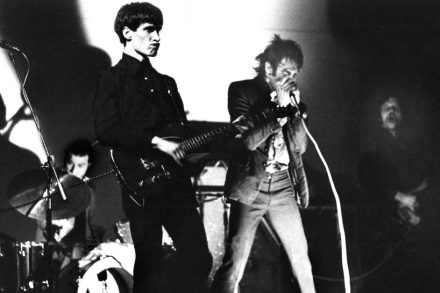
The Who are our last great rock ’n’ roll band. More than 60 years after four working-class boys from west London formed a humble R&B combo, the two surviving members look to be hanging up their spurs for good. The Who have named their latest string of engagements – a farewell tour which concluded early this month – “The Song Is Over.” When I caught them in Long Island, rumors of geriatric struggles were soundly put to rest: Pete Townshend, 80, and Roger Daltrey, 81, were in cracking good form. Most concertgoers that night were male, working-class and in their late fifties or early sixties.

Young

A Neil Young concert in the waning days of summer

By the time we got to Woodstock… actually, we never got to Woodstock. Bethel, the town in which the fabled festival of mud and myth took place, is about 50 miles as the crow flies from the famous musical happening’s eponym, and it was at the Bethel Woods Center for the Arts that we saw and heard Neil Young in the waning days of summer, when melancholy always spices the air. It boggles the mind that half a million kids – the youngest of whom are now hoary-headed septuagenarians – flooded Sullivan County on a rain-soaked weekend in August 1969, but it is almost as remarkable that despite the drugs and unhygienic conditions, only three concertgoers died.

The closest look yet at David Bowie’s mind and imagination

What would David Bowie say? The much-missed musician – dead a decade next January – is the beneficiary of a new, bespoke space inside the Victoria & Albert Museum’s East Storehouse outpost. Although Bowie is by no means Britain’s most commercially successful rock star, he is surely its most interesting – and certainly the most chameleonic, making his legacy ripe for serious re-evaluation. Now, thanks to the David Bowie Centre, the curious public can get its closest look yet into the artist’s mind and imagination. And as a bonus, it’s free, too. The space is composed of one room with nine rotating displays showing about 200 items.

Nick Drake’s explosive creativity

Nick Drake’s debut album Five Leaves Left (1969) had so much going for it. Supported by tasteful string arrangements and a cast of noteworthy musicians, Drake (1948-74) sang with a delicate croon that sounded like Chet Baker if he’d gone to Eton, and he played some of the finest acoustic guitar this side of Segovia. Joe Boyd, the impresario who’d launched Pink Floyd and Fairport Convention, produced the album, and it bore the imprimatur of Island Records, London’s hippest label. On the cover, Drake cut a shy but handsome figure, nonchalantly clad in blue jeans and blazer, gazing wistfully out the second-story window of an abandoned house in Wimbledon.

Drake

Diddy is finished

In the end, the verdict in the most talked-about trial of the year, perhaps the decade, came in far quicker than most commentators had expected. Judge Arun Subramanian had wisely suggested that he wanted a unanimous verdict on the charges that Diddy had been arraigned on and that he wanted this verdict to come in before the 4th of July holiday. Many had assumed, given the sheer weight of evidence against Diddy (real name, as we were informed many times, Sean Combs), that it would take at least a week to sort through the often sordid and distressing material that the jury were presented with over the course of the seven-week trial. In the end, however, it took just over a day of deliberations.

Diddy

Unpacking John Lennon and Paul McCartney’s complex relationship

Fifty-five years after they broke up, what is there left to say about the Beatles? There have been so many books written about the group and so many obsessively detailed websites devoted to exploring every song, every public utterance, every twist and turn in their history, that the average rational man or woman might think they know all there is to be known about them. Craig Brown’s magisterial 2020 volume 150 Glimpses of the Beatles was a pop-cultural dive into their peerless influence and standing; Ian MacDonald’s still legendary Revolution in the Head dives into the 241 songs that they recorded (although, of course, it should be 242, thanks to the emergence of “Now And Then” in 2023) and does so with grace, intelligence and slightly frightening attention to detail.

John
Frank

Remembering Jackson C. Frank

Before venturing to the North Park Theatre in Buffalo to catch a one-night-only showing of Blues Run the Game: The Strange Tale of Jackson C. Frank, the new documentary about the Queen City’s doomed native-son folksinger, I shared Frank’s most famous number, “Blues Run the Game,” with our friend Pat. “That could be the saddest song I’ve ever heard,” she said. Yet Frank wrote it during his very brief wine, women and musical heyday. One shudders to imagine what he composed as an obese, one-eyed, homeless paranoid-schizophrenic. Frank’s western New York contemporary, the novelist John Gardner, said that “art begins in a wound, an imperfection, and is an attempt either to learn to live with the wound or to heal it.

Charles Ives was a composer before his time

In February 1951, Leonard Bernstein led the New York Philharmonic through the première of a symphony by an American composer unknown at Carnegie Hall. The composer in question was Charles Ives, by then too frail to attend in person. He listened from home when the concert was broadcast a few weeks later. An experimenter by instinct, Ives’s work had already proved an inspiration to a younger generation of radical American composers including John Cage, Lou Harrison and Morton Feldman. But that Ives listened from afar to the première, at long last, of his Second Symphony – completed in 1902 – was symbolic of the distance he maintained from America’s classical mainstream.

Ives