Consciousness is thought by many to define what it is to be human. We know that animals are conscious to some extent, but they don’t have what we have in that department. So if we can explain how human self-awareness works it will be a Rosetta Stone to understanding what makes our species so odd, or, depending on your view, so special.
Also: big brains love exercise. And the great thing about this topic is that it can be tackled by biologists, neurologists, philosophers, physicists and even novelists. It’s an interdisciplinary, no-holds-barred intellectual wrestling match.

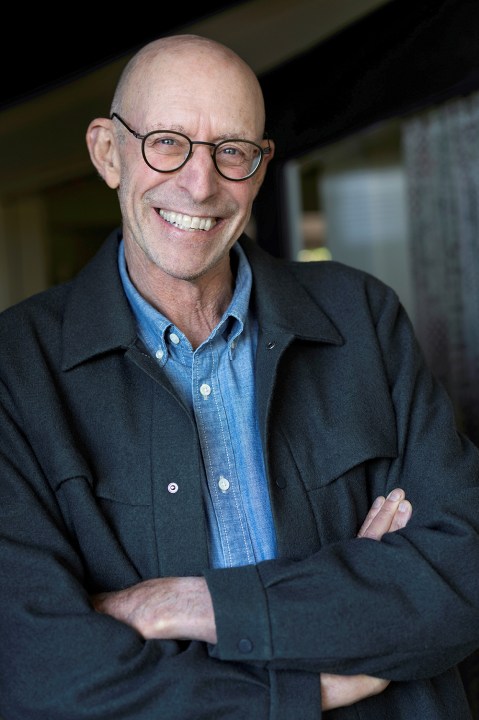
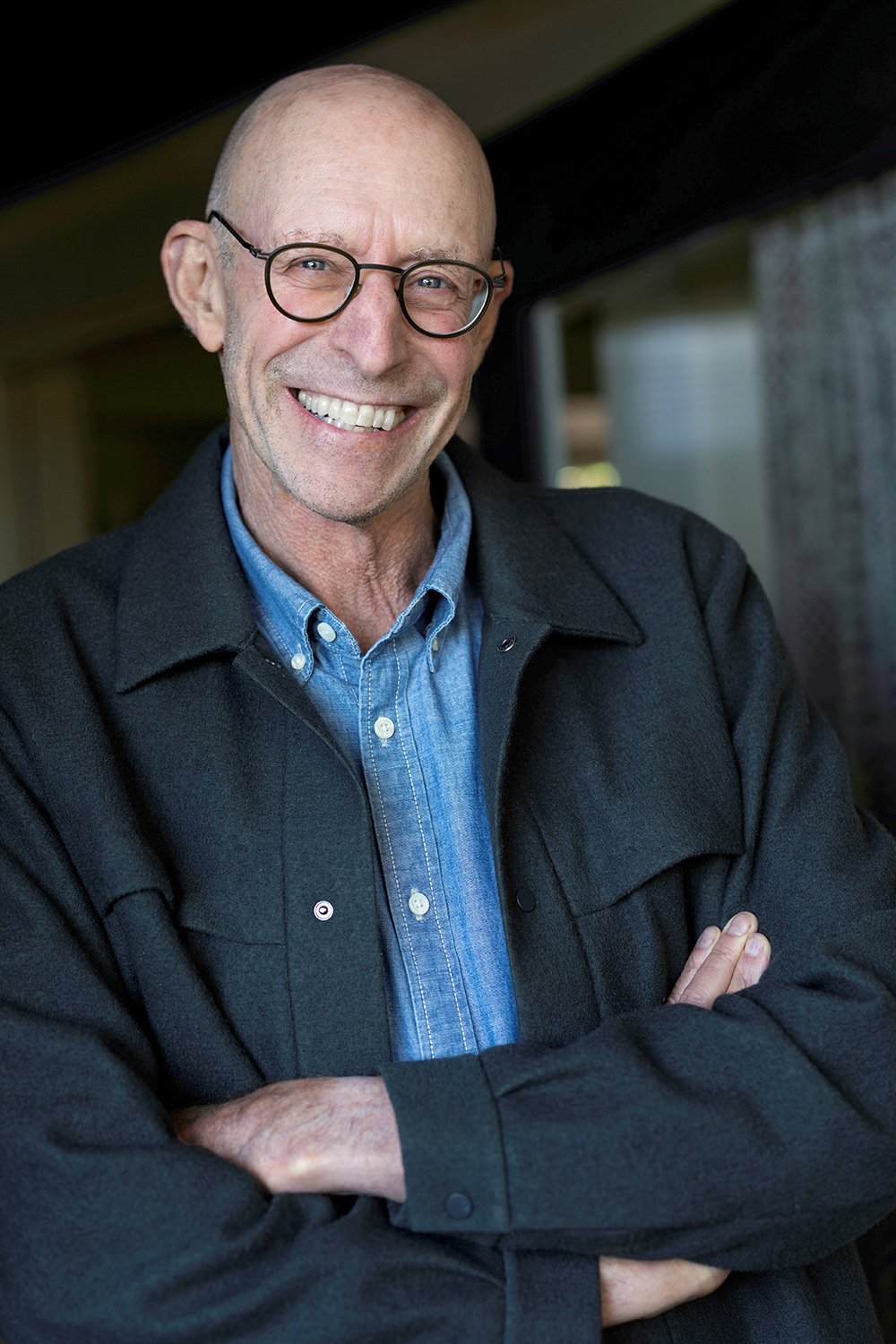
Michael Pollan, an American journalist and academic who works at both Harvard and Berkeley, comes from a literature background but is fluent in the relevant science. His book gives a lucid survey of the numerous hypotheses about how consciousness works and what it really ‘is’. But it’s more than a tour d’horizon. Pollan sits down over pots of tea with many experts in the field to interview them; he tests and enlarges competing ideas. He is no credulous scribe, either, but a critical listener. ‘I found this very hard to believe,’ he will often comment over the Lapsang.
It starts with a psychedelic trip and a suggestion that plants may be conscious. The roots of plants do direct as well as nourish the leaves; time-lapse cameras show climbers putting out precarious tendrils in the ‘hope’ of finding a vertical. So plants have at least a sense of purpose. They also die. And what is death but an absence of consciousness? But they are not conscious as we are. So before we start considering our moral obligations towards wisteria, it seems clear that the problem here is not a biological but a semantic one. You can be sentient and purposeful without being ‘conscious’. We probably therefore need new words for different degrees of the faculty under discussion – from that possessed by the daisy via that of the crow or bonobo and onwards to that of the gentle reader.
The chief way in which human consciousness differs from that of other creatures is that it is aware of itself: it is conscious of being conscious. From the 18th century, philosophers have stubbed their toe here. Pollan suggests (not strongly enough, perhaps) that this extra dimension is connected to the function of memory, to which our fleeting sensation of animal existence (at the moment of awakening, for instance) has a lightning-fast connection – and one which, furthermore, operates on a valve that we can open and shut at will, allowing us not only to refine but re-refine our sense of being alive at any point. Tulips almost certainly can’t do that; nor, so far as we know, can dogs. This is also the philosophical basis of Proust’s great novel: that experience can only be transcendent when the most developed and peculiar human faculty, memory, is deployed to its fullest extent.
Does this make humans superior to other creatures? The Spanish Catholic philosopher Miguel de Unamuno thought, on the contrary, that this reflexive self-awareness separated us from the joy of creation and rendered us ‘lower than the jackass or the crab’. Pollan encounters some who talk disparagingly of ‘human exceptionalism’ and call it ‘speciesism’. Being the only creature in the world that wakes every day knowing that it’s doomed to die has certainly taken some of the fun out of things. But a Darwinist will tell you that to have been continually ‘selected’ over a long – in human, though not long at all in evolutionary terms – period, the faculty must have been more useful than not. Mortal self-awareness may be the price we pay for vaccines, dams and Bach. But what is this self-awareness and how does it work?
Presumably through mutation and selection, our brains have acquired some special connections, peculiar to us, that allow it. But maybe not. Neurones (nerve cells) act very fast, but other cells could do a version of their work. Pollan explores the competing neuroscientific theories, making them easy to follow despite their off-putting names (IIT, Integrated Information Theory and Global Workspace Theory, or GWT, for instance).
But perhaps the faculty is not in your head, but seated elsewhere. After all, the brain is merely the servant of the body; its prime job is to keep the flesh alive in the same way that the root is the brain of the plant, which means ultimately being its grunt, its handmaid, albeit a fancy one. So are we guilty of ‘brain exceptionalism’? Probably; and anyway there may be no exact neural substrates, no single home for consciousness; perhaps it’s not ‘seated’ anywhere in particular. After all, we now think memories are stored all over the brain, not in a box or album in one corner of the skull.
Pollan divides his exploration of the subject into four parts: Sentience, Feeling, Thought and Self, with his interviewees assigned to their area of speciality. My review copy of the book is covered in exclamation marks and underlinings as their insights flow: there are many exciting glimmers of dawn, many eurekas. It is part of the joy and the frustration of this subject that they can’t be helpfully summarised out of context, so I’m not going to try. Nor was I able to synthesise the different insights from each of the four parts into an overarching explanation, or even a plausible narrative – though (spoiler alert) neither in the end is Pollan.
One thing most readers will conclude is that the controversy over whether AI is or will become ‘conscious’ is a red herring and a ‘human exceptionalist’ one at that. For all I know, some bots already have a silicon brand of awareness; but the idea that they could become more powerful or intimidating by joining us down here, beneath the jackass and the crab, seems misconceived. We may not yet understand the workings of our ambivalent superpower but we can be fairly confident that it stems from what Pollan calls a ‘wet biology’. AI may develop a version of consciousness, but it will surely function better and be more helpful to us in diagnostics and economics if it does not model itself too closely on such a violent, imperfect and transitional living species as Homo sapiens. Or, as Pollan puts it in a sudden Californian outburst: ‘We casually liken genes to software, but if a computer’s operating system were as buggy as a genome, we’d trash it.’
In the end he admits defeat. He had naively hoped to find an answer, or at least some decisive progress from his diligent search. But he finishes by thinking he knows less about consciousness than when he started his quest three years earlier. ‘But that’s good,’ says one expert interlocutor socratically. ‘That’s progress!’
Pollan is attracted by the idea that consciousness may lie outside the self, as Aldous Huxley suggested after his mescaline experiments. It is quite a big thought to suppose that consciousness may exist independent of the entity that experiences it. Far from relying on neural substrates or their electronic epigones, it may just be out there in its own right, ‘something far more deeply interfused’, as Wordsworth had it, in the entire natural world (and presumably ‘natural’ here should include silicon, the eighth most common element by mass on Earth). Pollan’s experiences in a Zen retreat, with which the book ends, give support to this idea as he reaches a transcendent sate of selfless harmony with the universe.
The conclusion has some force because Pollan has used so much rational thought, scientific and philosophical, to arrive there. He has been fair-minded and analytical as well as marvellously lucid in his examination of competing scientific theories and has won the right to embrace a little mysticism if he chooses. I wonder whether in 100 years’ time our descendants will laugh at the quest to discover how consciousness works and what it is. To them it may seem as quaint as the medieval passion for alchemy: interesting but beside the point. The Rosetta Stone was never to be found in the exitless maze of consciousness studies, they will tell us with a laugh. The question should be answered in 2126.
Meanwhile, Pollan’s book tells us as much as one inquiring mind can now know with any certainty (or lack of it) and is touched with brilliance in the way it is so elegantly offered up for our reading pleasure.


Comments