Memory

Down memory lane: It Will Come Back to You, by Sigrid Nunez, reviewed

Readers of Sigrid Nunez’s long-form fiction will be familiar with her concerns about storytelling: the gaps between what happened, what is remembered and what can be understood only through fictionalising. Her new collection of 13 stories, written across several decades, returns to questions of memory and the unreliability of narrative. The stories tend to have mundane settings: an insomniac awake late at night; a traveller stranded by a flight delay. Nunez is less interested in dramatic incidents than in the way a passing encounter can alter one’s understanding of life. Her narrators frequently find themselves re-evaluating past certainties or realising that events they thought they’d understood resist neat explanations.

Sorry, I won’t try to remember your name

As if there wasn’t enough apocalyptic news to keep abreast of, studies show that forgetfulness is on the rise. A cocktail of causes is to blame: microplastics clogging the brain, post-Covid symptoms, Dickensian air quality… whatever the culprit, our memories are taking a pummelling. Call me an inveterate optimist, but I’m glad to have the company. I had name amnesia before it was cool, as the kids say. Place me in front of a new neighbour or colleague, and I can glad-hand, smile and make friends with the best of them. What I can’t for the life of me do is recall that person’s name. (Too busy being paranoid about leaving specks of spit on their tie, or hiding the Mark Rothko installations of my armpit stains.

The mystery of what makes us special remains unsolved

From our UK edition

Consciousness is thought by many to define what it is to be human. We know that animals are conscious to some extent, but they don’t have what we have in that department. So if we can explain how human self-awareness works it will be a Rosetta Stone to understanding what makes our species so odd, or, depending on your view, so special. Also: big brains love exercise. And the great thing about this topic is that it can be tackled by biologists, neurologists, philosophers, physicists and even novelists. It’s an interdisciplinary, no-holds-barred intellectual wrestling match. Michael Pollan, an American journalist and academic who works at both Harvard and Berkeley, comes from a literature background but is fluent in the relevant science.

A literary Russian doll: The Tower, by Thea Lenarduzzi, reviewed

From our UK edition

A girl in a tower. The words trigger instant curiosity. Who is she? Who locked her away, and why? Was it punishment, or sequestration to keep her safe? Thea Lenarduzzi’s The Tower is a literary Russian doll, one story concealed within another, blurring identities, blocking memory. A far from reliable narrator – ‘let’s call her T’ – steers us between fiction and real life while the author herself occasionally amends the telling. Clues are offered as we turn the pages, but we may have misread some of them, or been misled, and the conclusion upends expectations. If this is all beginning to sound rather too Fernando Pessoa, breathe easy. Lenarduzzi’s book is a compelling read, elegant and artful, intertwining myth, fairy tale and reality. Is it a novel or a memoir?

Hell is other academics: Katabasis, by R.F. Kuang, reviewed

From our UK edition

‘Katabasis, noun, Ancient Greek: The story of a hero’s descent to the underworld.’ R.F. Kuang’s latest novel is a promising adventure story full of magic and maths but let down by florid prose. When Alice Law, an American postgraduate student of ‘Analytic Magick’ at Cambridge, learns of the death of her chauvinist thesis supervisor Professor Grimes, she and her peer, Peter Murdoch, must rescue his soul from the eight courts of hell. Their journey comes with the debt of half a lifetime. But without Grimes, Alice is stuck in academic limbo on Earth, so she must pay this penalty and ‘beg for his life back from King Yama the Merciful, Ruler of the Underworld’. The hellscape they encounter differs from Dante’s vision.

The strange potency of cheap perfume

From our UK edition

Ah, the scents of one’s youth! What hot, sour teenage kisses and grinding youth club discos would be conjured up for me by one whiff of Aqua Manda or the original Charlie. Adelle Stripe has constructed a memoir around 18 key fragrances, one for each chapter of her life, but true perfume addicts may find ‘the juice’ somewhat lacking. It might just be scented scaffolding, but fortunately the story underneath is captivating. Dune, CK One and the rest do not trigger madeleine-like waves of memory for Stripe; neither is this a paean to the olfactory art. The perfumes crop up casually rather than crucially: her dairy farmer father’s ancient bottle of Brut; her hairdresser mother’s Rive Gauche; a friend’s cloying Angel, which ‘fills every corner of the room like tear gas’.

We’ve been doing a monstrous disservice to goldfish

From our UK edition

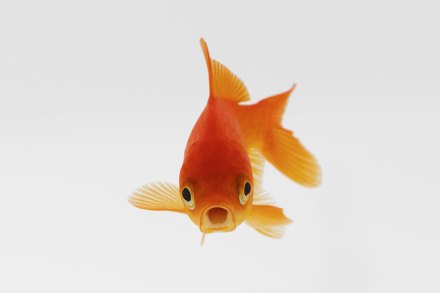
As everyone knows, Londoners don’t talk to strangers. And heaven forbid that anyone should make eye contact on the Tube. But despite having lived in the city for decades now, I’ve never really found this to be true. My average day out and about is punctuated by pleasant little conversations with strangers. Now and then, without too much effort, I’ve hit chat jackpot and got an entire life story out of a fellow bus passenger in seven stops. It seems that for many years we have been doing a monstrous disservice to goldfish Still, old myths die hard, and Radio 4 is promoting the new series of Alexei Sayle’s Strangers on a Train by saying that the host’s mission is to ‘break the golden rule of travelling by train and actually talk to his fellow passengers’.

The end of days: It Lasts Forever And Then It’s Over, by Anne de Marcken, reviewed

From our UK edition

How do you picture the end of days? ‘When I was alive, I imagined something redemptive about the end of the world,’ muses the unnamed narrator in It Lasts Forever And Then It’s Over. ‘I thought it would be a kind of purification. Or at least a simplification. Rectification through reduction.’ But no: ‘The end of the world looks exactly the way you remember. Don’t try to picture the apocalypse. Everything is the same,’ she continues from her vantage point in an afterlife, brought into vivid existence by Anne de Marcken. It’s telling that the author’s biography states that she ‘lives in the United States on unceded land of the Coast Salish people’.

A car-crash clean-up press conference Biden will hope to forget

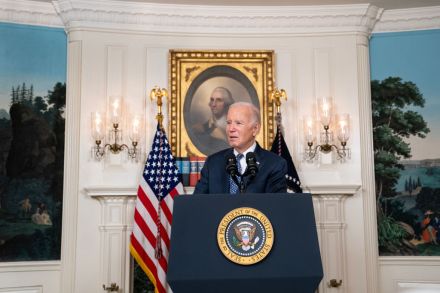
President Joe Biden surprised the American people Thursday night by delivering previously unscheduled remarks on his classified documents scandal — and promptly created an unmitigated PR disaster. Earlier in the day, the special counsel investigating Biden’s improper retention and storage of classified documents issued his report. Robert Hur found the president did mishandle documents, broke national security law and undermined national security by releasing classified information to his ghostwriter. However, perhaps even more damning, Hur declined to recommend charges against the president, asserting that he presents as a “well-meaning” elderly man with a poor memory.

joe biden press
robert hur

Robert Hur’s brutal report should mark the beginning of the end of the Biden era

Special Counsel Robert Hur predictably concluded that President Joe Biden’s handling of classified documents when he was a senator and vice president do not warrant criminal charges.  But unfortunately for the White House, Hur’s recommendations to the Justice Department quickly became background noise. Instead, his unsparing descriptions of the commander-in-chief took center stage.  None of Hur’s characterizations should surprise anyone who has watched Joe Biden for more than forty-five seconds over the last three and a half years. It’s not like the American people have had only one opportunity to catch Biden seeing dead people. There was a second and third showing.

Unequivocally Japanese: The Premonition, by Banana Yoshimoto, reviewed

From our UK edition

Who are you without memory? This is the question that sits at the heart of The Premonition by Banana Yoshimoto, best known for her 1988 novella Kitchen, which was a smash hit in Japan and adapted for film. The Premonition is a similarly slender work and one that casts a delicate spell. Nineteen-year-old Yayoi has the perfect family – doting parents and a brother she adores – but she feels unsettled, as if she’s forgotten something vital in her past: ‘There, in the midst of such a beautiful evening, my heart must have been full of that premonition.’ Looking for answers, she goes to live with her eccentric aunt Yukino, who she feels is a ‘siren to those of us who had lost part of our childhood’, and the answers she discovers change her life forever.

Memory test: The Candy House, by Jennifer Egan, reviewed

From our UK edition

On page 231 of The Candy House, a sequel – no, a ‘sibling’ says Jennifer Egan – to the Pulitzer prize-winning A Visit From the Goon Squad, we meet a character called Noreen. Wasn’t she in Goon Squad? Quick check and yes, there she is playing a bit-part peeping through a fence. Now she’s older, madder and still obsessed with the fence. It’s hard to decide if it’s an advantage to have read the previous novel, or if it just makes reading The Candy House like the sort of memory test that could mess with your head. This is unfortunate, since memory is key to its themes: the future of technology and the quest for authenticity. A tech tycoon, Bix Bouton, has created ‘Mandala’, a revolutionary way of externalising your memory.

The difficult decisions that come with downsizing

From our UK edition

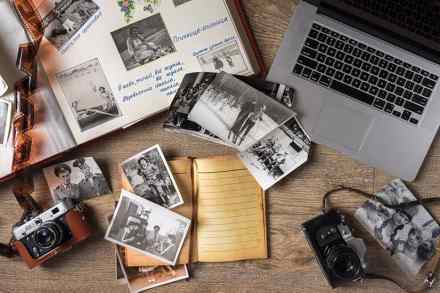
I’m perched on the bed reading an old Mothering Sunday card. It’s just one item in a box of miscellanea that I must sort and prune and I really can’t afford the time to linger. That box contains a fraction of what I have to deal with before I move house and I need to crack on. But I am sweating the small stuff. I’m sure I’m not alone in this. One of the legacies of lockdown has been a longing for more space. Across the UK, families with children are falling over themselves to find bigger places. It’s a downsizers’ market right now for those of us who feel ready to let go and to set about the sorting and binning of things. It’s good for us, they say. It’s liberating, they say. My home-moving history is not an unusual one.

Ghislaine Maxwell’s defense and the war on memory

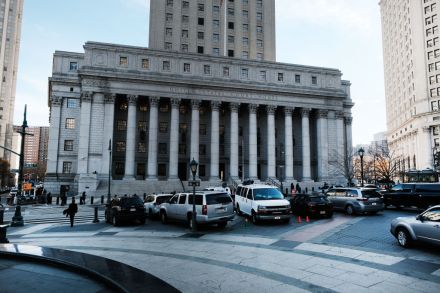
The Ghislaine Maxwell trial resumed today with the defense’s presentation of its case, beginning with a procedural loss for the Maxwell team. The judge rejected the defense’s unusual request to allow some of their witnesses to testify anonymously. Maxwell’s attorneys claimed three witnesses feared they “might get a lot of unwanted attention.” Judge Alison J. Nathan ruled that because the defense did not claim the witnesses were victims or sexual assault survivors, no special exemptions applied to the general rule that witnesses in federal court must be publicly identified.

ghislaine maxwell memory

Lord Lucan, Joan Collins and the greatest dinner ever

From our UK edition

There’s a narrow stretch of Chelsea, south of the King’s Road from Oakley Street to Ormonde Gate, that reminds me of post-war London when I first came here with my dad. Names such as Margaretta Terrace, St Loo Avenue, Alpha Place and Robinson Street bring back sweet memories of youthful innocence and desire. London back then was big on rep but ranked last on comfort. Much later, towards the end of the 1950s, Queen’s Club held the second biggest tennis tournament in the land and had just one shower in the men’s locker room. (With a dirty white curtain.) It is often said that schoolboys derive no benefit from fine architecture, and it was certainly true in my case, but what I did take in was the mood.

I loved prison

From our UK edition

Memories for me are like beautifully edited copy: all cleaned up and retaining only the good parts. The wife tells me that I’m quite lucky in choosing to remember just pleasant things, and of course I agree. Actually it’s not really a choice; it is almost automatic. Bad things are tucked away immediately, never to return. I suppose many idiots enjoy such forgetfulness, but then I’d rather be called an idiot than a surly grouch, complaining and finding fault with everything and everyone. Needless to say, I cannot forget Pentonville. Looking back, I recall only fun times among my fellow convicts. There was Warren, the large black man whose appeal I had to draw up because he was illiterate.

Technology is robbing us of the power to forget

From our UK edition

Two years ago, Lauren Goode, a senior writer at Wired magazine, cancelled her wedding and it was awkward. These things always are, but you get over it because the brain slowly learns how to skip over painful memories. Or it did, before social media. Goode has made a career out of wittily stripping away the pretensions of consumer tech, and when her wedding plans blew up consumer tech had its revenge. She ended her eight-year relationship in 2019 — but the internet didn’t get the message and kept confronting her with ‘a cyborg version of me, a digital ghost, that is still getting married’.