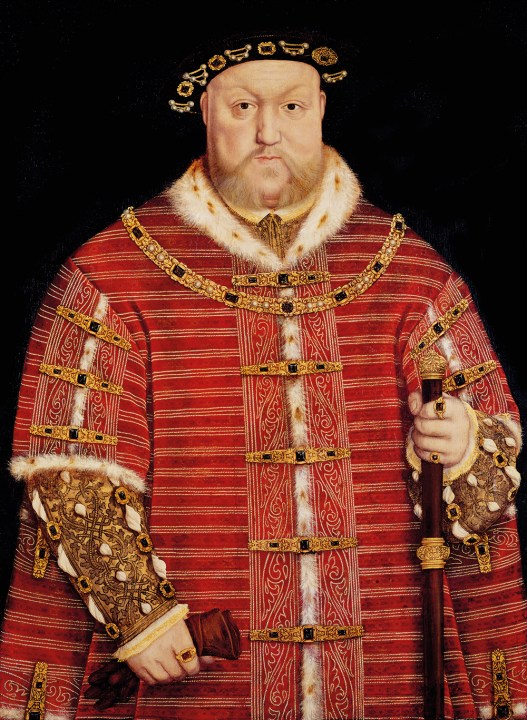
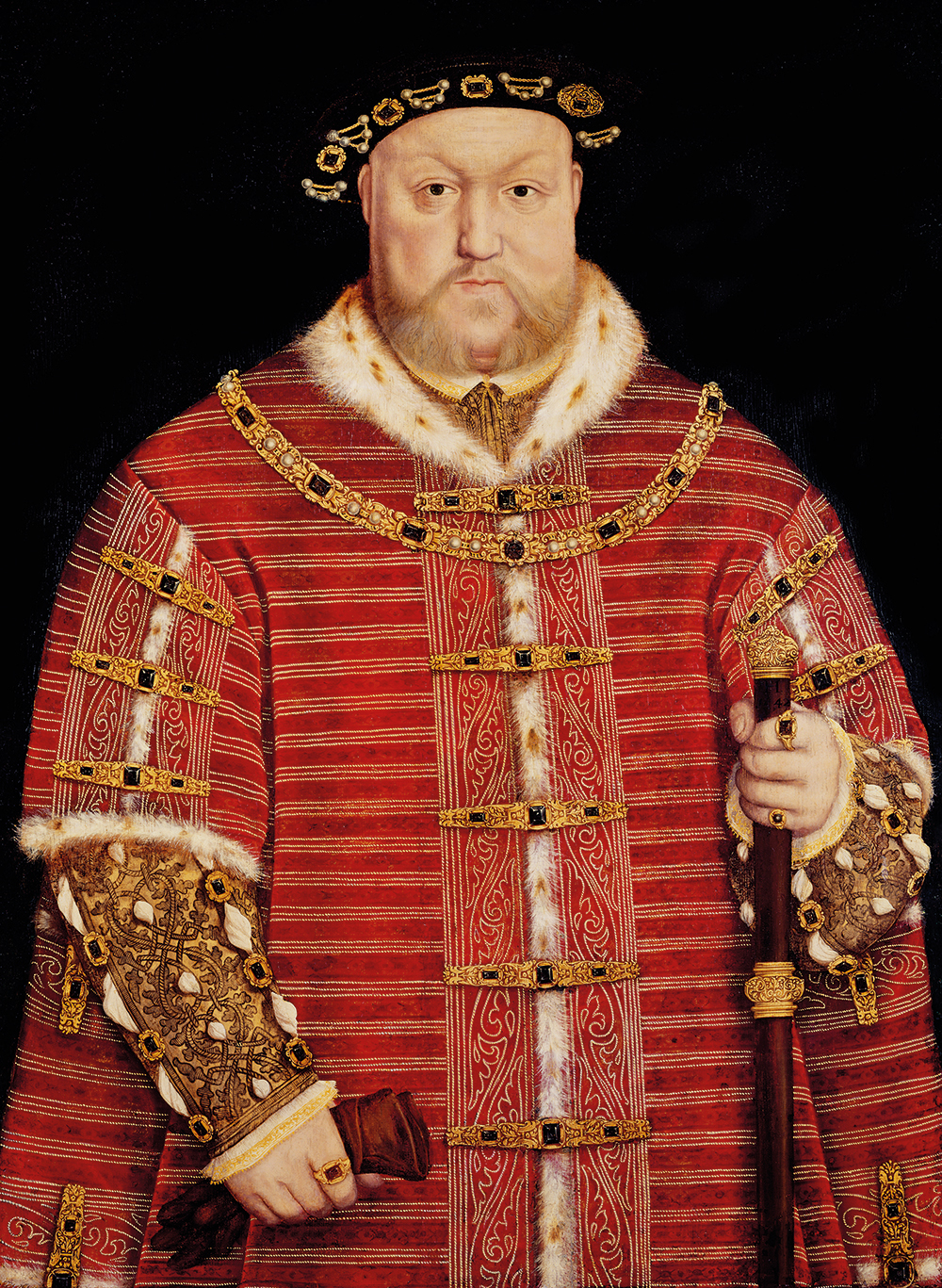
There can be virtually no aspect of Henry VIII’s life and reign, as Steven Veerapen puts it, that has not been ‘scrutinised under every available lens’. There have, of course, been any number of histories and biographies of Henry himself, and as many again of his wives and ministers to go alongside the films, plays and novels that, from Shakespeare to Hilary Mantel and (best of the lot) C.J. Sansom, show no signs of drying up.
So ‘why bother writing about Henry VIII?’ Veerapen asks – and he’ll not be the only one wondering that. He is happy to concede that this is probably an exhausted seam from a narrowly English perspective, but what of other perspectives? What of Henry’s immediate neighbours, targets of the imperial pretensions suggested by this book’s title? ‘Henry’s life was not merely an English one,’ Veerapen insists,
Henrician claims to an ‘overlordship’ smack as much of bombast and pique as of any settled imperial policy
Nor was his story an English story. His shadow fell heavily across every corner of the British Isles and his reign – and his developing regal identity – involved persistent attempts to assert and entrench English authority in Wales, Ireland and, most doggedly, in the holdout kingdom north of the border. Henry was by modern standards an ardent English nationalist, but he was not an isolationist; rather he was an aggressive expansionist.
That was not how he saw it, of course. Scottish suzerainty, Arthurian legend, ludicrous foundation myths, the historic independence of the English church – he could believe anything when it suited; but whether this is the ‘groundbreaking’ key to the reign is more questionable. There were obviously good military reasons for fearing both Scotland and Ireland, but these ebbed and flowed with the continental tides, and Henrician claims of an ‘overlordship’ smack as much of bombast, pique and competitive vanity as they do of any settled imperial policy.
In a sense, though, this is an idle argument, because for all the academic sparring and some engaging new additions to the usual cast, the focus of this book is inevitably England, and the dramas of Henry’s court. A reader might come away wondering if there was anyone in 16th-century Ireland other than a handful of FitzGeralds and Butlers, and anyone at all in Wales; but here in spades is the Tudor England of the popular imagination – a world of tournaments, rituals and display, of dynastic insecurities, terror, Tower Hill and Smithfield fires with, at its heart, the increasingly repellent figure of the ulcerated, 28st king.

‘I come no more to make you laugh,’ Shakespeare warned his Globe audience in 1613. ‘Such noble scenes as draw the eye to flow, We now present,’ and he was not joking. The marriage and early death of Prince Arthur; the fading hopes of a male heir; the ‘great matter’ of the King’s divorce; the ‘Calais swordsman’; the humiliation of Anne of Cleves; the short, sordid life of Catherine Howard; the rise and fall of Thomas Cromwell – it might be a familiar story, but Veerapen proves that it is one that never loses its power to shock. It is one, too, that he tells with terrific verve, with all the confidence of a man who knows his sources. There might be times when the historical novelist in him gets the upper hand, but if his Anne Boleyn has ‘skin in the game’, and his characters ‘sweat’ and ‘rasp’ and ‘thunder’ and ‘bark’, it seems a small price to pay for his flare and unfailing – often hyperbolic – energy.
He is not just a good storyteller, either, because Overlord also brings us face to face with that law of unintended consequences that is the hallmark of a reign that changed the political and religious landscape of Britain for good. By almost any measure – not least his own – Henry was a failure, with consequences that would echo down the centuries. And here, in full fig, he is, the dazzling hope of his nation who left it more bitterly divided than he found it; the Renaissance prince who, to the horror of Europe, would murder Thomas More and John Fisher; the defender of the faith who would break with Rome; the dynast whose dynasty would barely outlast the century; the medieval tyrant whose use of the law and parliament to do his killing would come back within three generations to bring a royal successor to the block.
It is the final irony of a life that is full of them. A Scottish king on the English throne beheaded by a second Cromwell. Could there be a more perfect footnote to a reign that changed Britain in ways that the young Prince Henry could never have dreamed of or planned?


Comments