Imperialism

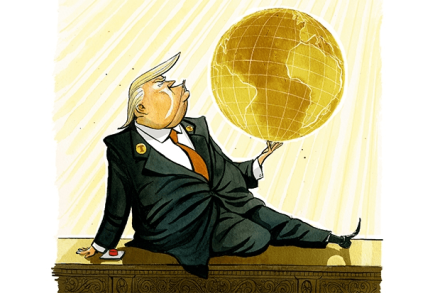
The case for MAGA imperialism

Empire has always been part of the American tradition. We are a sequel state to the greatest empire in world history. Our period of colonial tutelage under that empire taught the lessons of legitimate territorial expansion against French and Spanish rivals. Our continental aggrandizement after independence was necessary. Later overseas expansion, including periods of imperial apprenticeship in places such as Liberia, the Philippines and Panama, was further evidence of our colonial métier. Like it or not, imperialism and colonialism are congenital to the American experiment. This has been the case since 1779, when the Continental Congress branded a proposal to limit westward expansion an “intolerable despotism.

Imperialism

Israel’s imperial problem is ours, too

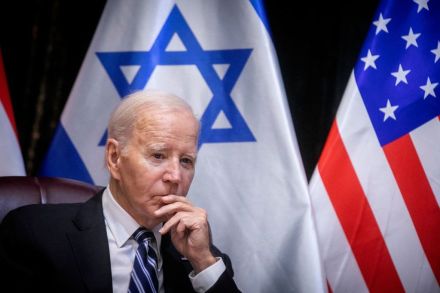
Israel will win its war against Hamas. But can it win the kind of war the United States lost in Afghanistan? Israel is facing today a dilemma that the West will face tomorrow. For more than sixty years, it has been easy for Western liberals to believe that imperialism is an unnecessary evil. When the US conquers and militarily occupies a foreign country, liberals don’t call it imperialism. It’s merely “regime change,” “nation-building” and “promoting democracy.” Such Newspeak has been powerless to alter the outcome of America’s wars in Iraq and Afghanistan, wars which after successful regime decapitations followed by decades of occupation and trillions of dollars spent on rebuilding failed to establish anything resembling secure liberal democracies in either land.

Israel

The strange effort to ‘decolonize’ global health

"Global health” has emerged in the last decade or so as one of the growth areas in the medical and quasi-medical world. The CDC has a Center for Global Health which “works to protect Americans from dangerous and costly public health threats, including Covid-19, vaccine-preventable diseases, HIV, TB and malaria — responding when and where health threats arise.” Global Health “is a collaborative effort by technologists and researchers from leading international institutions to build a trusted, detailed and accurate resource of real-time infectious disease data.” The Global Health Corps is “a diverse community of health equity leaders.

global health

The reviled Woodrow Wilson

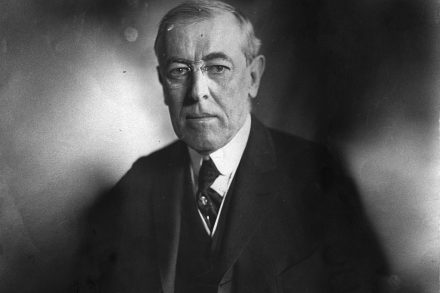
Woodrow Wilson can’t seem to catch a break. Since Princeton University’s 2020 decision to remove the name of the former president (both of the United States and the university) from its school of Public and International Affairs for his “racist thinking and policies,” other academic institutions have followed suit. An elementary school in Trenton, New Jersey, decided in May to drop his name because of Wilson’s “racist values.” Another school in San Leandro, California, made the same decision, as has a high school in our nation’s capital. There’s more than a little irony here. Wilson, racist though he was, was also a leading champion of the progressive, globalist worldview shared by our technocratic elites.

woodrow wilson

Don’t cancel John Donne’s poetry

All the way across the Atlantic, the British literary world has been seized by John Donne fever. Katherine Rundell’s biography of the metaphysical priest-poet has led to excitable chattering about his life and work. The book, Super-Infinite: The Transformations of John Donne, will be released in the US in September — a significant enough delay as to make the Declaration of Independence look like a mistake. Aside from radically different publication dates (again: would you rather have lower taxes and freedom from George III, or a brilliant Donne biography?), the specter of the far-off American continent has long since loomed large in Donne studies.

Maybe Hawaii should be independent

When you’re a writer, there’s no such thing as a vacation — there’s just visiting a new place with the potential to gather more material. Lucky for me, my most recent destination happened to be Hawaii. It’s a fascinating place, and if you didn’t already know it was a US state, it would be easy to mistake it for a distinct English-speaking country, albeit one with obvious and deep American influences. Oahu, the most urbanized island and home of the capital city of Honolulu, is shaped by an idiosyncratic mix of native Hawaiian, East Asian and midcentury American culture. Hawaii resembles a Pacific Island nation at least as much as it does the American mainland.

China’s Belt and Road Initiative is neo-Imperialism

China’s Belt and Road Initiative (BRI) is touted by Beijing as an attempt at multinational economic cooperation and development, comprising everything from foreign direct investment to the development of infrastructure. However, the purpose of the BRI is not economic or cultural but strategic, and is an effort to mask the expansion of Chinese power. In its strategic intent, the BRI should be considered an imperial project alongside the likes of the British East India Company (EIC) or the Dutch East Indian Company, Vereenigde Oostindische Compagnie (VOC).  With the BRI, China is exercising the 'imperial excuse', just as the EIC and VOC did centuries ago.

belt and road initiative

The short step from good manners to lofty imperialism

In the gap between what we feel ourselves to be and what we imagine we might in different circumstances become, lies civility. Keith Thomas’s marvellous new book addresses the subject of ideal behaviour. It shows the way that early modern England formed notions of civilisation and proper conduct, in contrast to what was termed ‘the Other’. These alternative people were labelled ‘barbarians’ or ‘savages’ when found abroad or on the Celtic fringe. If the unacceptable was found within England, rural or impoverished, they would be called ‘clowns’ or ‘clodhoppers’.