
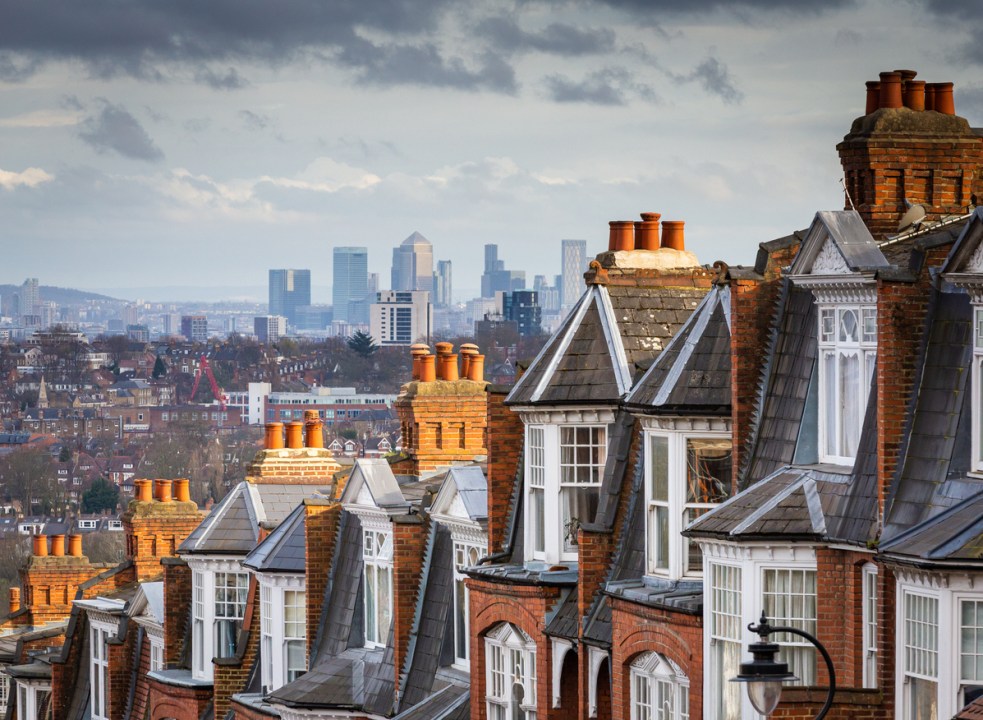
First off, let me say: I’m a London property owner. It’s a pretty little flat, in a pleasant corner of the capital. Nothing special, but quite desirable. Therefore, I am not writing this article in a gleeful spirit of provincial schadenfreude, rather, I write it with a grim sense of metropolitan foreboding. I had kind of hoped my flat would be my pension. Now I fear it may end up a nicely furnished prison.
The reasons why are obvious, and begin with our bewilderingly stupid government
Why? For the good reason that – unnoticed by many, who always presume London property prices go up – the London market has been stagnant for years, and often falling in real terms. Now prices are actively descending, sometimes quite severely. And, if my worst fears come true, this correction could turn into an unprecedented rout.
Here are the hard, sobering numbers. According to the latest data, London house prices fell by 2.4 per cent in 2025. Modest averages smooth over alarming details. In Kensington and Chelsea, the drop was 16.5 per cent. In the City of London, prices have plummeted by 18 per cent. Meanwhile Londoners are now more likely to take a loss on a sale than property owners anywhere else in the UK.
The reasons are obvious, and begin with our bewilderingly stupid government. When Labour abolished non-dom status to plug their alleged ‘black hole’, they ignored human nature. Millionaires ended up relocating to Milan or Dubai, taking their spending power with them. They dumped their Belgravia townhouses on an already weakened market, triggering a glut in the prime sector. And Labour’s new mansion tax will make this all worse.
The rot is not confined to the oligarchs. It has seeped into the suburbs, driven by Labour’s VAT bomb on private school fees. The ‘squeezed middle’ – families already mortgaged to the hilt – cannot find an extra £20,000 per child. The result is a panic-stricken flight to the shires. Family homes in Fulham are hitting the market just as demand evaporates.

Then there’s the tragedy of the London flat. If the house market is correcting, the apartment market is collapsing. The ‘luxury’ apartment dream – concierges, gyms, cinema rooms – has curdled into a service charge nightmare. Fees rose 11 per cent last year, turning ‘affordable’ homes into financial sinkholes. Modern units now trade at steep discounts to offset the crippling management bills. The Labour government promised to fix this hellish leasehold system: of course they have done nothing.
Worse is the safety trap. Despite years of promises, thousands of medium-rise blocks remain in Grenfell-led cladding limbo – unmortgageable and unsellable. Banks refuse to lend without several tons of paperwork; home-owners become serfs in a neo-feudal system.
Now add to this the death of the landlord. Reeves’s hike in Capital Gains Tax, combined with the new Renters’ Rights Act ending no-fault evictions, has triggered a further slump. No one wants to Buy To Let any more, they just want to sell.
Finally, there are the more enigmatic questions of crime, cohesion, demographics. We are told London is safe, but no Londoner walks around with their phone out, unless they are a fool. Meanwhile, in five decades, London’s white British population has fallen from 85 per cent to just 37 per cent. When a city undergoes such a rapid demographic overturning, does it retain the loyalty of its historic inhabitants? People do not buy homes in places where they don’t feel at home. And foreigners once attracted to the ‘historic allure’ of London may feel that allure is dented by burqas, bazaars and a billion vape shops.
It’s a melancholy list. And yet in normal times you’d expect a great world city like London to bounce back: big cities change, yet they recover. But these are not normal times. For years, any sensible Londoner with a dash of foresight has been fretting about the potential impact of AI. Because AI is going to decimate service and creative industries – and London is dependent on those industries.
Belatedly, the bumbling powers-that-be have realised this. On Thursday evening mayor Sadiq Khan made a Mansion House speech on the impact of AI in the capital. For once he didn’t mumble his words. He spoke of potential ‘mass unemployment’ in finance, the arts, law, education, and so on.
We already have evidence of what AI can do to a city. Across the Atlantic, the Los Angeles property market is stumbling. One major driver is the alarming shrinkage of the Hollywood machine – the writers, editors, and producers who used to fuel the city’s economy are being squeezed out by technology. By AI.
I hope I’m wrong; I fear I’m right. AI is ushering in an era where great cities will have much less to do, making them much less attractive places to live. What is happening to LA will happen to New York, Paris and the British capital. It sounds strange to say it, but get ready to feel sorry for the London property owner.




Comments