
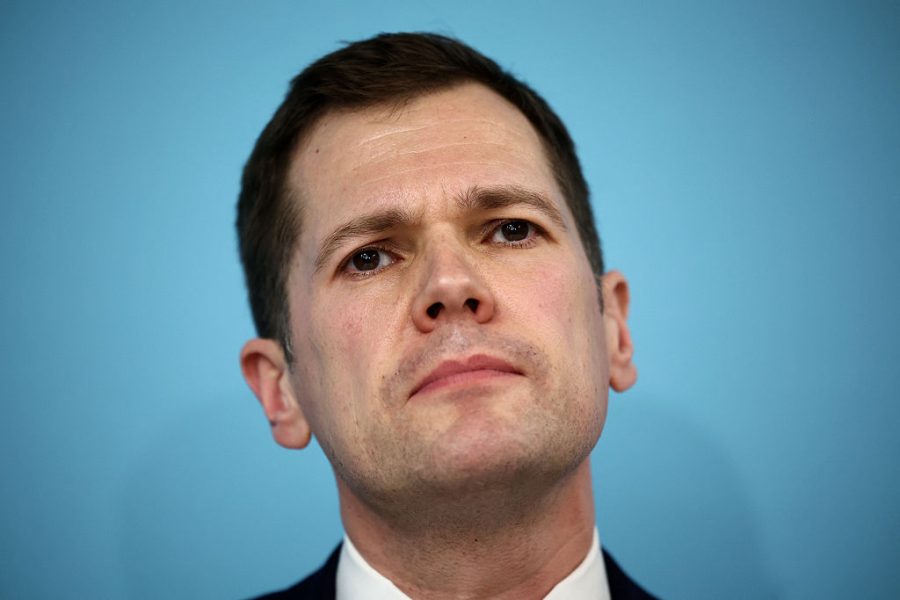
What a week. Robert Jenrick’s defection to Reform yesterday electrified Westminster and the fallout is still spreading. When our editor asked everyone at The Spectator whether Badenoch or Farage was stronger as a result of the Tory leader’s decision to pre-empt the deal and kick him out, I answered that they both were in a better position than they had been on Thursday morning. Badenoch has solidified her control on the Tory party and Farage has enhanced a team which is weak on ministerial experience, showing further momentum.
The battle to convince their own sides that Jenrick is a traitor/a key component of a future government has continued today. I understand Jenrick went for drinks with all of Reform’s other MPs after the press conference and also had dinner with his new colleagues. Zia Yusuf, the most virulently anti-Tory figure near the top of Reform, joined the convivial dinner and pictures exist of the two together – evidence that two of the biggest personalities and egos in the party are willing to park a likely rivalry to help Farage make it to Downing Street.
Kemi Badenoch has cojones, Nigel Farage has momentum, Robert Jenrick probably has fewer friends
When the Tory story dropped, Farage was on the stage in Scotland. As soon as he headed home, he called Jenrick from the car and said: ‘Let’s do this at 4.30pm’ – a press conference originally intended for something else. I understand, despite what seemed like a long night of the soul through the afternoon (and the last minute blip where he failed to appear on stage), Jenrick agreed immediately (‘It was not a long call’). He was holed up in Reform headquarters by 2.30pm and his speech was ready in good time.
Jenrick told the BBC today that he had made up his mind to jump ship as long ago as December. That mirrors a message I received from someone with an intimate knowledge of his thinking on 5 December, explaining that his ‘gut’ was telling Jenrick ‘the party under Kemi is not going to overtake Reform; therefore, it won’t be the main party of the right’, rendering it ‘an irrelevance for this electoral cycle’.
However, politics is a people business and is a fairly small world. The manner of Jenrick’s departure has enraged fellow Conservatives, who think his decision to slag off colleagues (the clearly culpable Priti Patel, who was as much to blame for the ‘Boris wave’ as Johnson himself, and the largely harmless Mel Stride) was lacking class, so too his decision to reveal details of shadow cabinet discussions, in which he made copious notes just a few days earlier. My inbox is groaning with MPs, aides and (perish the thought) journalists who say he lied to them.
Insiders say Badenoch phoned Jenrick on Sunday and he assured her he wasn’t defecting. He also attended a dinner after a Tory away day last Thursday at the Ivy restaurant near London Bridge. Those present say he ‘played happy families’ and also told the chief whip, Rebecca Harris, that it was ‘nonsense’ he was planning to quit on Thursday morning.
There is talk of a Team Badenoch ‘mole’ (singular) in Jenrick’s office, but senior figures say they were in receipt of tip-offs about his intentions from ‘many different people’ due to the ‘serial carelessness of Jenrick’s team’ in the pubs and offices of SW1. ‘Everyone is asking who the mole is,’ a Tory source crows. ‘We can now reveal it’s Robert Jenrick. He decided to defect in December but since then he lied and lied and lied and lied.’
A new poll suggests support for Jenrick among 2024 Tory voters has halved in the last week but I doubt that will bother Farage at all. It feels a little like the tectonic plates shifted a bit. That we might look back on this not as the moment when the right in Britain split apart, but as a key step in one bit of it swallowing the other, like the Russian spacecraft in You Only Live Twice opening its nose and gulping down the diddy British rocket.
All this looks like good news for Labour, but under the radar they’ve had another very telling week, rolling out another U-turn by pulling plans for compulsory digital ID cards. This was a proposal which was announced months ago, apparently before the details had even been remotely worked out. Here again seems to be a prime minister with little feel for politics or policy-making, who has been led up the garden path by aides and ministers, only to have to retreat when confronted by the views of MPs and voters.
After I wrote in the magazine this week comparing Starmer with Gordon Brown, a former cabinet minister said:
Digital ID is a perfect case study of Starmer. If the government had not agreed the new system, why did Keir announce the new system in September? All advice was not to announce then as the policy wasn’t ready – from overall purpose to detail – and he insisted. Why? He wants to be (or appear to be) a reformer without being capable of being a reformer. He is basically Gordon without the intellect or political machination.
A serving minister who attended some of the meetings on digital ID before the original announcement has revealed that the decision was driven by the ‘grid’ of news ‘because the PM needed something to announce’. A source in whom this minister confided said:
All the ministers said it wasn’t baked through. All were ignored. The grid managers were in the driving seat. Keir’s announcement was written by the grid people. It never went near policy people. This is the key to understanding No. 10. There is no policy function, never has been under Keir and now Darren Jones is floundering around trying to introduce one.
Furthermore, insiders say that when the first media calls asking about the impending reversal came in last Friday, they were ignored. It was then proposed that a minister do a pre-emptive parliamentary statement to seize the initiative, but this was vetoed in No. 10. Another proposal, that Downing Street embrace the change as new policy, was also rejected. This was blocked because No. 10 did not want to be seen to U-turn again. Then the decision leaked. The former minister concluded:
It is a seminal and emblematic moment for the government. It will have a profound effect on PLP’s attitude to Starmer including on those who welcome the u-turn.
What did we learn this week? Kemi Badenoch has some cojones, Nigel Farage has momentum, Robert Jenrick probably has fewer friends. And whoever emerges as the main challenger to Labour by the time of the next election – which Farage seems overwhelmingly likely at the moment to do – will fancy their chances of beating Starmer.



Comments