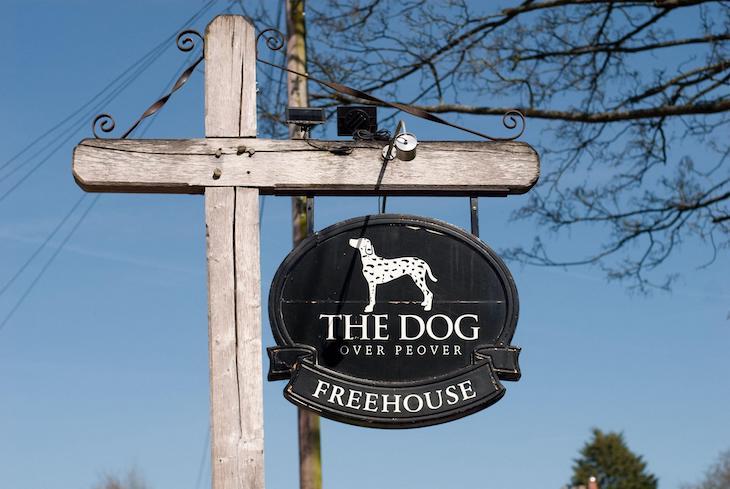
Britain as a place of “warm ale, (with) a black Labrador by your feet in a pub” is a “far-right fantasy that never really existed”. That is the verdict of Labour’s nature minister Jenny Riddell-Carpenter.
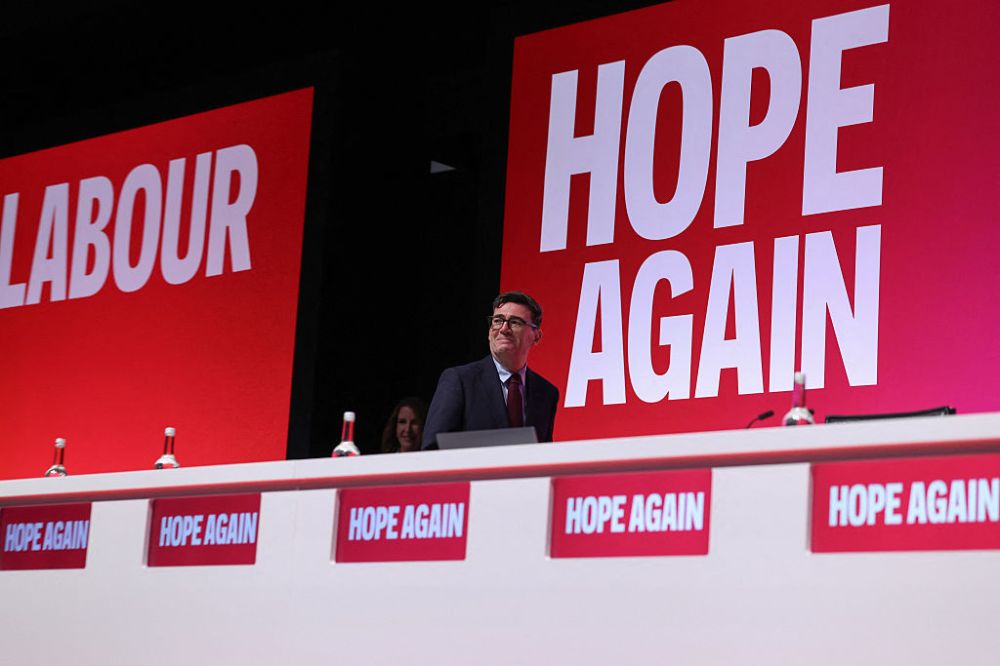
At a fringe event at Labour conference in Liverpool, Riddell-Carpenter warned attendees that the so-called “far-right” will try to weaponise rural Britain at the next election. The MP for Suffolk Coastal – that’s right, rural Suffolk – said she lies “awake at night” at what “nostalgic vision” of the countryside will be used in the supposed battle. “This is one of the things I do stay awake at night about, and think about, and fear.”
Riddell-Carpenter warned that the “far-right” will try to weaponise rural Britain
Let us leave aside that Riddell-Carpenter is the Defra minister with responsibility for rural communities, tasked with understanding, sympathising with and fighting for precisely this way of life. What does it say about her, and indeed about the Labour party’s mindset, that this is how they think?
Indeed, how does this happen? Brought up in rural Suffolk, Riddell-Carpenter has made her local roots and rural authenticity a part of her political identity. Did SOAS, where she studied History and Politics, followed by a master’s in Islamic history, change her mind about the landscape she presumably grew up loving? Or was it her involvement in the modern Labour party, where, pitted against Barbour-sporting opposition leaders, even the pub and Labrador are deemed too Tory or Reform-coded?
Who knows? The important point is that this is how she thinks. “Fifty years on from now, Britain will still be the country of long shadows on county grounds, warm beer, invincible green suburbs, dog lovers, and – as George Orwell said – old maids bicycling to Holy Communion through the morning mist”. Little did John Major know that 33 years on he would have a Labour minister trying to gaslight us into thinking it never existed at all. Now even the Labrador has become politically suspect.
Nostalgia has long been a dirty word. The idea of looking back with rose-tinted spectacles is seen as not just naive but somehow irresponsible. And what is striking is that Riddell-Carpenter appears to regard nostalgia in these terms, as something sinister. Somewhere between the village green and the pub apparently lies the road to fascism.
Why should wanting to preserve the best things about our country be shameful? Thomas Hardy reminded us that rural England is not perfect. It can be unforgiving and poor. But that makes it no less worth treasuring.
Hearing Riddell-Carpenter’s comments I was caught somewhere between rage and demoralisation. The only reason I am in the political fray at all, insofar that I am, is because I cling on to such a vision of England. The idea of our England as the Shire has been deemed unacceptable by the left ever since Elon Musk used it to describe this country. JRR Tolkien, as we know, has been deemed by the authorities as a warning sign of far-right extremism. Well, to hell with it. As I have written in these pages before, I got my moral code from Tolkien. I want to see the Shire restored. I suspect the same is true of many of us.
The only reason many of us keep faith with this country when, on every objective metric, it increasingly feels more rational to leave, is because, yes, it is home, but also because we hold out a hope – however distant it can often feel – that this country will forever be our green and pleasant land.
And having spent much of the last decade serving abroad, the thing one realises when speaking to foreigners is that it is this ideal of England that fills their minds’ eye. This is the England they have read about and yearn to see. The England, as Orwell put it, of solid breakfasts on gloomy Sundays, smoky towns and winding roads, green fields and red pillar boxes. The England of John Betjeman. And we can and should, like Philip Larkin in ‘Going, Going’, treasure “The sense that, beyond the town, / There would always be fields and farms”.
As our own Madeline Grant has pointed out, when in The Silver Chair, the Witch tries to convince Puddleglum and the children that Narnia never existed, Puddleglum declares: “four babies playing a game can make a play-world which licks your real world hollow. That’s why I’m going to stand by the play world…I’m going to live as like a Narnian as I can even if there isn’t any Narnia”.
There is something in that. The England that Riddell-Carpenter denies, did exist. Does still exist, even if all too often it feels hanging by a thread. But even if it didn’t, and never did, we should still want to believe in it.
What kind of party becomes frightened of its own country’s sentimental self-image? Riddell-Carpenter and her fellow Labour ministers should perhaps worry less about people pining for this version of Britain, and more about why so many people feel they have lost it.
Like GK Chesterton’s “lords without anger or honour” who “fight by shuffling papers” and look upon us with alien indifference, so we are presently forced to bear the indignity of being scorned by the likes of Riddell-Carpenter. But no-one can deny us Housman’s blue remembered hills – it is our home, real or imagined.






Comments