

When Britain handed Hong Kong over to China in 1997, Tony Blair was in melancholic mood. The newly elected prime minister turned to his aides Alastair Campbell and Jonathan Powell and mused: ‘We shouldn’t lose any more territory. Britain needs to be big. Look at a map. Britain is so small.’
Nearly 30 years later, Britain is shrinking further. Blair may offer advice to his successors in private – Campbell does so in public – but the only one of the trio exercising real power now is Jonathan Powell. He is the Starmer government’s national security adviser – the single most influential actor in British foreign policy. And he’s the architect of the debacle which has come to symbolise everything wrong about that policy: our surrender of the Chagos Islands.
We are not only losing territory, but paying for the privilege. Britain is not just smaller, but poorer too
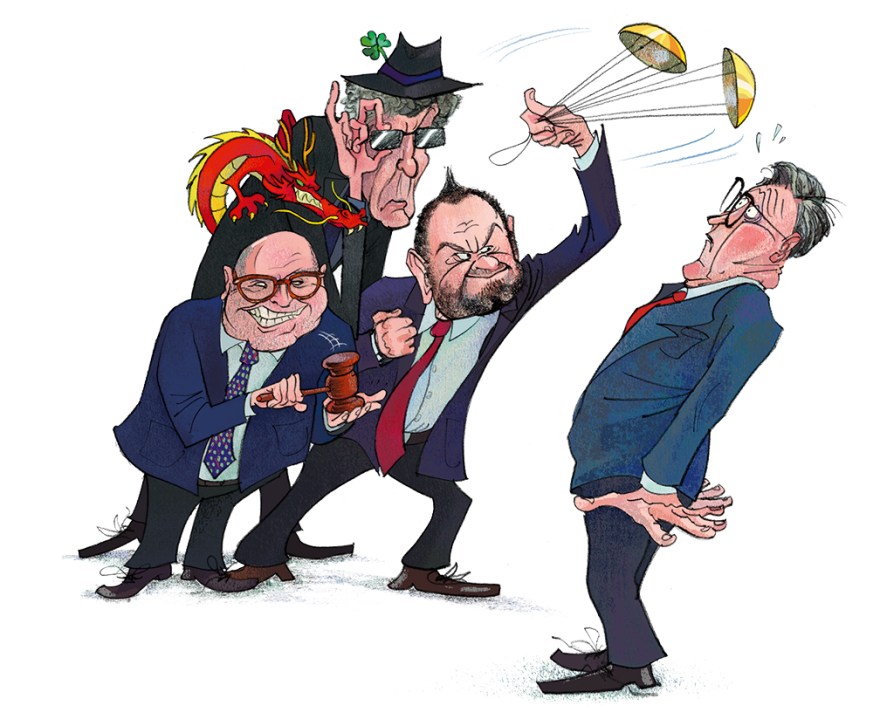
Powell’s is not the only sinuous mind behind the transfer of British territory into foreign hands. He has been supported and encouraged from outside government by the distinguished human rights silk Philippe Sands and from within government by the equally distinguished human rights silk Richard Hermer, Keir Starmer’s Attorney General.
Together they have ensured that the UK government has entered into a treaty with Mauritius – an economic dependency of China– to hand over sovereignty of the Chagos Islands, which includes the Anglo-American military base of Diego Garcia. This handsome gift is to be accompanied with payments running into the billions of pounds, money going straight from the UK defence budget to the Mauritian government. We are not only losing territory, but paying for the privilege. Britain is not just smaller for this deal, but poorer too.
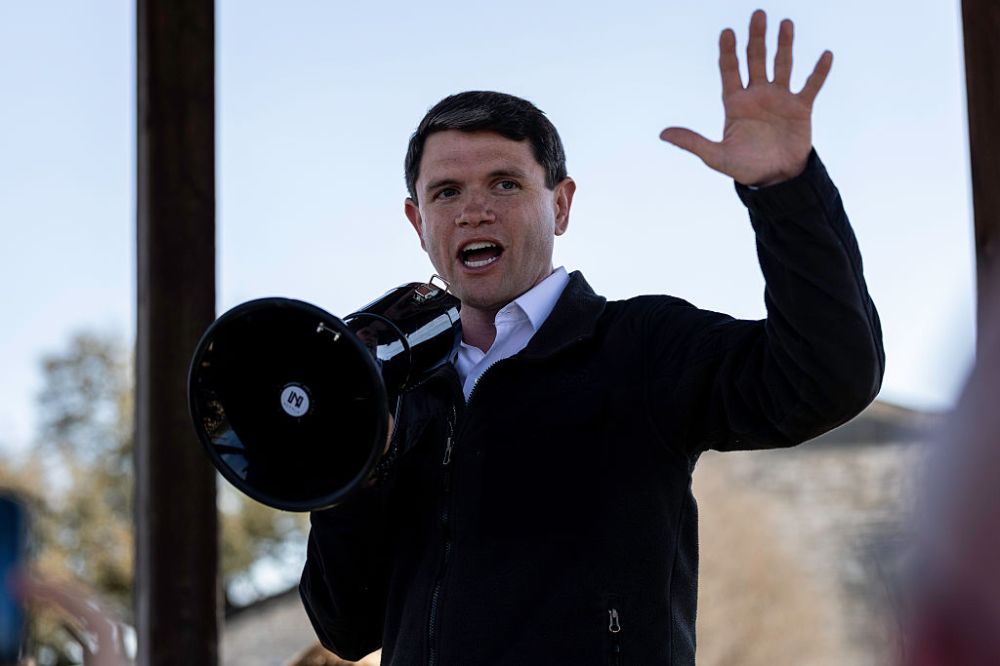
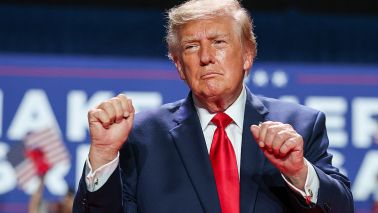
While the treaty has been signed, the parliamentary legislation underpinning the handover has been stalled. Opposition in the House of Lords – from Conservatives, of whom I am one, plus Liberal Democrats, cross-benchers, non-affiliated peers and the Labour backbencher (and former First Sea Lord) Alan West – has forced the government to pause. Allegations that the Lords’ actions are anti-democratic run up against the unbudgeable opposition of the Chagossians themselves to the deal. They want to remain British. Now that Donald Trump has apparently withdrawn acquiescence in the handover, the surrender seems increasingly friendless.
To understand why the government is still, formally, set on this course it is necessary to understand the impulses and ideology driving men such as Powell, Sands and Hermer, all of them friends of the Prime Minister and all of them inhabitants of a thought-world in which the concept of Britain’s national interest is subordinated to the dream of a borderless world governed by international jurists. Those who threaten the British state and its allies are to be indulged and appeased rather than confronted and defeated.
Powell’s most significant role during the time he worked for Blair was as an engineer of the Northern Ireland peace process. He was involved in negotiations with Sinn Fein, and by association the IRA, from the beginning of Blair’s premiership to the end. His role was much more central and determinative than any of Blair’s Northern Ireland secretaries, just as his control of foreign policy now is firmer than either of Starmer’s foreign secretaries has been.
A penetrating new study of the Northern Ireland peace process by the academic Geoffrey Sloan, Seeking Success and Confronting Failure, details how Powell sidelined the Northern Ireland Office and the security forces, ‘who were seen as part of the problem’. While the IRA continued to conduct armed operations, including bombings and a bank heist, Sloan records that ‘the army’s HQ at Lisburn was simply informed by London of what decisions had been agreed’ between Powell and the IRA.
Sloan reports that ‘on one occasion one of the [Special Branch] surveillance teams was following Siobhan O’Hanlon, who was a senior Belfast member of the Provisional IRA and worked directly for Gerry Adams. O’Hanlon led the team to the airport… to the team’s surprise, she collected Jonathan Powell, who had been on a commercial flight and was travelling alone. She took him directly to West Belfast to meet senior members of the Provisional IRA’.
Sloan records the suspicion of the Royal Ulster Constabulary Special Branch that ‘Powell shared sensitive material with the Provisional IRA’ and that he ‘issued written instructions to the intelligence assessments staff to make the reports they produced more upbeat prior to the Good Friday Agreement’.
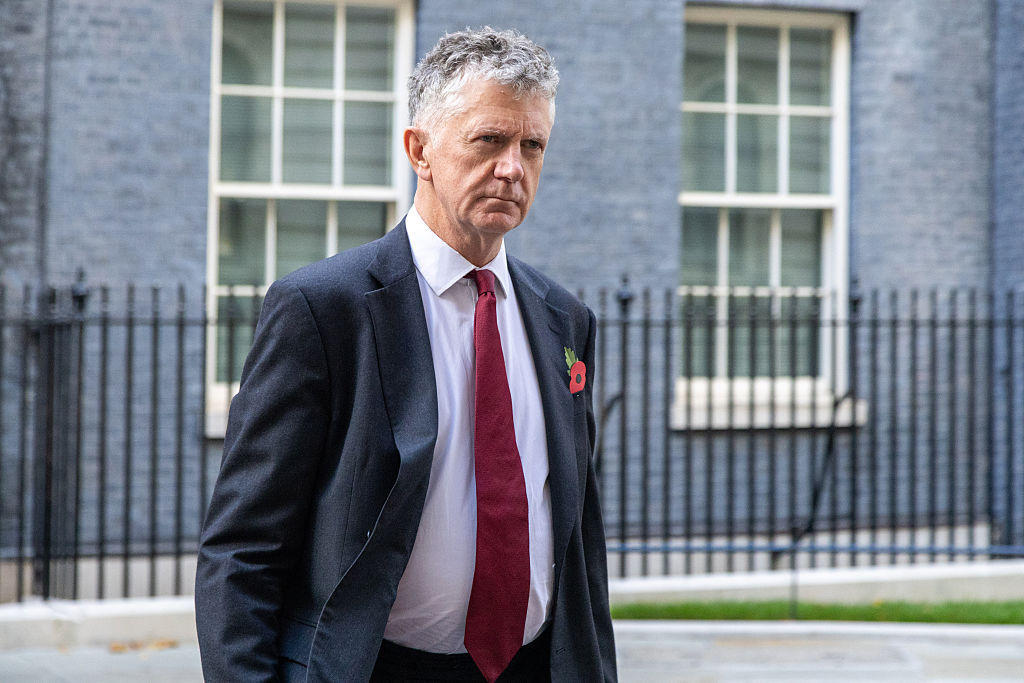
The pursuit of peace in Northern Ireland was undoubtedly an idealistic endeavour, but it was led by a British government official whose sympathies lay not with the majority who wished to remain British but with efforts to understand, support and buttress terrorists bent on weakening the ties that bind the United Kingdom. In his own memoir of the peace process, Great Hatred, Little Room, Powell is open about his attitude of, at best, indifference to Britain’s territorial integrity: ‘The British government were clear they were a neutral facilitator, content with any outcome as long as the two sides could live with it.’ The outcome, as Powell records, was the collapse of Northern Ireland’s moderate centre and vindication for Martin McGuinness and Gerry Adams, whom he considers ‘sophisticated politicians’ of ‘courage’ whom he wished to support ‘to keep the Provisional IRA together’. McGuinness and Adams were both invited to Powell’s wedding in 2007.
It has become the accepted wisdom for a certain type of British official to consider the Northern Ireland peace process a model of statecraft and a source of moral capital when operating on the world stage. In his book Hard Choices, Lord Ricketts, himself a former national security adviser, argues that the Good Friday Agreement boosts UK ‘soft power’, as we can flaunt our peace-making credentials before lesser nations preoccupied with such antique considerations as defeating terror, upholding territorial integrity and protecting citizens who believe in their country.
It is a moot point whether it was ever the case that national security has been best served by allowing terrorists to determine your country’s constitutional future and immolate democrats in the process. But it is certainly no longer the case that weakness in the face of armed opponents conveys ineffable moral superiority in international relations. With even Mark Carney, the Canadian Prime Minister, declaring that the rules-based international order is over – and that nostalgia is not a policy – celebrating the fact that your own army is not allowed to defend your own nation is not, perhaps, the most robust and reassuring posture. For your citizens or your allies. As Trump has been not so gently pointing out.
But rather than reflect on the limitations of Powellism, this government is super-charging it with respect to the Chagos Islands. Powell’s principal ally, Philippe Sands, has been open about his work representing a foreign power: the Mauritian government. (Although he is more reticent about his expedition to the islands, when he planted a Mauritian flag on UK territory– the tweet celebrating the annexation has been deleted.) His main public argument for surrender, however, is that UK sovereignty causes ‘grave reputational harm to the UK as a promoter of the rule of law’.
For them, the rule of law is a free-floating global instrument of virtue
Sands is open about his friendship with Powell, whom he acclaims as a ‘remarkable man’. He himself is a superb lawyer and brilliant writer whose books attest to his passionate commitment to human rights. But he is also an advocate for a very particular ideological take on human rights and the national interest. He takes a utopian line that nation states are artificial constructs, incubators of jingoism and prejudice. As he wrote in the Guardian in 2017: ‘Bedazzled by the power of statehood – that most artificial and fake of constructs – are we not also citizens of our home, our street, our borough, our city, our Europe and our world? The reform is clear: to recognise that our essential rights flow not from the happenstance of nationality – and certainly not just from our national passport – but from our essence as individual human beings. That’s what the 1945 moment said, that we are citizens of the world. We should have, beyond our national passports, a global passport. Over time, the withering of the monopoly power of the nation state, and the oppressive, absurd, monopoly power of the national passport – that would be my reformation.’
These are not just empty words. Sands has put his commitment to transcending tedious rules on national passports into practical effect, evading Covid restrictions in 2020 by travelling on a Mauritian diplomatic passport. As so often at the human rights bar, high-minded idealism and personal convenience can happily coincide.
Sands’s opposition to nation states and their attachment to pre-1945 follies such as borders and defence extends to his work in international courts to place Israel in the dock for trying to defend its citizens against terrorist incursions. He has argued that Israel is guilty of war crimes in taking on Hamas in Gaza and that it is illegal for the UK to supply arms to the country. It’s intriguing to note that Powell has recently argued that retaining arms is, however, vital to advance peace in the Middle East. Specifically, he has pressed for Hamas to have the right to keep its AK-47s for the foreseeable future.
Sands’s willingness to use lawfare against Israel finds a sympathetic ear in Hermer. Hermer, like Sands, is a scintillating advocate and privately charming, genial and open. He also has a long record of viewing Israel’s actions through a critical lens. In 2011 he co-authored a chapter in a book called Corporate Complicity in Israel’s Occupation: Evidence from the London Session of the Russell Tribunal on Palestine, co-edited by Asa Winstanley. Winstanley is the associate editor of the Electronic Intifada website and a vociferous campaigner for boycotting Israel as an ‘apartheid state’. Hermer’s thinking is altogether more subtle than Winstanley’s, but he was staunchly opposed to legislation to deal with boycotts of Israel and has backed controls on arms sales to it.
He has also been the ally of Sands and Powell in pushing the Chagos surrender on their close friend Starmer. For all three, the rulings, even tentative and advisory, of international courts supersede any hardheaded assessment of the importance of protecting national sovereignty and national defence.
Whether in Northern Ireland, where Hermer also acted for Gerry Adams in court, or Israel, or in the Indian Ocean, Britain and its allies are considered oppressors whose colonial guilt needs to be assuaged by sounding the retreat. The rule of law is not rooted in our national culture and institutions but is a free-floating global instrument of virtue. If that means, as it does under Powell, Sands and Hermer’s sway, that British soldiers who served in Northern Ireland should be dragged into court and treated more harshly than IRA terrorists, or British defence bases should exist only on terms dictated by Chinese vassals, or our principal democratic ally in the Middle East should have its defences weakened by embargoes and boycotts, then so much the better for justice.
But in a world at once more brutal and dangerous, where terrorists see their campaigns indulged and legitimised, where foreign rivals see us lower our guard, where allies see us hesitate to stand fully behind them in their hour of need, are we safer?
Watch the latest of Michael Gove on Quite right!


Comments