Northern ireland

Northern Ireland has been the biggest loser from Brexit

In the decade since the vote to leave the European Union, arguably no issue has consumed more energy, column inches, political capital and careers than how to solve the problem of Northern Ireland. It was on that narrow, jagged border between North and South that the substantive skirmishes took place between the UK and EU on what their future relationship would look like. While Michel Barnier and Lord Frost arguing the toss over the finer points of agri-food regulation may lack the luster of the Battle of the Boyne or the romantic connotations of 1916, it was no less significant a moment in Northern Ireland’s history.

northern ireland

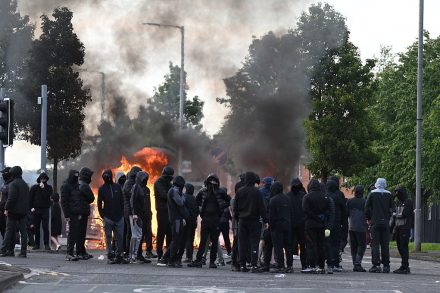
Why is it mainly loyalists rioting in Belfast?

Monday’s alleged attempted beheading in North Belfast was not the first time an act of brutality has taken place in the area. During the Troubles, it was one of the most violent and dangerous parts of Northern Ireland. Robert Curtis, the first British soldier to be killed in the Troubles, was shot by the IRA in New Lodge. North Belfast was also the grim stage for many of the brutal sectarian killings carried out by the Shankill Butchers. In North Belfast, the loyalist ceding of ground to nationalists has been compounded by the impact of immigration It is a deeply deprived part of the city and the population shifts and turmoil of the late 1960s and early 70s turned it into an ethnic and confessional maze.

loyalist

Britain imported a problem it refuses to name

I get the sense that the political and media class badly miss Katie Hopkins. Back when the reality TV star was still a regular on Britain's screens and in our newspapers, she could be relied upon to be the focus of attention whenever the people in charge didn’t want the public’s attention to be focused where it ought to be. So when a British soldier was decapitated on the streets of London, or a suicide bomber went off at a pop concert packed with teenage girls, Ms. Hopkins could be found saying something that a lot of people were thinking – only in a more colorful or unwise way.

Starmer must drop this terrible Troubles bill

From our UK edition

As we mark another anniversary of the Good Friday Agreement, we should be less inclined to celebrate and more disposed to worry. What was achieved on 10 April 1998 was remarkable. It worked not because it resolved everything, but because it deliberately did not, allowing former enemies to move forward without settling every question of the past. Yet it depended on consistent political leadership to embed its spirit into a society divided by grievance. That leadership is now faltering, with the risk of the past being weaponised in ways the Agreement was designed to avoid. The struggle for a united Ireland continues. One of the Agreement’s greatest achievements was to move it from the gunman to the ballot box. But legitimacy cuts both ways.

Chuck Norris’s paper tigers

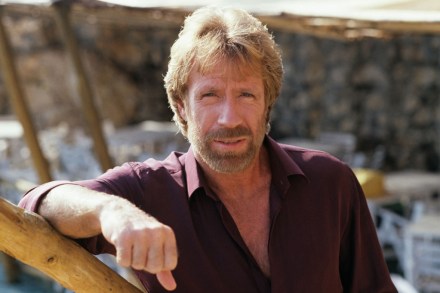
Cockburn is saddened to hear of Chuck Norris’s death, aged 86. He was an action star of the 1980s, a top meme of the 2000s – and an outspoken political thinker for almost all his career.Norris was a close ally of now-Ambassador to Israel Mike Huckabee, who he endorsed for president in the 2016 campaign. In a tribute, Israeli Prime Minister Benjamin Netanyahu described Norris as “a great friend of Israel and a close personal friend.” Thanks for reading Cockburn’s Diary from The Spectator. Subscribe to receive new posts and support his work. Back in 1986, Norris costarred with Lee Marvin in The Delta Force, an action flick inspired by the Hezbollah hijacking of TWA Flight 847 a year earlier.

chuck norris

The guilty men: the ideologues who undermine Britain

From our UK edition

When Britain handed Hong Kong over to China in 1997, Tony Blair was in melancholic mood. The newly elected prime minister turned to his aides Alastair Campbell and Jonathan Powell and mused: ‘We shouldn’t lose any more territory. Britain needs to be big. Look at a map. Britain is so small.’ Nearly 30 years later, Britain is shrinking further. Blair may offer advice to his successors in private – Campbell does so in public – but the only one of the trio exercising real power now is Jonathan Powell. He is the Starmer government’s national security adviser – the single most influential actor in British foreign policy. And he’s the architect of the debacle which has come to symbolise everything wrong about that policy: our surrender of the Chagos Islands.

Justice in war is messy

From our UK edition

At the end of last month, a judge in Belfast issued a verdict that was both right and wrong. The case related to a man known to the public only as ‘Soldier F’. He was one of the members of the Parachute Regiment involved in the events of the day in January 1972 that became known as Bloody Sunday. That day 13 members of the public were shot dead during a civil rights march in Londonderry that turned violent. The precise details are probably more heavily documented than those of any other day in history thanks to the Saville Inquiry, which became the longest and costliest legal inquiry in British history. Indeed, it made the trial of Warren Hastings look like a snap verdict.

When, why and how came the fall – the success and sorry decline of the British Army

From our UK edition

I wonder how many people appreciate what a remarkably capable army we had for the first three decades of this book’s range – and how incapable that army has become. Forward defence in Germany during the Cold War (56,000 troops); keeping the peace in Northern Ireland; bringing Rhodesia/Zimbabwe back into the fold; liberating the hostages at the Iranian embassy in London; retaking the Falkland Islands; ejecting the Iraqis from Kuwait; bringing order to the Balkans; halting the civil war in Sierra Leone – the ‘rise’ part of Ben Barry’s book is indeed inspiring.

The frustrations of the Tory mindset

From our UK edition

‘The facts of life are Conservative.’ This sentence is often attributed to Margaret Thatcher, whose centenary falls next week. The exact words are ‘The facts of life invariably do turn out to be Tory’ and were not hers. They appeared in the first major policy document produced under her leadership, ‘The Right Approach’ (1976). The author was probably Chris Patten, the document’s drafter and more of a ‘wordsmith’ – her coinage – than she. (There might even have been a deliberate Patten double-entendre of the sort that always escaped Mrs T since, in those days, the phrase ‘the facts of life’ meant the sex lessons given by embarrassed parents and teachers to children.) The operative phrase in the sentence is ‘turn out to be’.

Will the Red Wall revolt split the right?

From our UK edition

48 min listen

On the podcast this week: is Rishi ready for a Red Wall rebellion?  Lee Anderson’s defection to Reform is an indication of the final collapse of the Tories’ 2019 electoral coalition and the new split in the right, writes Katy Balls in her cover story. For the first time in many years the Tories are polling below 25 per cent. Reform is at 15 per cent. The hope in Reform now is that Anderson attracts so much publicity from the right and the left that he will bring the party name recognition and electoral cut-through. Leader of Reform UK Richard Tice joins Katy on the podcast to discuss.

With Diana Henry

From our UK edition

41 min listen

Diana Henry is a critically acclaimed, multi-award winning cook, food writer and author of 12 books including the classic cookbook 'Roast Figs, Sugar Snow', which has just been updated and re-released twenty years after it was first published. Diana also writes for newspapers and magazines, and presents food programmes on TV and radio. On this podcast Diana shares childhood memories of her mother's baking, how 'Little House on the Prairie' influenced her writing and when, on a French exchange trip, she learned how to make the perfect vinaigrette. Presented by Olivia Potts. Produced by Linden Kemkaran.

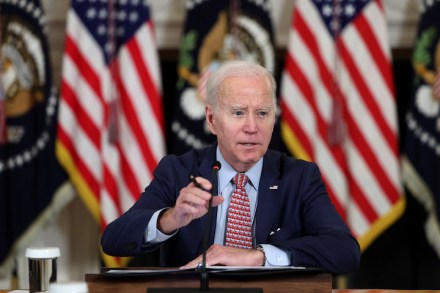
Joe Biden’s Ireland trip is all about Joe Biden

Joe Biden’s Ireland trip is all about Joe Biden Half a century since he was sworn in as a US senator, the Biden brand is a well-established series of safe bets: a fondness for aviator sunglasses, a hankering for chocolate chip ice cream. Also high on the list: conspicuous displays of Irishness. The second Irish-American president is fond of quoting Heaney and Yeats. He may be the only teetotaler who enjoys St. Patrick’s Day, which he says is his favorite holiday.  And so much about Biden’s trip to Ireland this week is unsurprising. After landing in Belfast last night, the president this morning had a quick cuppa with British prime minister Rishi Sunak and gave a speech to mark twenty-five years since the Good Friday Agreement.

joe biden ireland

Violent extremists won’t spoil Joe Biden’s visit to Northern Ireland

From our UK edition

What can violent extremists do to wreck Joe Biden’s first visit to Northern Ireland? The answer is precious little. The President’s visit has been denied the electoral fairy dust of a functioning Executive as he blows in to hail 25 years of the Good Friday Agreement. While that might disappoint some local politicians keen to bathe in some harmless warm platitudes, it will be less of a security headache for those charged with keeping him safe. So what of the known arrangements and the risks? Biden will land at Belfast International Airport this evening and be taken, one assumes by air, to a venue in the city for some glad-handing.

The DUP has a right to be difficult over the Northern Ireland Protocol

From our UK edition

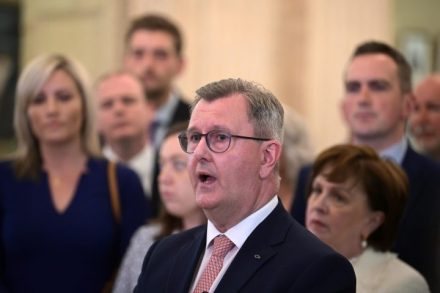
It’s easy to take an unsympathetic view of the Democratic Unionist Party. For many, its politicians are caricatures of the dour Ulsterman come to life; flinty types with an antediluvian outlook. An unfortunate reminder – for a certain type of Englishman – of all that ‘Irish stuff’ they would rather not have to deal with.  The back and forth over the Northern Ireland Protocol has seen this sentiment ratcheted up. Jeffrey Donaldson’s standpoint – no return to devolution without his party’s tests being met – is engendering incredible frustration among government ministers and a press tired of having to surrender column inches to this intractable tale.

The David Trimble I know (1998)

From our UK edition

David Trimble, Northern Ireland's first minister from 1998 to 2002 and leader of the Ulster Unionist party from 1995 to 2005, has died aged 77. In 1998, Ruth Dudley Edwards wrote about the Unionist leader from a Catholic's perspective. On a wall in David Trimble's Westminster office is a cartoon of a bunker, complete with tin-hatted soldiers poking their rifles over the sandbags. I was dealing with someone with an intellectual life outside academia and politics 'Ulster,' says the caption. 'Probably the best lager in the world.' I laughed when I saw it, and Mr Trimble grinned and gestured to a 1929 election poster behind his desk, featuring Lord Craigavon glowering over the legend, 'Ulster. What we have we hold.' That's here in case people think I've gone soft.

The EU never understood Northern Ireland

From our UK edition

At the heart of the crisis over the Protocol is its failure to deliver on its own stated aims. To understand this crisis, it is necessary to know some key aspects of the Protocol’s genesis and history. Exactly a month after Theresa May triggered Article 50, the European Commission was instructed by the member states (the European Council of 27) with ensuring the UK’s orderly withdrawal from the EU, including finding arrangements for the island of Ireland. That meant securing the Good Friday Agreement and avoiding a hard border.

Letters: Banning Russia’s culture only benefits Putin

From our UK edition

Don’t ban Russia’s culture Sir: It is uncouth, illiterate and actually beneficial to Putin when theatres, opera houses and other cultural institutions in Britain and across the globe block access to these heights of culture (‘Theatre of war’, 14 May). During Stalin’s last decade and throughout the Cold War, Isaiah Berlin was a superb help to this country and to Russia through his connection with Anna Akhmatova, including the award to her of an honorary doctorate at New College, Oxford, in June 1965, the year before her death. Censorship and blocking of the free flow of culture between Russia and western society is what the Soviet Union enforced.

Portrait of the week: Inflation’s 40-year high, Tory MP’s rape arrest and monkeypox in Britain

From our UK edition

Home The annual rate of inflation, impelled by energy costs, rose to 9 per cent, its highest since 1982. Unemployment fell to 1.2 million, 3.7 per cent, its lowest since 1974 and below the number of vacancies of 1.3 million. Britain said it wanted to do something about the Northern Ireland Protocol, but the EU said it couldn’t. The Democratic Unionist party said it would not take part in the power-sharing executive of Northern Ireland unless Britain did. Liz Truss, the Foreign Secretary, told the Commons that a new law would adjust Northern Ireland’s trading status. Maros Sefcovic, vice-president of the European Commission, said the EU would ‘respond with all measures at its disposal’.