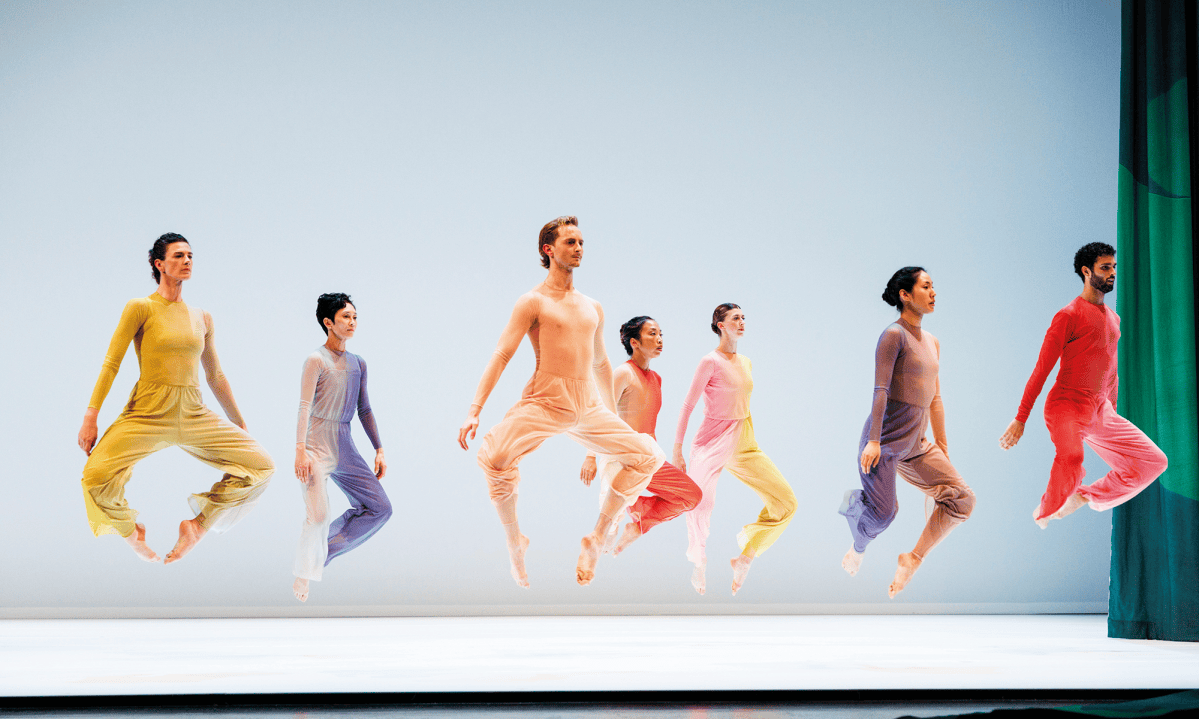
Too much ballet these days is top-heavy with narrative that would be better served by the spoken word than it is by body language. And too few choreographers know how to engage with music, rather than using it as a mere sonic backdrop. So what a blessed relief it was to encounter Pam Tanowitz’s utterly delightful Pastoral, which is guilty of neither of these failings. I enjoyed it so much that I was compelled to go back and see it again, at my own considerable expense, two days later.
Pastoral lasts for an hour or so, but seems to ignore tick-tock time: it is both simple and complex, naive and sophisticated. The score by Caroline Shaw plays with extracts from Beethoven’s Sixth Symphony, its themes played repetitively by clarinet, horn, oboe and bassoon live in the pit, mixed with snatches of full orchestral recordings, whistles, hums and even briefly the rumble of urban traffic – akin to the way that we experience music in our heads. The light on the stage passes imperceptibly through colours and intensities, representing the passage of weather. Curtains and panels, painted in abstract shapes of springy greens and autumnal browns by Sarah Crowner, quietly drawn and parted, or raised and lowered, evoke the rustic landscape.
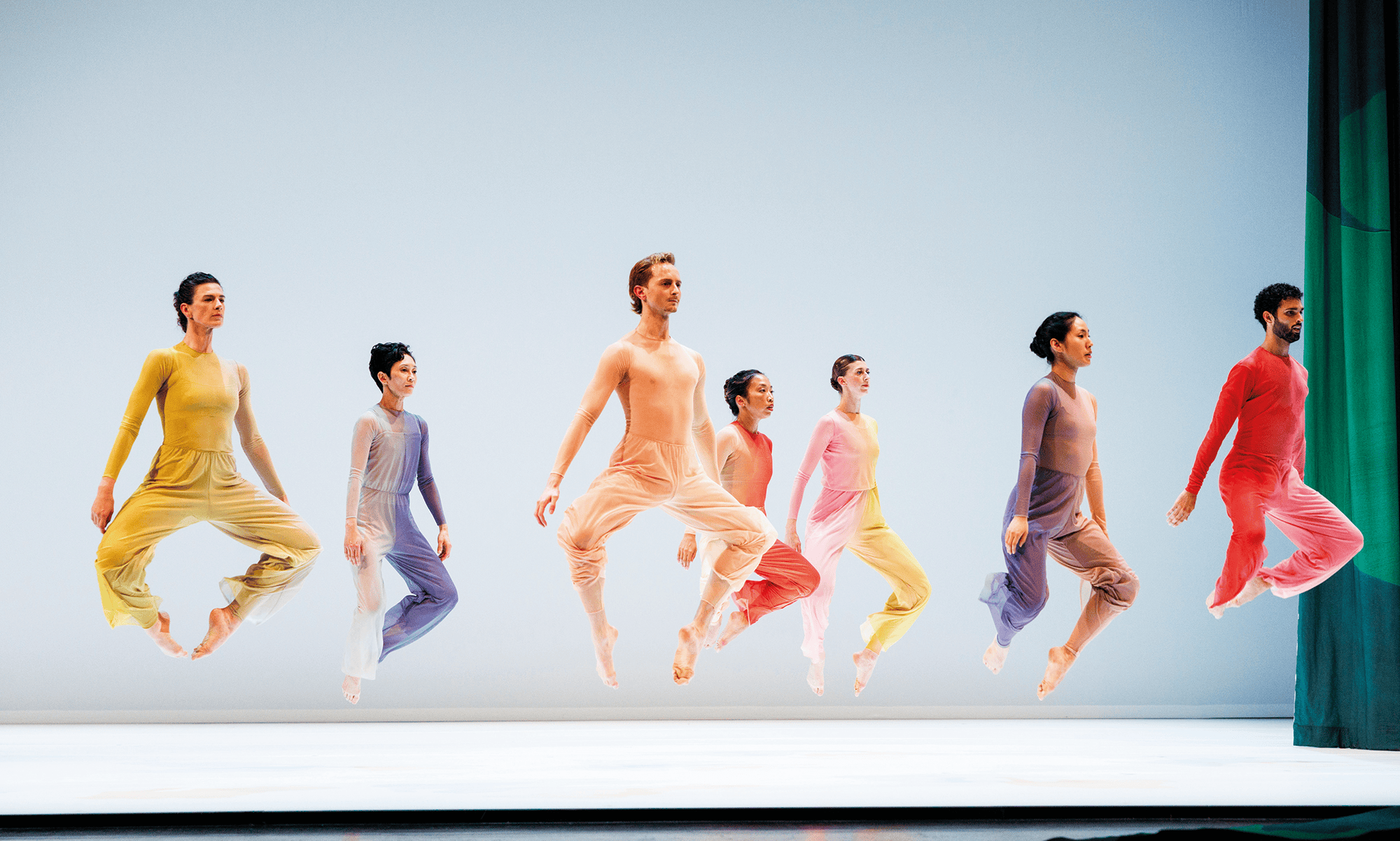
Everything moves, constantly. Seven liberated dancers in shimmering pastel-hued pyjamas, seem to travel in and out of the moods suggested by both music and decor. Tanowitz is not interested in differentiating gender, or signalling emotion facially. Instead her choreography takes us back to basics, her imagination focused on exploring the infinite variety of human bodies in motion. Sometimes these entities move together in strict unison, sometimes they conjoin, sometimes they weave individual paths, as though obeying different gods. Music is the spirit that impels them all. At moments they could be birds fluttering and riding the air; or deer frightened by the hunt; or lovers reclining amorously on the grass; or friends ambling down a path. There are allusions to folk idioms in turned-up feet and linked arms, to classicism in gentle curves and slow leg extensions, to modernism in the flattened lines and sudden bends. But nothing is explained, there is no climax or resolution: it is joyful, but gently so, and ravishingly beautiful.
A world away from this earthly heaven is Deepfake by Jess & Morgs, otherwise known as Jessica Wright and Morgann Runacre-Temple, a choreographic partnership that recently enjoyed great success with a sci-fi reworking of Coppélia for Scottish Ballet. Jess & Morgs are not focused on the fascination of bodies moving to music, and one doubts that the genius of Pam Tanowitz would be to their taste. They are plugged instead into AI, CGI, robotics, deep-state conspiracies and all the 21st-century bogeys that the tech billionaires have spawned upon us. Drawing on techniques explored (to much greater effect) by Crystal Pite in works such as The Statement, Deepfake uses spoken text, amplified, which the performers jerkily mime out, and what is seen live on stage is simultaneously broadcast on to giant monitors, as at arena rock concerts or political rallies.
An Emily Maitlis-style television journalist quizzes a fictional prime minister as to why he appeared with his flies undone 24 minutes late for a state banquet at Buckingham Palace. Throughout Journalist and Prime Minister are attended to or attacked by faceless drones, embodying, I guess, the forces of fake news and media manipulation. What finally emerges is that the PM’s excuse carries even less conviction than a visit to Pizza Express in Woking. I expected a clever twist right up to the last minute and it just doesn’t come. The net effect is of something vacuous and gimmicky du moment, but smartly executed and, to be fair, the audience at Sadler’s Wells East seemed to lap it all up happily.



Comments