Architecture

In praise of Trump’s architecture

I was in Budapest last month, where the city’s castle is now being rebuilt in its old neo-Baroque style. The plan is to create a near-exact replica of the complex as it stood before the city’s siege in 1945, when it was reduced to rubble during the fighting. So much of the original was destroyed that whole wings – like the palace of the Archduke Joseph – will have to be rebuilt from scratch.  The new complex has been accused of being a sort of Disneyland. This isn’t helped by the fact that many of its structures are made largely out of concrete, with the baroque facades added later as an outer shell. Yet there is a deeper reason. The project is much too self-conscious.

Trump ballroom library

Beautiful interiors can’t guarantee a beautiful marriage

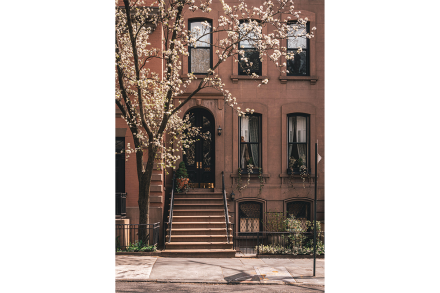
I remember poring over the photos when they first appeared in Architectural Digest in early 2023. Even back then, before Lily Allen wrote what Rolling Stone called “the most brutal album of the year,” I knew in my gut that her marriage to that actor guy she met on Raya – whatshisface? David Strangerbeard? – wouldn’t last. Because looking at the pictures of their house made me feel queasy. There was something off about it. It just wasn’t right. It didn’t bode well. It’s not that the house wasn’t gorgeous. It was – and still is – spectacular. A double-width brownstone in the slouchiest artisanal urban village on Earth: Carroll Gardens, Brooklyn.

prague

Prague by design

Prague has a graffiti problem. This becomes apparent as the train pulls towards the nineteenth-century Masarykovo Nadrazi station, through the old industrial east of the city. Huge derelict warehouses, some from the communist era, others much older, are covered top to bottom in scrawls and daubs amidst collapsed roofs and glassless windows. It’s unlikely to stay this way for long, though; Prague’s answer to gentrification is swiftly transforming previously rundown areas of the city, making it worth a venture off the beaten track. For all the genteel architecture at its heart, the graffiti is a sign of a city unafraid to show discontent. Trapped behind the Iron Curtain for so long, progress was, for decades, conducted at the whim of communist governments.

The Spectator’s 2024 Holiday Gift Guide

Matt McDonald, managing editor As we grow older, the idea is that we become wiser. I’ve decided to buck that trend by making progressively dumber decisions that put me further from my goals of attaining professional success, home ownership, emotional stability and nirvana. The most recent of these is increasing the distances I’ve been running; I will be attempting a half-marathon back home on the south coast of England the week before Christmas, with a view to running my first marathon in Berlin next fall. It’s unclear why we as a species decided to adopt the practice of doing marathons a couple of millennia ago — the first man to do it did die at the end, after all.

gift

Notre-Dame rising

Five years have passed since a major fire swept through the Cathédrale Notre-Dame de Paris on April 19, 2019, bringing down the church’s roof but sparing the rest of the building. In response, French president Emmanuel Macron immediately promised that the structure, which is owned by the state, would be rebuilt quickly, and more beautiful than before. He further promised that the cathedral would be ready to receive worshipers and visitors in time for the 2024 Paris Summer Olympics. Since his announcement, however, things have not gone entirely to plan. Notre-Dame will not be finished in time for the Olympics; as of this writing, completion has been pushed off to December 2024.

notre-dame

The royal lust of Hampton Court

The Dowager Countess of Deloraine, who was governess to the children of George II at Hampton Court and other royal homes, was a notorious bore — so much so that her “every word” made one “sick,” according to the courtier Lord Hervey. When she naively asked him why everyone was avoiding her, he replied with exquisite irony that “envy kept the women at a distance, despair the men.

Hampton

The buildings Richard Nickel championed

Perusing the listings of a recent auction, I noticed an intriguing, relatively flat piece of copper-plated cast iron featuring intricate foliate and geometric designs. It was a baluster designed by the firm of Adler & Sullivan in 1893 for the old Chicago Stock Exchange. The 1972 demolition of that building, thanks to the “urban renewal” undertaken by many progressive American cities during the mid-twentieth century, led to this bit of architectural salvage coming up at auction many years later. It also led to the death of an idealistic photographer and activist named Richard Nickel. When Nickel (born in 1928) was killed on April 13, 1972, his body was not recovered for weeks.

nickel

Scotland by sleeper

Traveling internationally these days is a bit like how Dicky Umfraville, a character in Anthony Powell’s Dance to the Music of Time, describes aging: being punished for a crime one hasn’t committed. After taking my pre-departure COVID test, alerting the British government to my whereabouts for the next week (no small undertaking given I’d be in a different bed every night), and proving all this plus my vaccination status to the British Airways check-in desk at JFK, I finally settled in my seat and supplemented my mandatory mouth-muzzle with an eye mask as though bound for Gitmo, not Heathrow. An hour into the flight, the woman in front of me started bawling: a panic attack brought on by mild turbulence.

scotland

Cuomo by design

'Please. I beg you. It’s not worth seeing. Avert your eyes. It’s all laptop screensaver crack smoke. Just please don’t make me write about Hunter Biden’s artworks.' Such were this critic’s fevered thoughts as the news of New York governor Andrew Cuomo’s resignation came across the Twitter-tape. And so we turn to another artist manqué. This time, he is a builder, a builder of works on the order of the Romans of the 1930s. And now, these works will remain unappreciated (such is the fate of true artists). So, let’s appreciate. 'Excelsior', this governor scrawled across the edifices and tunnels and apps of his numinous creation. 'Ever Upward', he helpfully provided just beside it in translation. 'It’s Latin!

design Andrew Cuomo (Getty Images)

Time for Tudorbethan

You’ll find them all over the boroughs of New York City. Multiple-dwelling buildings, usually large apartment blocks, slapped with a faux-Tudor façade defined by fake gables hiding a flat roof. They aren’t particularly attractive buildings. Even 100 years after most were built, they come off as self-conscious, a bit tacky, imparting to the viewer a dreaded feeling of secret working-class shame — a befuddling reproduction of a reproduction. They say New Yorkers never look up. But even during short journeys through Queens or parts of Brooklyn, New Yorkers are bound to have noticed examples, even if they don’t give it much thought.

tudorbethan

From Prussia with love

‘What a loss is the excellent Humboldt. You and Berlin will both miss him greatly,’ Prince Albert wrote to his much-beloved daughter Vicky, Crown Princess of Prussia, on news of the death of the author, explorer and celebrity Alexander von Humboldt in 1859. ‘People of this kind do not grow upon every bush [‘an den Blumen’] and they are the grace and glory of a country and a century.’ After some delays and bad luck, the grace and glory of the Humboldt name flourishes once again with the opening of the Humboldt Forum. Annoyingly digital to begin with, the launch in January of the Forum signaled the culmination of Berlin’s Museum Island restoration program and, with it, the crowning of the capital’s place within contemporary European culture.

humboldt

The sorry history of London’s Hoover Building

In the early Thirties, when impoverished Americans were cramming into shanty towns called ‘Hoovervilles’, another Hoover created an industrial building of rare magnificence in west London. Driving into London from Heathrow airport, we see acres of nondescript suburbs. The Hoover Building at Perivale, about five miles from the West End, still astounds. Set back from the road in well-manicured gardens, this art deco masterpiece rises in brilliant white (due to the use of a cement called Snowcrete), its façade laced with angular green trim and sunburst decoration. The Hoover Building was the British factory of the Hoover Company, the Ohio-based vacuum-cleaner manufacturer.

hoover

The perception of doors

The architectural historian Andrew Alpern has for decades done the dirty work when it comes to pre-war New York apartments. Others have presented glossy coffee-table books full of newly commissioned professional photographs. Alpern has focused on the practical details of apartment design, especially floor plans, which tell us so much about how people actually live in their apartments, or at least were originally meant to. His Apartments for the Affluent (1975), Historic Manhattan Apartment Houses (1996) and New York Apartment Houses of Rosario Candela and James Carpenter (2002) are essential compendia; anyone with an interest in New York residential architecture, especially of the magnificent variety, must have them. The more industrious uptown real estate agents also find them useful.

doors

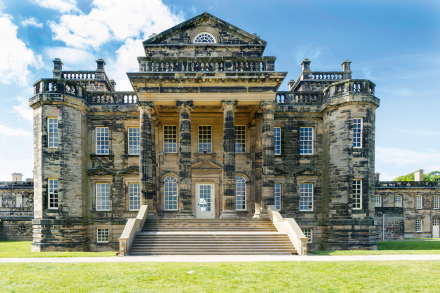
Trump should build to last

Will the government finally stop giving the concrete finger to popular taste by erecting ugly, expensive and unsustainable buildings with taxpayers’ money instead of fostering a civic architecture that speaks the language of American democracy?The leaking of a draft directive that calls for a return to ‘Classical and traditional styles’ in major public buildings in Washington DC has occasioned outrage and contempt from the expected quarters: architects who know best and journalists to whom the exterior of a public building is an obstacle to be surmounted on the way into the corridors of power. But the traffic circus known as Dupont Circle is not about to become a Roman circus, with lions of the Senate fighting each other with net, trident and rolled-up order papers.

build

Keep the modernists away from the Notre-Dame restoration

One heartening if dimly consoling result of the disastrous fires that swept through Notre-Dame cathedral has been the willingness of politicians and philanthropists to pledge their financial and institutional support towards its reconstruction. Yes, some of them might have an eye on acquiring good PR. Yes, believers might question the nature of their attachment. Still, it good to know that people will not watch the decline of beauty and tradition with absolute indifference. The reconstruction, though, will be fiercely contested. Already, modernists are sidling into the conversation with progressive platitudes and philistinic schemes. You might think the widespread shock and sadness that the fire caused represented love and admiration for Notre-Dame as it was.

notre-dame restoration