
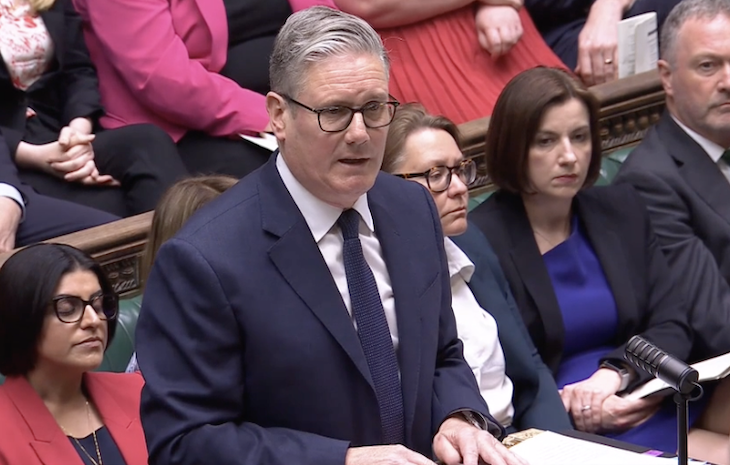
Keir Starmer gave six responses to questions about Lord Robertson’s defence spending comments today, none of which addressed the criticism properly. Kemi Badenoch rightly chose to focus all her attacks at Prime Minister’s Questions on the speech by the author of Labour’s strategic defence review, opening with the line from Robertson about a ‘corrosive complacency’ on defence. He replied:
The Speaker intervened to remind Starmer that this was Prime Minister’s Questions, rather than questions to the Leader of the Opposition
‘Let me start by saying I respect Lord Robertson. And I thank him again for carrying out the strategic review. My responsibility is to keep the British people safe and that is a duty I take seriously, that is why I don’t agree with his comments. Last February, that was seven months after taking office, I took the decision to increase defence spending from 2.3 to 2.6 per cent, paid for by a difficult decision on overseas aid. Last June at the Nato summit, I committed to raising core defence spending to 3.5 per cent. Last November, the Budget committed record funding to defence. I reaffirm those commitments now. The spending, the strategic defence review is a ten year blueprint for national security. The Defence Investment Plan will put that into effect, it will be published as soon as possible, we need to get it right, we inherited plans that were uncosted and undeliverable and we are not going to repeat those mistakes.’
It was a long answer, worth reproducing in full to show that it did not address any of the points that Robertson had made. The former Secretary General of Nato is well aware of the commitments that the Prime Minister has made on spending – and of the still forthcoming Defence Investment Plan. Badenoch came back to him, reminding him of Robertson’s credentials as former Labour defence secretary and former Nato Secretary General. She then quoted him further, saying he had described Britain as ‘underprepared, we are underinsured, we are under attack’, and asked why the Prime Minister wouldn’t publish the DIP before the end of the parliamentary session in two weeks.
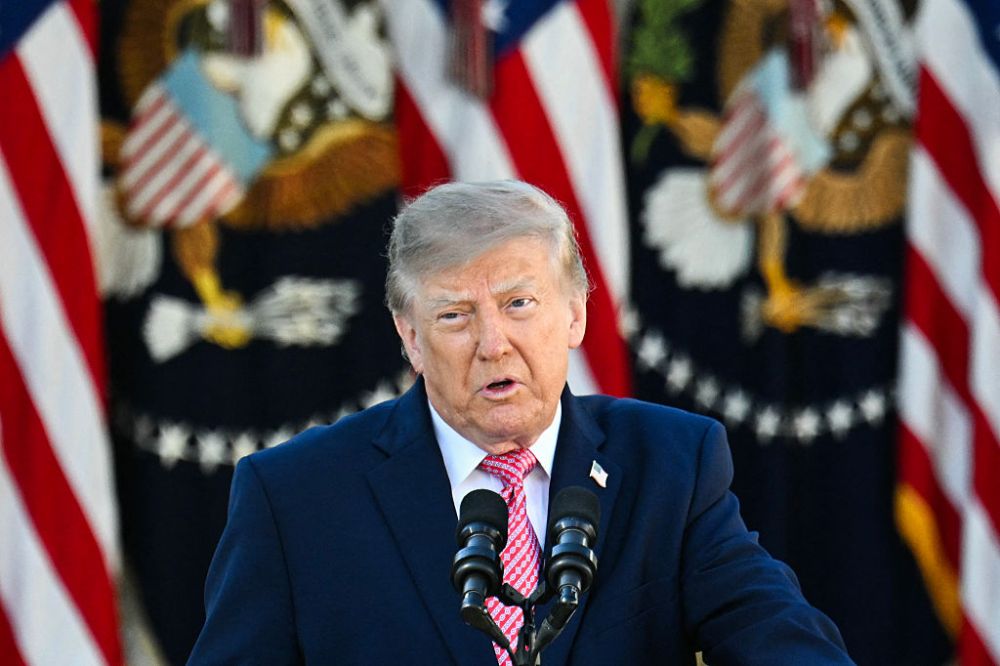
Starmer said his party had put in place ‘the biggest sustained increase in defence spending since the Cold War’, ‘record amounts, decisions of a Labour Prime Minister, a Labour Chancellor and Labour government’. He described the ways in which the Tories had not backed the armed forces in terms of spending or numbers either – though for once he decided not to quote Ben Wallace on hollowing out the military. ‘She said at the weekend our defences are the weakest for 400 years. That is what they left behind!’
Badenoch’s next question was her best of the session. She asked: ‘He’s talking about the biggest sustained increase, talking about an increase is not the same as giving an increase. The military and the defence industry want to hear about what he’s going to do, not him prosecuting past governments. He promised the defence investment plan would be published last autumn. I asked him at PMQs six weeks ago when it would be published: he had no idea. It is now the middle of April. What’s the hold up?’
The Prime Minister didn’t have an answer to that beyond ‘I’ve set out my position’ and that the DIP was the first ‘line by line review of defence budgets for 15 years’. He then quickly moved onto one of his favourite lines at the moment, which is that he got the call right on the conflict in Iran and she got it wrong and then flip-flopped around. At this point, the Speaker intervened, as he is having to do on an almost weekly basis, to remind Starmer that this was Prime Minister’s Questions, rather than questions to the Leader of the Opposition. Badenoch decided to defend herself, saying: ‘The Prime Minister loves to misrepresent my position on Iran… let’s stop talking about what I didn’t say, let’s start talking about what he isn’t doing.’
In response, Starmer carried on talking about Badenoch’s position on Iran, clearly using a line he’d prepared before the session that her call for verbal support was ‘standing on the sidelines, saying, get in there, good luck mate! You’ve got this!’ He added that ‘we are reforming welfare, and spending more on defence’ – both comments that are technically true in the sense that the government is doing a bit of both, but not enough on either. He also brought up Liz Truss again, saying taking advice from the Conservatives on welfare was ‘like asking Liz Truss how to keep your mortgage down!’
The Tory leader then used the best story of the week to needle the Prime Minister and suggest that his party wasn’t serious: Labour MP Samantha Niblett’s call for a ‘summer of sex’. ‘This is – Labour MPs are laughing – this is a moment of profound national seriousness, and what are they doing? They’re promoting sex toys in parliament. It gives a whole new meaning to fiddling while Rome burns.’ It was a good line, making Labour seem small and silly. She then pointed out that Labour has a ‘welfare plan to 2031’, but no DIP, then asked whether he would put the money from the Chagos deal into defence – ‘or is that going into welfare as well?’
For her final question, Badenoch asked quite a specific one on the upgrading of destroyers, presumably because it made it harder for the Prime Minister to offer a payoff that would work as a social media clip. He did give it a go, though it wasn’t a particularly good one, as he ended up repeating his bad faith claim that she had ‘insulted our armed forces’, which Badenoch had not. It was not a painful session for Starmer, but it also showed how little he had to say and how little authority he seems to have over such a serious matter as defence spending.



Comments