Pascal attributed royalty’s employment of court jesters to the king’s desire to forget or ignore, for however brief a moment, the fact of his own mortality. Carl Trueman, in The Desecration of Man, suggests that today’s star athletes and entertainers owe their remuneration, exceeding by many times the annual salary of the US president, to the major role they play in helping postmodern and post-Christian people to do the same.
Certainly it is imperative to resist the tyranny of politics, an almost wholly politicized world’s attempt to replace what remains of the ordinary man’s interests in the non-political aspects of life that used to be of paramount concern to everyone outside the strictly limited circle of politicians and government functionaries: the arts and sciences, nature and out-of-door pursuits, society (polite and impolite), family, friends, food and drink and sports played at the local and amateur level, as Chesterton advocated, but which he believed were spoiled by being taken with an unwarranted seriousness.

It is true also that mass entertainment commands attention far beyond the world of mundane amusements to monopolize public as well as private life. The human desire to be distracted from what is most important in life and that the Catholic Church calls the “Four Last Things” (death, judgment, heaven and hell), remains as strong as the fear of advancing oblivion.
The near-complete trivialization of modern life is apparent in Mediaworld, including the respectable print journals whose features sections encourage readers to waste their presumably valuable time indulging their more narcissistic inclinations by reading chatter about fashion, bad novels, pop music, beauty, fashion, weight-loss jabs and how they should look 60 at 80.
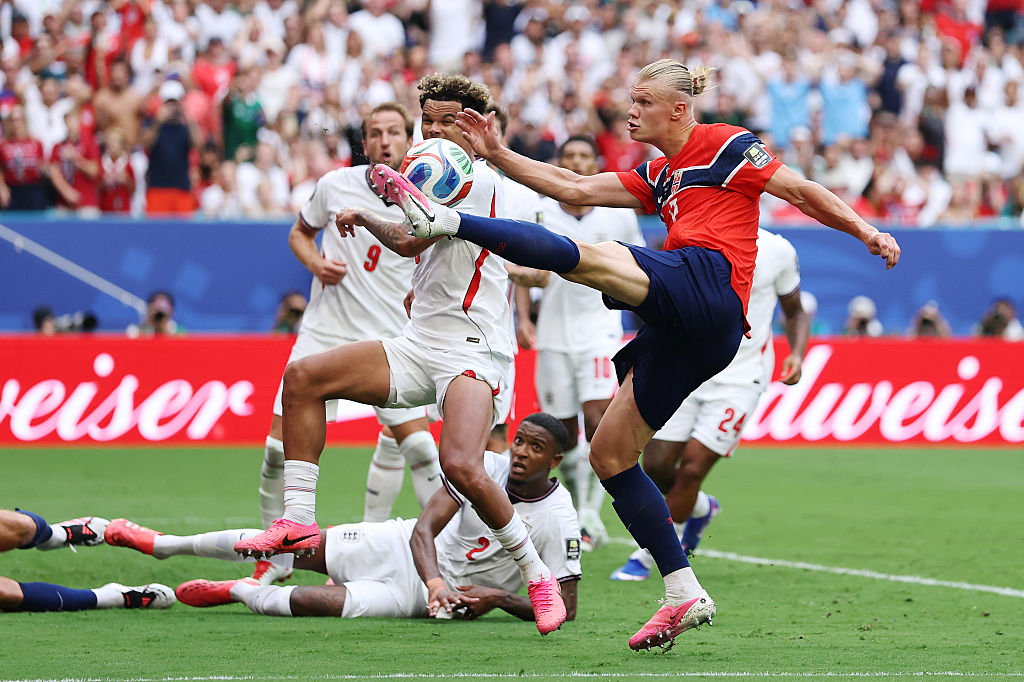
The most recent example of journalistic frivolity at the global level was the frenzy surrounding the World Cup, which promoted the raucous patriotic impulses usually deplored by liberal western politicians as nationalism while encouraging the idolization of the players. Today, such people vie for the lavish attention bestowed on the well-groomed, well-fed and carefully cultivated and promoted animals recognized as “sex symbols,” and on the clashing, throbbing, barbaric, atavistic and ubiquitous popular uproar called “rock,” a word that has become virtually synonymous with “music” among that overwhelming majority of the world’s people who are simply unaware that anything else by the same name exists.
The great virtue of the World Cup, in fact, has been to demonstrate the extent to which politics and sports have merged to produce the real opiate of the people, the greatest and final distraction from the one great thing: death. This probably accounts for the desperate quality of the whole business of the Cup: the gilded leaders and the street sweepers and trash collectors who gather like buzzards in the aftermath of the festivities alike, facing the ultimate fate together, all of them aware of the fact but with the majority knowing no way to confront the unthinkable apart from atheism on the one hand and nihilism on the other. For moderns, assuming they had heard of it, Pascal’s “Night of Fire” would suggest nothing more than a nightmare induced by an evening of overindulgence, an unwilling girlfriend with a headache, heartburn and abdominal cramps.
If the last sentence suggests that the subject of this column is the enormous and wasteful extravagance of a wealthy world exhausting its worldly substance in acts of wild and heedless revelry, I hasten to say that that is not my point at all. The world of the 21st century is indeed a vulgar, extravagant and heedless one, as countless previous eras have been. What distinguishes it primarily is the almost studied triviality. It is devoted to the trivial for three discernible reasons.
The world of the 21st century is indeed a vulgar, extravagant and heedless one
The first is the immensity of its cumulative material wealth, amassed over centuries of prosperity. The second is the nature of consumerist society. And the third is the reason Pascal gives for the king’s jesters. Modern men are far more haunted by and obsessed with death than we blithely assume people in the so-called Dark Ages to have been, because for our long-ago ancestors death was a friend, even a relative: Little Sister Death, Saint Francis called it.
“In the midst of life, we are in death” is a motto I often heard repeated while I was growing up. With that thought held firmly in mind, agonizing modern preoccupations like making “consumer decisions,” getting accepted into the most exclusive schools, choosing which candidate for political office to vote for and whether your country wins the World Cup will appear, even to the most shallow and trivial of us, no more than small beer on a warm day.






Comments