
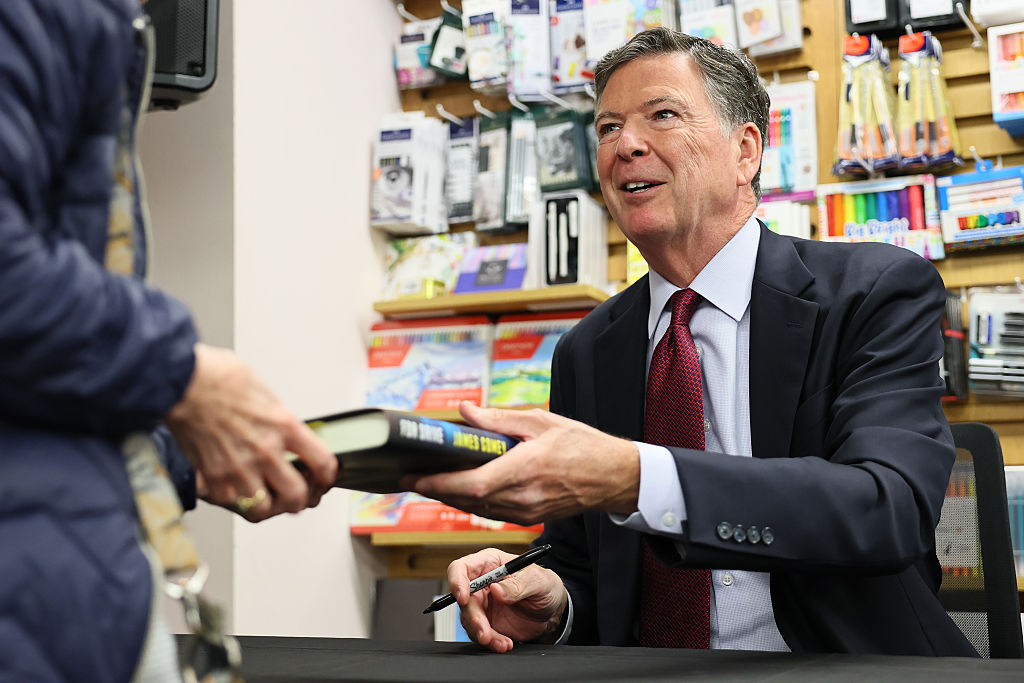
One consequence of Trumpism has been the open entry of America’s national security state into politics. Former spies and generals such as Mark Milley, James Comey, Elissa Slotkin, Robert Mueller and Alexander and Eugene Vindman are all offered to us as stately and apolitical figures who have, in extremis, bestirred themselves in defense of the republic. America’s governing class increasingly relies on such people to lead it, as Virginia’s new Governor Abigail Spanberger shows.
They have evolved a distinct rhetorical style. With the exception of Milley these people pose as scrupulously neutral bureaucrats who have, in a quivering way, finally raised a voice in protest. “This president is unethical, and untethered to truth and institutional values,” says Comey in his 2018 book A Higher Loyalty. “Our president must embody respect and adhere to the values that are at the core of this country. The President should not stain those values,” he told ABC that same year.
The phrases are hackneyed but they have earned people like Comey a loyal following. To the #Resistance, seeing a staid and officious person such as Comey haltingly remind Trump of his “duty” was like seeing Grandpa start breakdancing – a charming subversion of expectations. The joke has carried on for nearly a decade, and has now spawned a whole new political style, manifest in bodies like the Lincoln Project: a group of rather boring ex-Republicans who “clap back” at Trump for his incivility.
Comey has now taken the joke too far. Last year he posted a photograph from the beach, where he had arranged seashells to form the numbers “86-47.” Some saw it as the former FBI director compassing the President’s death. The post was a typical example of this style: allusive and catty. The charges brought against Comey for the post by the acting Attorney General will probably go nowhere, and his idiom – the apolitical “decency” of the security services – is likely to endure.



Comments