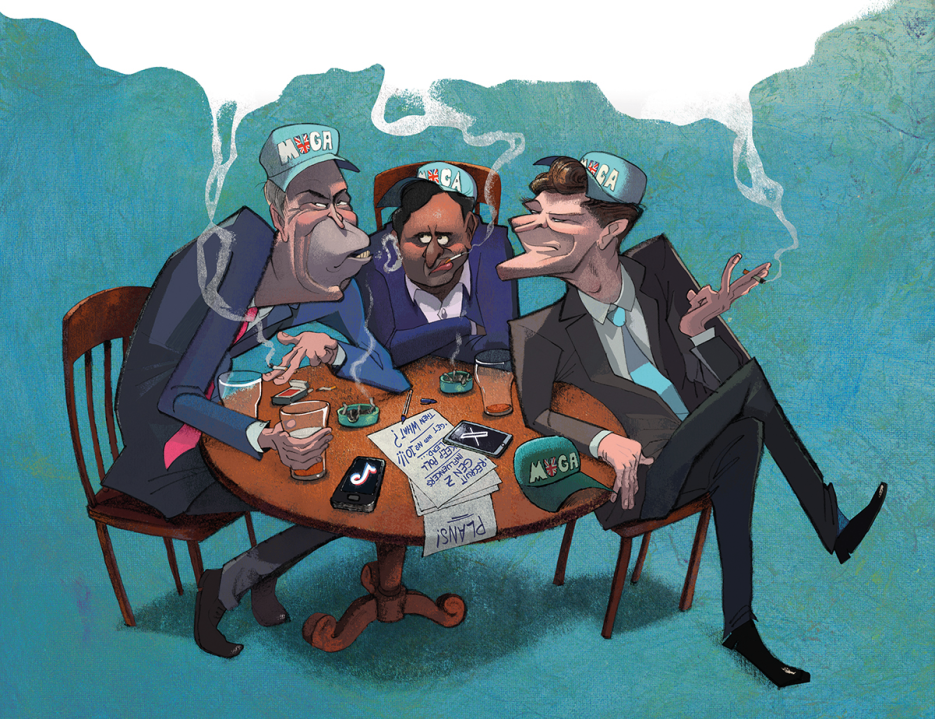
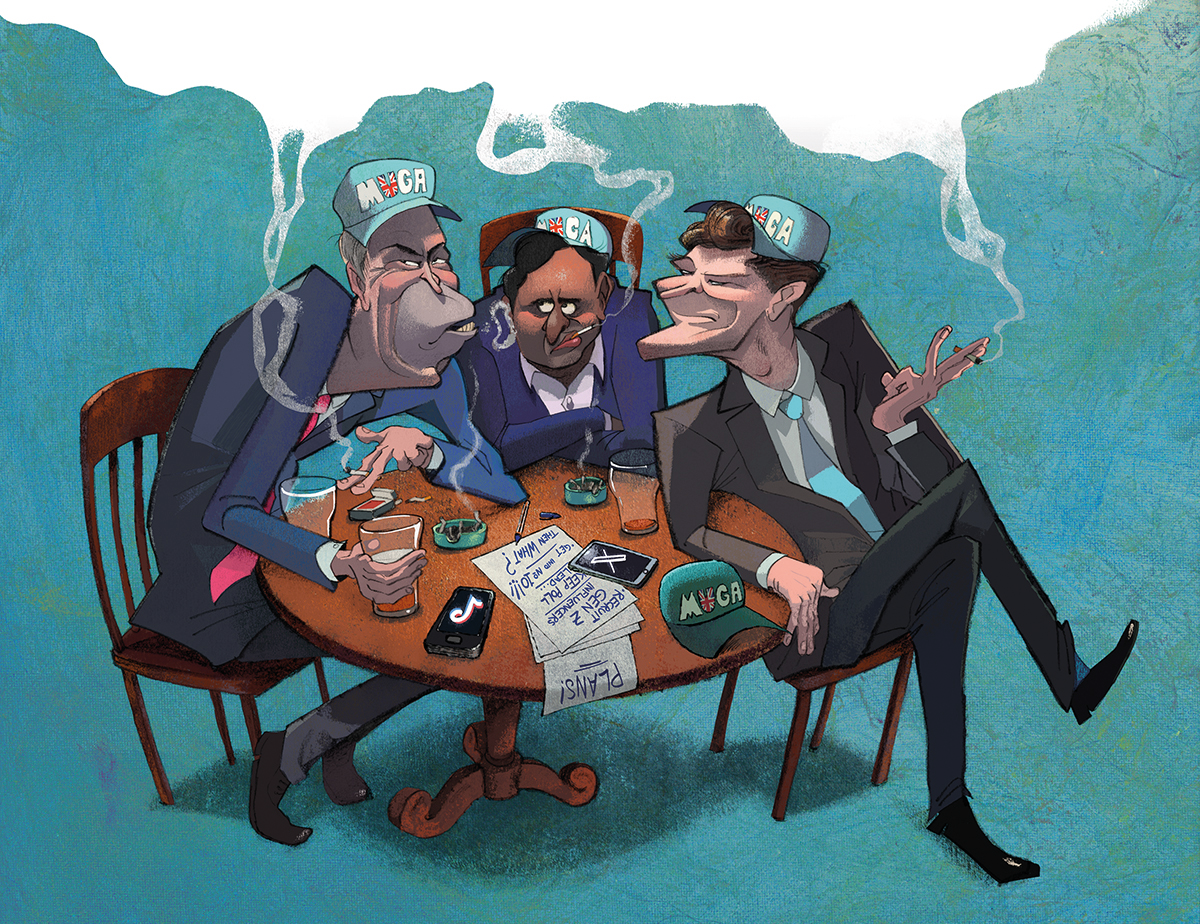
A new MRP poll has predicted that were an election held tomorrow, Nigel Farage’s Reform party would be the third biggest in the Commons, on 123 seats, against 130 for the Tories and 241 for Labour. The poll shows that Reform have been particularly hit by Rupert Lowe’s Restore Britain, who would take over three percentage points from Farage’s party and cost them marginal seats across the country. On the face of it this might all seem to be grim news for Nigel Farage, and cause for celebration by Kemi Badenoch, but there are good reasons to challenge this narrative.
Firstly, this has come after a terrible summer of headlines for Reform including numerous funding stories, a parliamentary standards investigation into Farage and the infamous Channel 4 undercover sting which resulted in the departure of Dan Jukes and James Orr from the party’s operations. As a result, naturally, Reform’s support has been hit, and it seems we have found their polling floor in the low 20s, significantly above the Tory and Labour floors in the teens. Assuming no more significant scandals, this provides Reform with a solid base to build on.
Further, Restore Britain’s inherent contradictions, between a leader whose policies differ little from Reform’s, and much more radical, and even extreme supporter base, mean that party is facing its own battles and scandals. But while Reform’s have been about money, Restore’s are about what kind of language and policies Lowe will accept within the party he notionally controls. At the moment it seems to be a battle which the more extreme wing of the party are winning, with more centrist figures such as Jez Hermer saying that the party is ‘being hijacked by racists’ and I know that other senior figures in the party are deeply concerned that Lowe is not getting a grip on things, or taking extremism seriously. Restore then seem likely to suffer significant further scandals, which may lead to them shedding less extreme voters back to Reform – another three percentage points would transform the polling, potentially putting them closer to 250 seats.

Charles Talbot of Cambridge Circus Research has conducted detailed analysis of recent polling. According to him:
‘An aggregate analysis of 16 MRPs from December 2024 to the present show at least 113 seats in which Reform have had a majority of 4 per cent or more in at least ten of those polls. Fifty-four of those seats have had a Reform lead of at least eight percentage points. Furthermore, Reform are within striking distance of the poll leaders in at least 345 constituencies, and this is accounting for the slew of negative polls which have come out over the summer. Given the current political situation, a general election now would mean all to play for.’
As Talbot suggests, this is not a good poll for any of our political parties. A hung parliament, in which Labour have to stitch together a coalition with the Lib Dems, and either the Greens or the nationalist parties, will not appeal to the PM, and it’s hard to see him itching to call an election under these conditions. And things are about to get worse for Labour. The energy price shock is coming, as a result of the Houthi attacks in Saudi Arabia which have disrupted oil deliveries to Europe. Rising energy prices just as autumn starts to bite, along with a Budget which is unlikely to be full of tax cuts and giveaways, the new phase of the illegal migration crisis, and the increasing discontent in leafy middle class villages like Piddington all mean that the government is going to become much less popular. And if the government goes ahead with retrospective legislation to deny Reform its recent donations from Ben Delo and Christopher Harborne, they will strengthen Reform’s position as insurgents, fighting against the ‘uniparty’.
None of this is reason for Reform to be complacent. They should take the summer of scandals and the sting as a painful lesson. If the party wants to form the next government then it needs to professionalise, devlop a well-articulated suite of detailed policies and push them every week. The current model of launching policies at press conferences but rarely returning to them is not cutting through. But with an early election seemingly unlikely, Reform have the time and opportunity to push upwards to over 30 per cent in the polls, when a majority becomes attainable. It remains to be seen whether they will seize their chance.






Comments