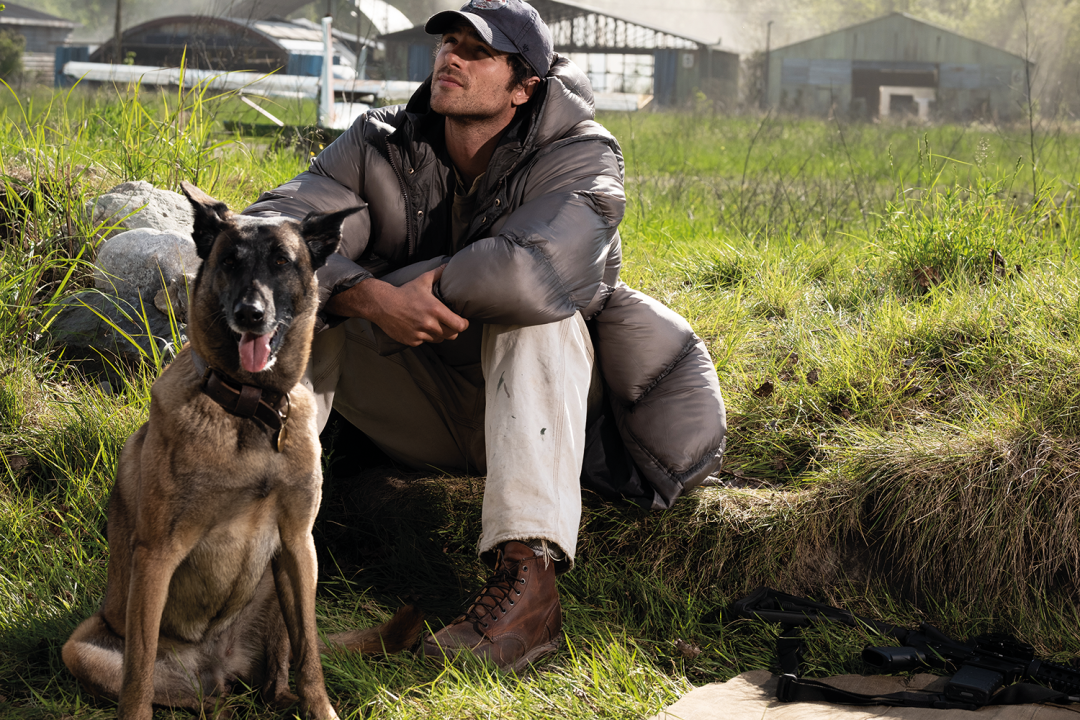
Ridley Scott’s post-apocalyptic The Dog Stars is his third film in four years after Napoleon (disjointedly strange) and Gladiator II (not very goodus). On this occasion he’s made what I call a ‘hang on, what?’ film. Hang on, what? Who are these American Indians on horseback? Hang on, what? Why is Allison Janney suddenly cosplaying a 1950s air stewardess? The storytelling is so rushed it’s hard to follow. Scott is now 88, so perhaps he’s thinking there’s no time to muck around.
One interesting feature of post-apocalyptic movies is that guns survive but no one has a toaster
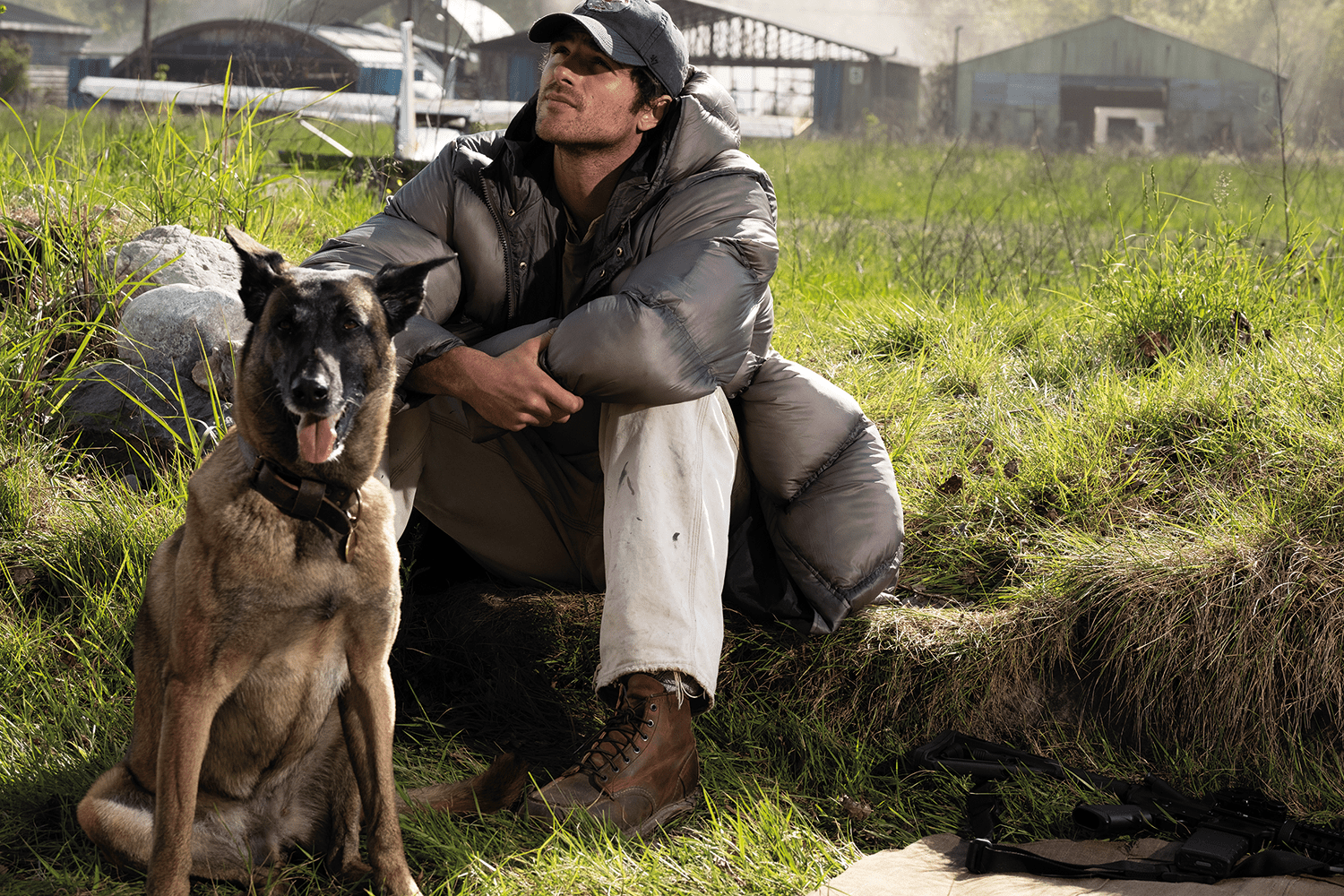
The film is based on a novel by Peter Heller and takes place sometime after a flu epidemic has all but wiped out mankind and civilisation has been reduced to a succession of film sets. (You know the scenario.) One such set is the abandoned Colorado airport hangar where survivors Hig (Jacob Elordi) and Bangley (Josh Brolin) have set up home. Bangley is the trigger-happy one, while Hig will kill when he must – he’s no wuss – but is the more sensitive. His best friend, as it happens, is his beloved dog Jasper, played by a Belgian Malinois who attended the première I went to, so I can say with first-hand knowledge that he’s a very good boy.
Hig, with Jasper in the passenger seat, flies an old Cessna to scour the countryside and visit the city to stock up on supplies, plus mooch forlornly around the house where he used to live with his wife (RIP). One day he hears a voice over the plane’s radio and sets off to fly further than he’s ever done before to find out what’s out there. Jasper has a hand in his decision to leave but more than that I cannot say, except that I may never forgive Scott. (Hang on, what? You’d do that to such a good boy?)
Most popular
Steven Edginton
Invented claims of lynchings and racist violence are irresponsible — and dangerous
It is, for the most part, blandly familiar on the post-apocalyptic front, leaning heavily into the genre’s tropes, with their deserted cities, empty highways and humanity representing the worst evil. No zombies, at least, but there are marauding survivors who stagger zombie-style, as well as marauders in the form of tattooed skinheads who look like neo-Nazis. Often, the action cuts back to Bangley blowing their heads off from his watchtower in a way that doesn’t progress the story but does provide one of the bloodthirsty interludes that Scott seems obliged to insert willy-nilly and audiences appear to love (they applauded when someone was decapitated).
Elsewhere, Hig, having been forced to land his plane, discovers Pops (Guy Pearce) and his medic daughter Cima (Margaret Qualley). She will, it won’t surprise you to hear, become the love interest. Pops patrols his own farm with a gun. (One interesting feature of post-apocalyptic movies is that guns survive but no one has, say, a toaster even if, hang on, what?, the electricity still works?) Eventually, the trio will be forced to flee. The mysterious horse-riding American Indians have something to do with it.
The pacing is all over the place, as is the tone, switching on a dime from profound and sincere to plainly ludicrous. At one point, for instance, we spend some time with a cult led by Janney’s stewardess who appear to keep chopped-off heads in the freezer. Honestly? No idea. This part plays out like a comic caper completely at odds with the rest of the film.
There’s a hopeful end I’m not convinced has been earned. And all the performances are perfunctory. As characters aren’t given room to breathe, there’s little for the actors to sink their teeth into. This is, however, just one view so I’ll leave you with Scott’s: ‘It’s the best film I’ve ever made.’ Hang on, what?




Comments