For those of us who associate Wuthering Heights either with high-school English classes or Kate Bush caterwauling over the moors while exhibiting some remarkable interpretive dance moves, the news that the new Emerald Fennell-directed film of what she calls “my favorite book in the world” has become the subject of a race-based controversy may come as a shock.
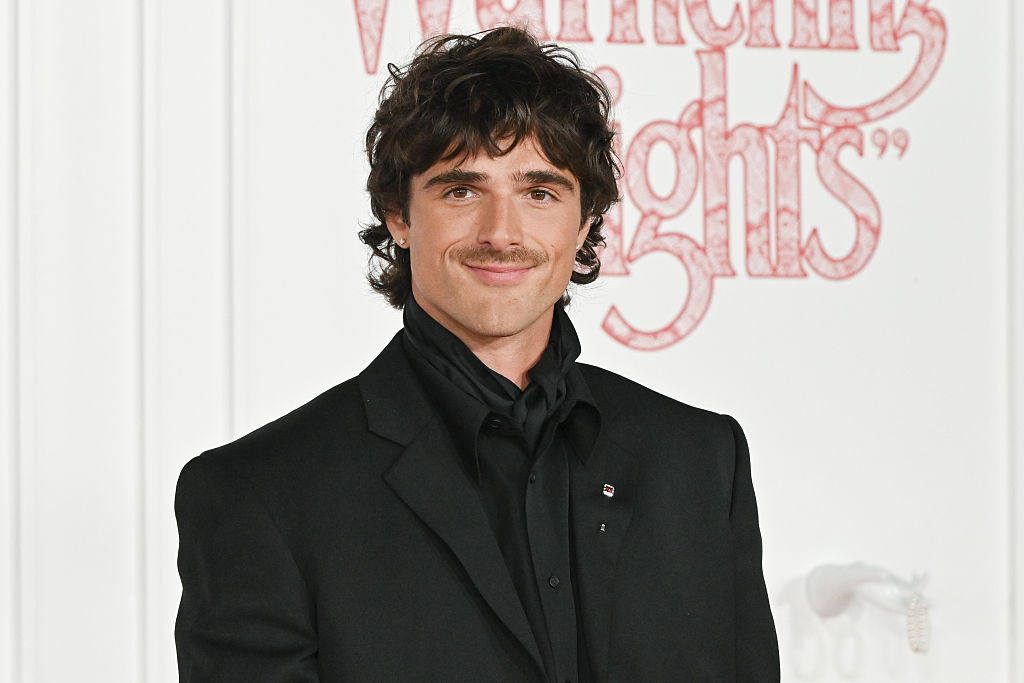
Yet the latest interpretation of Emily Brontë’s classic novel, which is being released, appropriately, on Valentine’s Day, has already been met with contempt and derision by many before anyone even sees it. Margot Robbie – fresh from taking the world by storm as Barbie – plays Cathy Earnshaw, the novel’s lovelorn and tormented protagonist, and Jacob Elordi, the star of Fennell’s much-derided previous film Saltburn, has stepped up to the role of Heathcliff, the equally tormented Byronic antihero whose tempestuous love affair with Cathy threatens to tear the very fabric of society apart. And the songs – the songs! – are provided by the none-more-modish Charli xcx.
Objections can be made to the film on an artistic level. Fennell has been derided in many quarters as a nepo baby whose career owes more to remarkable luck and family connections – her father is the society jewelry designer Theo Fennell – than talent, and the model-gorgeous pairing of Robbie and Elordi will almost certainly play against the inherent darkness and misery at the heart of the novel. Robbie’s Cathy may, indeed, be wuthering all over the place, but she still looks like someone who has popped into the nearest Aesop shop before doing so.
Yet it’s the casting of Elordi that has proved more problematic in the contemporary sphere. The last cinematic version of the film was directed by Andrea Arnold in 2011, and starred the multiracial actor James Howson as Heathcliff in an interpretation that foregrounded the idea of the character being black or mixed race. He is belittled, bullied and whipped like a slave throughout, and this lends itself to the now-standard interpretation that the forbidden love between Cathy and Heathcliff is based on racial prejudice as much as anything else. Brontë famously describes Heathcliff in the novel as “a dark-skinned gypsy, in aspect.” This has been seized upon by the book’s most stalwart admirers to mean that Heathcliff must be played by a black or mixed-race actor in these ethnically-conscious times, and that Elordi’s casting is both offensive and a prima facie example of whitewashing.

While Brontë’s description of Heathcliff as “dark-skinned” is inarguable, the Victorian use of the term did not mean “black” or “mixed-race,” as there was no such interpretation of the phrase in 1847, when the novel was written. There were other, considerably more robust, references to black-skinned people used by Brontë’s contemporaries. If she had wished to refer to Heathcliff as a person of color, she would have done so in terms that most people would now regard as racist, or in the very least as profoundly unacceptable.
I am usually the last person to rush to the defense of Emerald Fennell, but the furore in this instance seems entirely misplaced. She herself has said of Elordi’s casting that “I think the thing is everyone who loves this book has such a personal connection to it, and so you can only ever make the movie that you sort of imagined yourself when you read it. I don’t know, I think I was focusing on the sado-masochistic elements of it.” The actor, meanwhile, tactfully dodged the discourse altogether and commented that “this is Emerald’s vision and these are the images that came to her head at 14 years old; somebody else’s interpretation of a great piece of art is what I’m interested in — new images, fresh images, original thoughts.”
We live in an age where “race-blind” and “gender-blind” approaches to acting are supposedly the norm, but the furore here shows that this modish approach is only welcomed if it goes in an approved direction. It’s perfectly acceptable to think Wuthering Heights is going to be bad, but the reasons for its potential failure are far simpler than this manufactured contretemps. Let’s have less wuthering nonsense and more clear-sighted common sense, as otherwise these shenanigans will become regrettably commonplace.
Fennell has said, with misguided optimism, “The great thing about this movie is that it could be made every year and it would still be so moving and so interesting,” she added. “There are so many different takes. I think every year we should have a new one.” For the love of Brontë – and our collective sanity – please let this one be the last one for a while.






Comments