
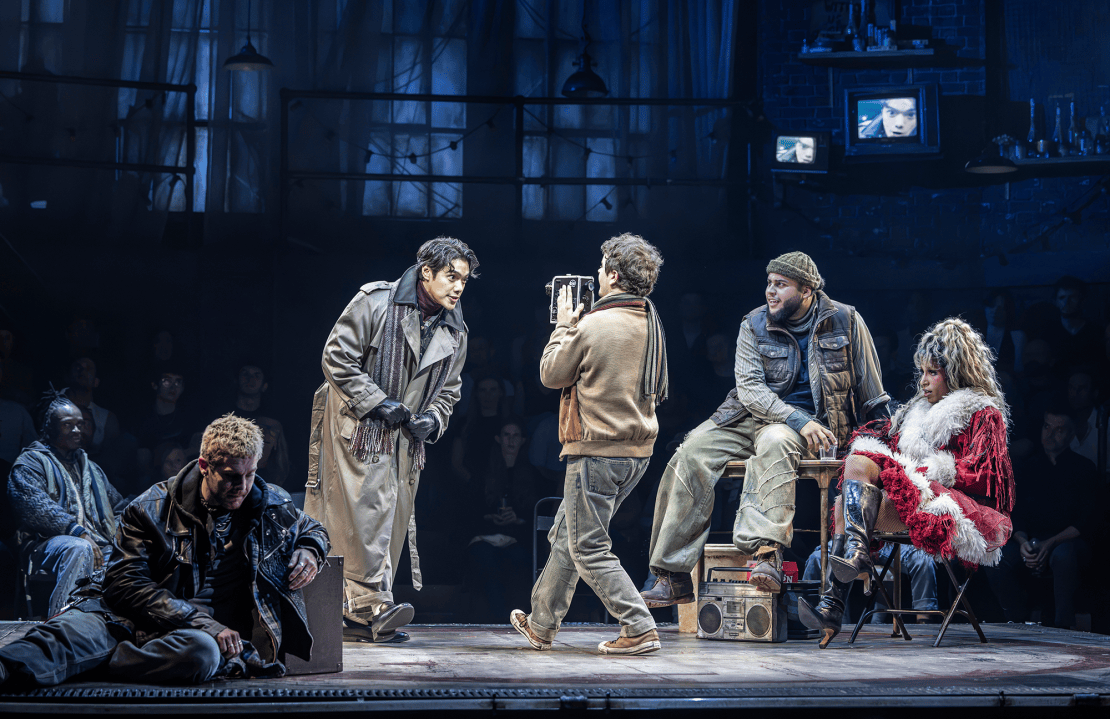
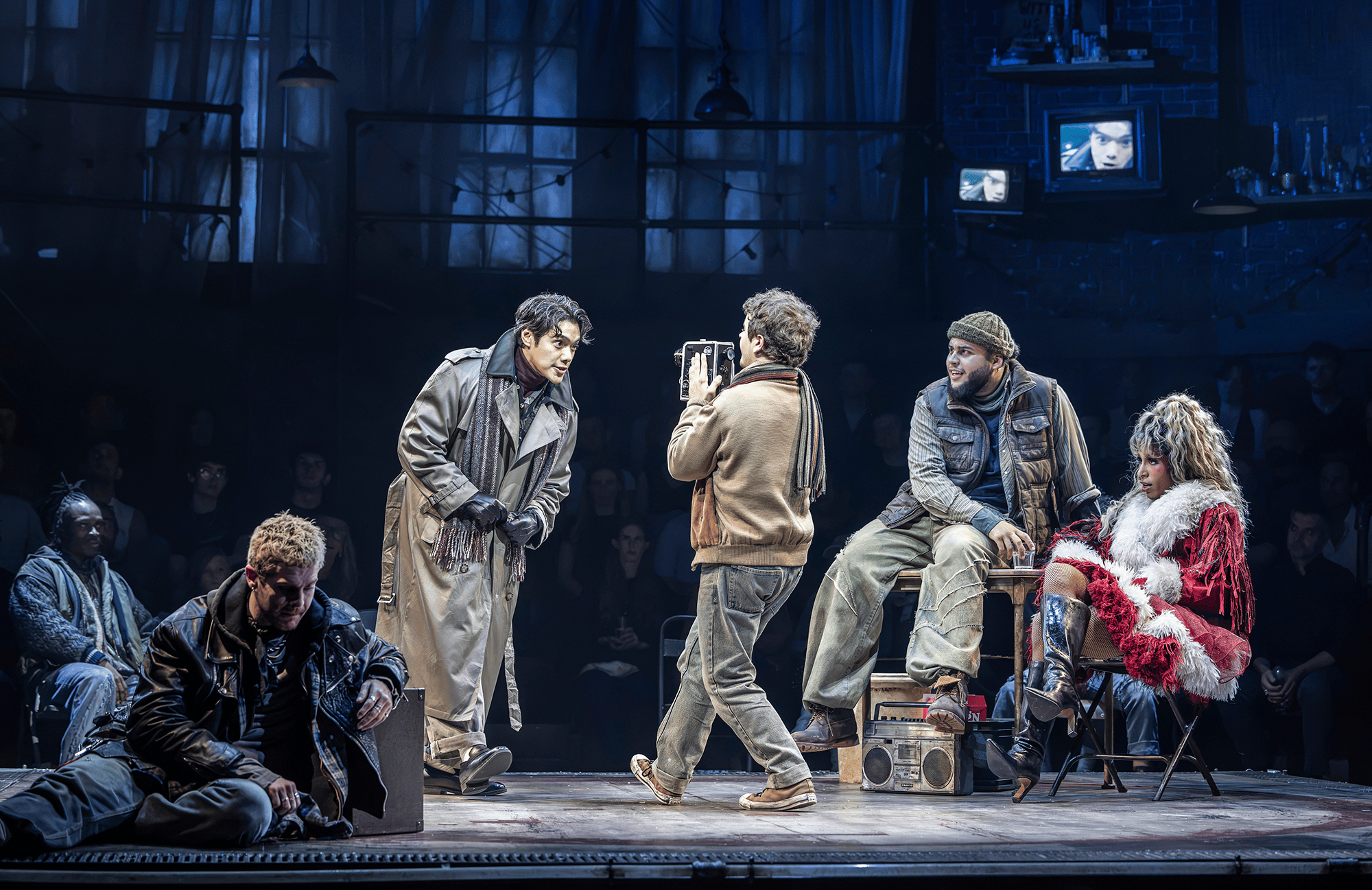
Rent is a show about mortality haunted by the untimely death of its author, Jonathan Larson. On the eve of the first preview in 1996, he underwent heart surgery but he didn’t survive to see his creation become one of the most enduring hits in musical-theatre history. The producers of Luke Sheppard’s version don’t need reviewers to offer their verdict because the show has a worldwide band of disciples who maintain its bankability. On press night, the loyalists clearly adored what they’d seen.
The script takes the plot of Puccini’s La bohème and transfers it to New York’s East Village in the 1990s where a salon of artistes are facing eviction. Their landlord, Benny, used to be a member of the gang but he joined the capitalists and now he wants a year’s back rent from his old chums. To make matters worse, the Aids epidemic is picking off gay men at random.

The storyline seems tame rather than provocative these days, and the characters are noticeably well behaved. Mimi, the nightclub stripper, snorts cocaine but her addiction is not emphasised. A street protest develops into a riot which makes very little impact on stage. Lesbians, drag queens and drug-taking look suburban to modern eyes. Mainstream, in fact.
The show’s appeal lies in the ensemble singing that feels like choral music at a church service. Essentially this is a religious ceremony for agnostic gay hedonists. The plot develops so slowly it’s hard to see it moving. Roger, the mopy guitarist, catches the eye of sexy Mimi but he sends her packing with a prickly couplet. ‘Who do you think you are? Barging in on me and my guitar?’ Eventually they become an item and their romance annoys the evil Benny who once dated Mimi. But the three-way friction doesn’t escalate much. The show is more interested in the slow death of the cross-dresser, Angel, who eventually croaks surrounded by sobbing attention-seekers. ‘He taught us how to love,’ weeps a bereaved artiste.
Alexa Lopez (Mimi) stands out from the ensemble. She has a fabulous voice, a great physique and lots of mischievous energy on stage. Put her in a rock band and she could be a star. She even makes her skimpy dark brown outfit look appealing.
Designer Gabriella Slade has overdone the grunge aesthetic and she dresses the lithe young cast in great baggy tents. Her palette of blacks, ochres and greys lowers the mood further. Some of the garments barely qualify as clothing. They look like old blankets, shower curtains, tablecloths and bits of roof insulation stitched together. To cheer things up, the stage is bathed in blue lights matched with amber. The safest combination in the book. No one would call the show dazzling to look at. Thirty years have passed since the première, and one wonders what became of the ambitious, sexy young Bohemians who inspired the story. Some, no doubt, found success. Others may have turned into lonely Botoxed pensioners with Tippex teeth and no children.
Oh Zeus! is a zany comedy based on a handful of Greek myths, loosely interpreted. The setting is modern but the characters wear togas and sandals, and the humour relies on puns and comic reversals of fortune. The powerful gods are humiliated and the humans triumph unexpectedly. The plot doesn’t make much sense and it doesn’t need to. In classical mythology, as in science fiction, anything can happen to any character at any time for any reason. Lazy writing is the result.
The creators want to emulate the Marx brothers but they barely reach the level of the Goodies
In Act One, Zeus has to stop his daughter, Hebe, from marrying a nerdy hotelkeeper, Gregg Jeeby. Their union would give her the married name Hebe Jeeby. Zeus visits Gregg’s workplace, the Hotel Krapios, and he suffers some amusing physical setbacks as he tries to keep the couple apart. He has to play dead in his bedroom while the staff prowl the hotel trying to find him. These scenes are good fun and very well executed, and if the troupe applied their skills to a bedroom farce they could create something durable. But this feels like an improv show. Too throwaway. And it’s probably more fun to perform than to watch. Some of the caricatures are effective. Poseidon is played as a self-adoring Aussie lifeguard in a pair of skimpy speedos. Hera, a frosty matriarch, wears Anna Wintour sunshades and glides around the hotel glaring nastily at everyone. The goofy hotelier Gregg is less successful, and the silly waiter, Moussaka, is too hysterical to be interesting.
The crazy atmosphere of this raucous spoof would suit a slot on children’s TV. And it would please a crowd of boozy students at a late-night bar. The creators want to emulate the Marx brothers but they barely reach the level of the Goodies. The running time of 145 minutes is far too long for a show based on hyperactive chaos.






Comments